
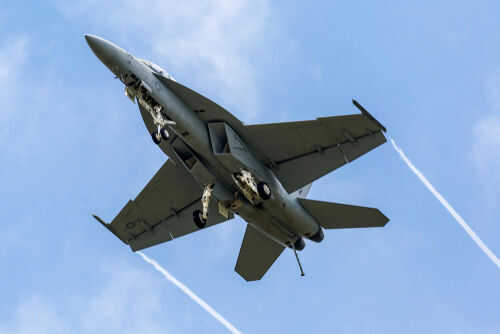
China and Russia just sent warplanes into South Korea’s air defense zone again, raising real questions about how far America’s enemies will test our allies and our patience.
Story Snapshot
- Chinese and Russian warplanes entered South Korea’s air defense identification zone, triggering a fighter jet scramble.[2]
- The aircraft stayed for about an hour over the seas around Korea but avoided sovereign airspace, keeping the incident in a legal gray area.[2]
- South Korea filed a formal complaint to both Beijing and Moscow, warning that repeated flights without notice raise regional tension.[4][10]
- China and Russia insist the flights were routine exercises under international law, part of their growing military partnership.[4][9][11]
Chinese and Russian Warplanes Push the Limits Around Korea
South Korea’s Joint Chiefs of Staff reported that seven Russian aircraft and two Chinese planes entered the Korea Air Defense Identification Zone on December 9, 2025, over waters east and south of the peninsula.[2] The air defense identification zone is a buffer area that lets a country demand identification from foreign planes even though it is outside sovereign airspace.[1][10] South Korea’s military detected the aircraft before they crossed into the zone and scrambled fighter jets as a precaution against any sudden move.[2]
Officials in Seoul said the aircraft remained in the air defense zone for about one hour, repeatedly entering and leaving before finally exiting.[2] Importantly, none of the planes crossed into South Korea’s sovereign territorial airspace, which would have been a clear violation under international law.[2][10] That detail lets China and Russia claim they followed global rules, even while they tested South Korea’s defenses and resolve in a way that feels provocative to many observers.[4][10]
Seoul Protests, Beijing and Moscow Brush It Off
After the incursion, South Korea’s defense ministry lodged a formal diplomatic complaint with the defense officials from China and Russia.[4][10] Seoul said the aircraft flew for an extended period in its air defense zone without prior notice and warned that such actions can “unnecessarily heighten tensions in the region.”[4][6] A senior policy official, Lee Kwang-suk, stressed that South Korea’s military will respond actively to foreign aircraft operating in the zone in line with international rules, signaling that these flights are not being treated as harmless.[10]
China and Russia offered a very different spin. China’s defense ministry framed the flights as part of an annual joint strategic patrol with Russia, carried out above international waters and under a planned defense cooperation program.[9][11] Chinese spokespeople have previously called similar sorties “routine flight activity” and said they are fully in line with international law.[5] Russian and Chinese officials also insisted the patrols were not aimed at any third country, which clashes with how South Korea views warplanes moving repeatedly through its warning zone.[4][10][11]
Gray-Zone Pressure and a Warning for U.S. Allies
This incident is not a one-off. Since 2019, Chinese and Russian aircraft have repeatedly entered South Korea’s air defense zone without prior notification, usually during joint or parallel exercises.[6] Similar events were reported in 2022 and 2024, with between six and eleven aircraft entering the Korea Air Defense Identification Zone and forcing South Korea to scramble fighters each time.[4][6] The pattern looks like steady “gray zone” pressure, where hostile powers stop just short of breaking the law but still try to wear down allied militaries and test response times.[6][9]
NEW: South Korea scrambled fighter jets after nearly 10 Chinese and Russian military aircraft briefly entered its Air Defense Identification Zone (KADIZ). The aircraft did not violate South Korean airspace and later departed the zone.
— GeoInsider (@InsiderGeo) June 27, 2026
For Americans who care about strong borders, national defense, and a clear-eyed view of authoritarian regimes, the lesson is simple. China and Russia are learning how far they can push without triggering a direct clash, whether in Asian skies or in cyberspace and technology theft that targets the United States and its partners.[19][22][24] These constant tests demand firm support for allies like South Korea and Japan, serious investment in air and missile defenses, and a refusal to accept Beijing and Moscow’s attempts to rewrite the rules whenever it suits their agenda.[16][24]
Sources:
[1] Web – South Korea says Chinese, Russian military aircraft enter its air …
[2] Web – South Korea scrambles fighter jets as Chinese, Russian … – Reuters
[4] Web – Russian, Chinese Bombers Do Joint Patrol Between South Korea …
[5] Web – S Korea, Japan scramble warplanes in response to Russia, China …
[6] YouTube – 2 Chinese, 7 Russian Jets Enter South Korea’s Air Defense Zone
[9] Web – South Korea’s Air Force scrambled fighter jets after nine Chinese …
[10] Web – NUMBER OF CHINESE UNAUTHORIZED ADIZ INTRUSIONS … – jstor
[11] Web – China, Russia warplanes enter Korea’s KADIZ; JCS scrambles jets …
[16] Web – Joint Declaration of the People’s Republic of China and the Russian …
[19] Web – [PDF] The Rise of China, the United States, and the Limits of …
[22] Web – Researchers report rare intrusion by suspected Chinese hackers …
[24] Web – The Cybersecurity Strategies Of China, Russia, North Korea, And Iran