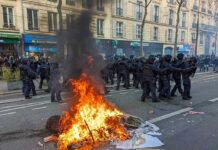

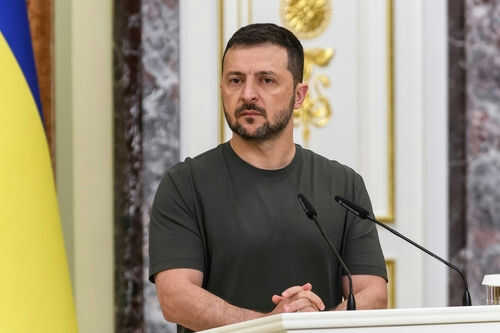
Ukraine’s shock firing of its reformist defense minister has sparked street protests and fresh questions about where billions in Western war aid are really going.
Story Snapshot
- Popular Defense Minister Mykhailo Fedorov was dismissed after only six months on the job, triggering protests across Kyiv.
- President Volodymyr Zelenskyy says a “systemic conflict” with top general Oleksandr Syrskyi and uncoordinated weapons buying forced the move.
- Fedorov had pushed audits and anti-corruption reforms in defense spending, angering parts of Ukraine’s old guard.
- The shake-up fits a pattern of repeated defense purges in wartime Ukraine, raising concerns about stability and use of Western funds.
Zelenskyy fires Fedorov and blames deep clash with the generals
President Volodymyr Zelenskyy has removed Defense Minister Mykhailo Fedorov from his post, even though Fedorov served just six months and was widely viewed as effective and popular. In a closed-door meeting with his party, Zelenskyy said Fedorov had a “systemic conflict” with Commander-in-Chief Oleksandr Syrskyi over how to fight the war and how the defense ministry should work. Zelenskyy argued that such deep disagreement made it impossible to keep both men in their positions.
Zelenskyy also claimed Fedorov’s ministry was making important weapons purchases on its own, instead of following requests from Ukraine’s General Staff. He pointed to artillery shell buying as an example, saying the ministry acted “at its own discretion” rather than based on military orders. Fedorov, for his part, confirmed he was leaving and said it had been an honor to serve the Ukrainian people as defense minister during a critical stage of the war.
Reformer minister pushed audits and reforms, angering Ukraine’s old guard
Reports from Ukrainian and European outlets describe Fedorov as a young, tech-minded reformer who tried to drag the defense ministry toward cleaner, more modern systems. One detailed account says he launched audits of the ministry and army brigades that uncovered roughly 300 billion hryvnias in overspending and introduced lie-detector testing for employees. Supporters say he blocked attempts to send big contracts to favored companies and instead pushed for more open competition.
Fedorov also backed major changes to recruitment and service rules, including a contract-based system with clear service terms meant to protect manpower and treat soldiers more fairly. That program aimed to restore public trust and raise motivation for voluntary service. However, Zelenskyy told allies that Fedorov failed to deliver on promised recruitment reforms and that his approach clashed with the views of traditional commanders. Tensions reportedly came to a head in early July, when generals criticized his supply decisions and resisted his reform push.
Protests and outrage show deep unease over Ukraine’s war-time leadership
Fedorov’s removal has not gone quietly. Ukrainian soldiers, veterans, and civil society activists have publicly called the decision “utterly baffling” and accused Zelenskyy of pushing out one of the few officials who was seriously trying to fix the system. Aviation expert Anatolii Khrapchynskyi, a former air force officer, said he was sorry to see Fedorov go and called him a rare leader with “strategic vision and an agile approach.” He argued that officers inside the army “stifled” Fedorov’s effort to overhaul personnel policy.
I did not go down to take photos of the protest this morning. I don’t exactly understand what’s happening — the people are upset apparently appealing for President Zelenskyy to abandon his decision to remove the Defense Minister #FedorovMykhailo
The protest(s) was large… pic.twitter.com/G1jtUcQC2F
— SPQR2026 (@73RDARM) July 16, 2026
International media also note that Fedorov’s dismissal has sparked calls for protests and demands for answers from Ukraine’s leadership. Some lawmakers and commentators warn the move could hurt Ukraine’s war effort by removing a minister credited with boosting drone use and striking Russian logistics, especially in occupied Crimea. Military analysts quoted by Ukrainian outlets now express concern about future coordination between the ministry and the armed forces and whether hard-fought reforms will stall.
Recurring defense purges raise red flags about Western aid and accountability
This is not the first time Zelenskyy has shaken up Ukraine’s defense leadership during the war. In 2023, he dismissed Defense Minister Oleksii Reznikov, saying it was time for “new approaches” after corruption scandals over inflated food contracts for soldiers. Soon after, he fired six deputy defense ministers and the entire defense cabinet, a move described as a purge ahead of trips to the United States and Europe to seek more support.
Analysts at respected think tanks say Fedorov’s ouster fits a pattern where civilian reformers and the traditional military command keep clashing over procurement, mobilization, and how much change the system can bear. For American taxpayers, that pattern matters. The United States and its allies have sent Ukraine tens of billions in weapons and aid, expecting cleaner practices and strong oversight. When reform-minded officials are pushed out while old networks stay, it raises real questions about how well that money is watched and whether politics is trumping battlefield logic.
Why this matters for American conservatives watching the war
Many conservatives in the United States support helping Ukraine fight off Russia but also want strict control of spending and clear goals. Fedorov’s case shows how messy things can get once money and power flow through a war-time bureaucracy. He dug into waste, pushed audits, and tried to modernize the force, yet he faced pushback from generals and defense industry insiders who did not like their old ways being challenged. Now he is out, and the system that resisted him is still there.
For a Trump-era Washington focused on cutting waste, defending national interests, and avoiding forever wars, Ukraine’s inner turmoil is a warning sign. Big checks with weak oversight invite trouble, whether in Kyiv or in our own Pentagon. As protests grow and Ukraine reshuffles its cabinet again, Americans have every reason to insist on hard proof that our aid supports real reforms and battlefield success, not just another round of political musical chairs.
Sources:
euronews.com, theguardian.com, cbsnews.com, pravda.com.ua, nashaniva.com, english.nv.ua, meduza.io, reuters.com, cnn.com