
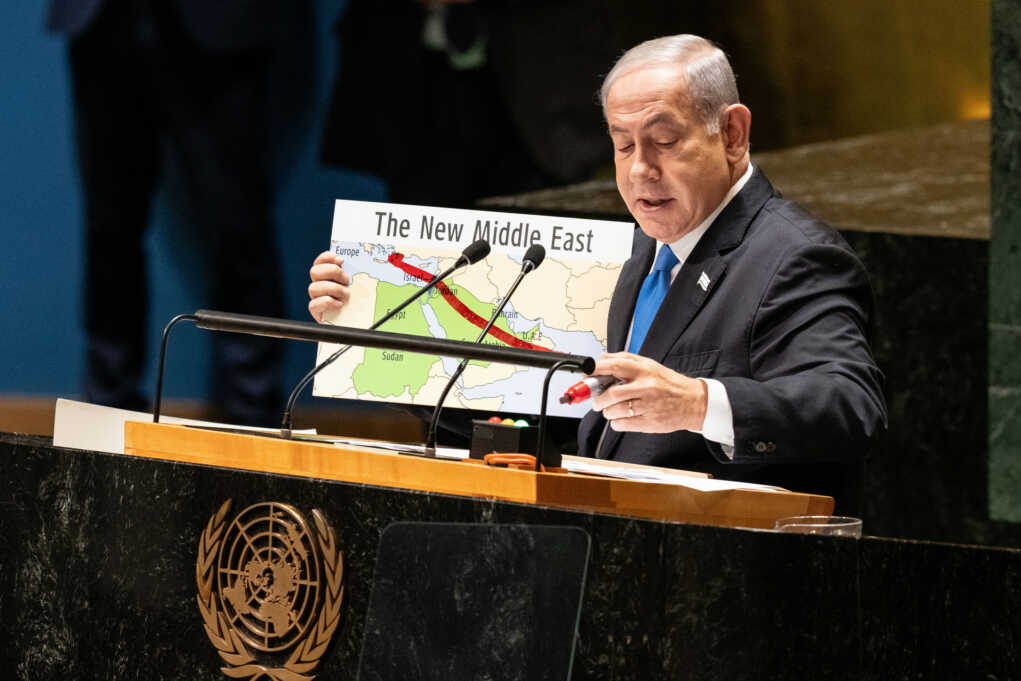
Israel’s parliament has dissolved and new elections are coming, putting Benjamin Netanyahu’s war record — and Israel’s security direction — on the line.
Story Snapshot
- Israel’s Knesset has formally disbanded, triggering national elections expected around October 27.
- Prime Minister Benjamin Netanyahu claims major strategic gains from wars in Gaza, Lebanon, Syria, and Iran as voters prepare to judge his leadership.
- Netanyahu dissolved his wartime cabinet earlier and shifted power to a harder-line security cabinet as the conflict dragged on.
- Critics and international bodies, including the International Criminal Court (ICC), question his motives and raise legal and moral concerns.
Parliament Dissolves and Israel Heads for New Elections
Israel’s 25th Knesset has now voted to dissolve itself, ending its term and sending the country into a fresh election season. Lawmakers passed the dispersal bill after a long night of votes, tying it to party finance legislation in a final burst of activity. The move means the parliament goes into recess and will not return until a new Knesset is sworn in after the vote. The election date written into law is October 27, giving parties just over three months to campaign. Reports say the final dissolution vote passed with a clear majority and no real opposition, reflecting wide agreement that the current coalition could not hold together any longer.
For American conservatives, this looks familiar. When a government cannot pass a budget or hold a stable majority, it goes back to the voters — much like our own fights over spending and gridlock in Washington. In Israel, dissolving the Knesset is the legal way to end a failed term and reset the political map. It fits a pattern in recent years: repeated elections, fragile coalitions, and deep splits over war policy, religion, and the role of courts. This time, though, Israelis are voting in the shadow of a long and deadly conflict and under global pressure over how that war has been fought.
Netanyahu’s War Record and Claims of ‘Tremendous Successes’
As the campaign begins, Prime Minister Benjamin Netanyahu points to what he calls “tremendous successes” from military operations in Gaza, Lebanon, Syria, and Iran. He argues that Israel has pushed back major threats and is now “stronger than ever,” framing the war years as a strategic victory despite heavy costs. Netanyahu has also told troops to answer any threat “immediately,” signaling a hard line on security as elections near. Supporters credit him with signing onto a United States–mediated framework that links an Israeli pullback in Lebanon to the disarming of the Hezbollah terror group, a key concern for many in both Israel and the United States.
Economic numbers give him another talking point. The governor of the Bank of Israel has said the country’s economy remains resilient, with Israel’s risk premium returning to pre-war levels and total war costs estimated around $135 billion. That is a massive hit, but officials say markets and investors still see Israel as stable, which Netanyahu presents as proof his government protected growth under fire. At the same time, there is no clear evidence tying that resilience directly to specific laws or fiscal plans he wrote himself, so voters will need to decide how much credit he deserves versus Israel’s broader private-sector strength.
War Cabinet Dissolved, Power Consolidated, and Critics Push Back
Earlier in the conflict, Netanyahu dissolved his six-member war cabinet after centrist leader Benny Gantz and ally Gadi Eisenkot walked out over frustration with his handling of the fighting. All key war decisions now run through a larger security cabinet, where harder-line figures have more sway and moderating voices have less. Analysts say this shift gives Netanyahu tighter personal control over war policy and may make a cease-fire or fast political deal in Gaza less likely. For conservative readers, it is similar to when an American president bypasses bipartisan advisory bodies and leans more on loyal cabinet members to push a tougher line.
Criticism has mounted at home and abroad. A major investigation in The New York Times claimed Netanyahu at times let personal political goals guide his choices, including extending the war to keep his coalition from collapsing. The International Criminal Court has gone further and issued an arrest warrant for him on alleged crimes against humanity, putting him in the same legal category as leaders like Vladimir Putin and Omar al-Bashir. These actions do not prove guilt on their own, but they add heavy pressure and shape how global media frame his leadership, often using terms like “controversial” and focusing on civilian harm rather than Israeli security gains.
High-Stakes Campaign: Security, Costs, and American Conservative Concerns
This election is not happening in a vacuum. United States intelligence reporting has warned that Netanyahu is likely to undermine any peace deal with Iran, raising concern in Washington and among Trump-aligned hawks who want real deterrence but also clear red lines. International forces are preparing to enter parts of Gaza to police cease-fire zones and manage aid, which could reduce Israel’s direct control over key security areas and complicate Netanyahu’s message that only his firm hand keeps the country safe. All this gives voters a stark choice: double down on his hard-security approach or risk a weaker line under rivals who may bow sooner to global pressure.
The 25th Knesset has officially dissolved.
Elections in Israel are in 102 days. 🇮🇱 pic.twitter.com/NNYkpHkEOQ
— Eli Afriat 🇮🇱 (@EliAfriatISR) July 17, 2026
For American conservatives watching from afar, the stakes are easy to see. Israel is our closest ally in a rough neighborhood, facing terror groups, radical regimes, and constant legal and media attacks much like those aimed at strong U.S. leaders who refuse to bend to globalist agendas. As Israeli voters go to the polls after their Knesset’s dissolution, they are not just picking lawmakers. They are choosing how their nation will fight, spend, and defend its borders — and that choice will echo straight into U.S. policy debates on defense, foreign aid, and the future of the Middle East.
Sources:
insiderpaper.com, youtube.com, jns.org, bbc.com, nashaniva.com, nytimes.com, jewishdallas.org, washingtonpost.com, aljazeera.com, timesofisrael.com, pbs.org, jpost.com, foreignpolicy.com, apnews.com