Florida has executed 74-year-old Dennis Michael Sochor, closing a brutal New Year’s rape-murder case that haunted a family for 44 years while death penalty opponents try to turn his age and missing victim’s body into a weapon against tough-on-crime justice.
Story Snapshot
- Florida put 74-year-old convicted killer Dennis Sochor to death by lethal injection, one of its oldest prisoners ever executed.
- Sochor confessed on tape multiple times to strangling 18-year-old Patricia Gifford and hiding her body where he said no one would find it.
- Governor Ron DeSantis signed the death warrant in June 2026 as Florida leads the nation in executions and cracks down on violent crime.
- Opponents highlight Sochor’s age, missing remains, and past questions about his legal defense to attack the death penalty and Florida’s justice system.
Florida Carries Out Execution In Long-Delayed New Year’s Murder Case
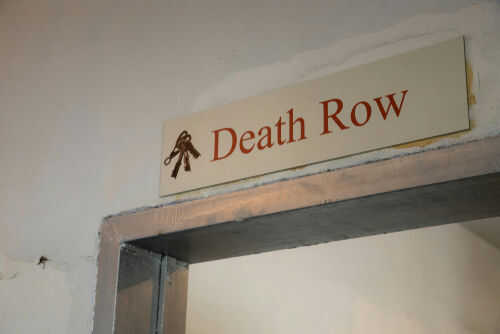
Florida officials carried out the death sentence for Dennis Michael Sochor on Tuesday evening, finally enforcing the penalty in a 1981 rape and murder that stunned Broward County. Corrections staff executed the 74-year-old by a three-drug lethal injection at Florida State Prison near Starke, with witnesses reporting the procedure ended without incident. Sochor was pronounced dead at 6:16 p.m., roughly 44 years after the killing of 18-year-old Patricia “Patty” Gifford, whom he met at a New Year’s Eve party in Fort Lauderdale.
State records show Gifford spent New Year’s Eve celebrating at the Banana Boat Lounge before leaving with Sochor and his brother Gary in the early hours of January 1, 1982. Prosecutors said Sochor drove Gifford toward the Everglades, raped her, and strangled her, then dumped her body in a remote area. A photo from that night, taken by friend Delta Harville, captured Gifford sitting with Sochor and became key evidence once she vanished. When police later aired the photo on television, roommates testified Sochor quickly fled the state.
Confessions, Witnesses, And A Body That Was Never Found
Court records and reporting show Sochor confessed to the murder at least three times on tape after his 1986 arrest in Georgia for driving under the influence. In those statements he admitted killing Gifford and said he put her body “in a place no one will ever find her,” describing a remote Everglades location. His brother Gary also testified at trial, saying he tried to stop the assault and saw Sochor choke Gifford before driving off with her alone. Together, those confessions and eyewitness accounts formed the backbone of the state’s case.
Despite repeated searches, law enforcement never recovered Gifford’s remains, leaving her family without a grave and fueling criticism from death penalty opponents. Investigators followed Sochor’s directions into the Everglades, but harsh terrain and time made meaningful recovery nearly impossible. Legal scholars describe such “no-body” murder convictions as rare but increasingly common, with very high conviction rates when strong confessions and witness support exist. That pattern matched Sochor’s case, where jurors heard detailed admissions and testimony even though physical evidence was thin.
DeSantis’ Warrant And Florida’s New Focus On Elderly Death Row Killers
On June 10, 2026, Governor Ron DeSantis signed Sochor’s death warrant, formally setting a July 14 execution date at 6 p.m. This marked at least the eleventh warrant he signed in 2026 and continued a two-year push to clear long-delayed capital cases, making Florida the nation’s busiest death penalty state. Reporting notes that if all scheduled executions proceed, Florida will have put 29 people to death since January 2025, far more than any other state in that period. Several of those inmates, including Sochor, are in their seventies or older, signaling a tougher stance on aging violent offenders.
The Florida Supreme Court rejected Sochor’s final motion for a stay of execution the week before his death, allowing the warrant to stand and appeals to end. Earlier rulings had addressed problems with his original defense, including a finding in 2004 that trial counsel was “clearly deficient” for failing to present mental health evidence like bipolar disorder and lithium treatment. Two justices dissented then, arguing that the poor defense prejudiced the outcome and raised doubts about the fairness of the death sentence. Those dissents now feed talking points for activists who say elderly inmates like Sochor should have their sentences reduced, not enforced.
Victim’s Family Still Lacks A Grave As Activists Attack Florida’s Record
Gifford’s sister, Marilyn, has said publicly that she has “lost hope for closure” because the family still does not know where Patty’s body lies and doubts Sochor will ever tell the truth. She and other family members criticized a 2019 book by Norwegian journalist Jan Twystad, who wrote about Sochor’s years on death row and described him as a victim of cruel isolation while barely naming Patty and omitting his prior rape convictions. For many families who have suffered brutal crimes, those kinds of accounts feel like the media turning away from victims and toward killers.
"Florida just executed 74-year-old Dennis Sochor, making him the oldest inmate executed in the state's modern history. This is Florida’s 10th execution of the year—more than the rest of the US combined. Thoughts on this trend?"
— MR Reader (@Mr2966Mr) July 15, 2026
Death penalty opponents used Sochor’s execution to argue that Florida’s system is broken, focusing on his age, the missing body, and old questions about his legal defense. A petition campaign urged citizens to call the Governor and demand clemency, claiming that executing a 74-year-old veteran with mental health history is inhumane. But many Floridians, already angry about rising crime and decades of soft-on-crime policies, see something else: a state finally enforcing long-promised justice for violent attacks on women and pushing back against activists who seem more worried about killers than about victims.
Sources:
facebook.com, supremecourt.gov, usatoday.com, casemine.com, sun-sentinel.com, cbsnews.com, media.ca11.uscourts.gov, library.law.fsu.edu, leg.state.fl.us, latimes.com, nationalgeographic.com