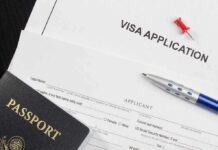

China is warning of retaliation after President Trump’s team tightened visa limits on Chinese state-backed journalists, putting national security ahead of Beijing’s complaints.
Story Snapshot
- Trump administration set firm time limits on foreign journalist visas, ending open-ended stays.
- Most foreign reporters now get up to 240 days, while mainland Chinese journalists are capped at 90 days.
- China calls the new rules “discriminatory” and threatens reciprocal countermeasures against Americans.
- The policy closes loopholes that allowed long, poorly supervised stays by foreign media workers.
U.S. Clamps Down On Journalist Visa Loopholes
The Department of Homeland Security ended the old “duration of status” system that let foreign journalists stay in the United States for years, as long as their employer kept them on the payroll and they met basic rules. Under the new regulation, most foreign media workers receive an initial stay of up to 240 days, with the chance to request extensions if needed. The Trump administration says the goal is stronger oversight of legal immigration and better tracking of who is in the country and for how long.
Federal officials also tied the change to wider concerns about visa abuse and security risks linked to long, lightly monitored stays by foreign nationals. The same rule narrows time limits for international students and cultural exchange visitors, ending long, open-ended study and work periods and replacing them with fixed four-year maximums and tighter transfer rules. By putting a clear end date on these visas, the administration gains more regular review points to catch fraud, espionage, or violations before they linger for years.
Special 90-Day Limit Targets Chinese State Media
Within this broader visa overhaul, the sharpest change falls on journalists from mainland China, whose stays are now capped at just 90 days at a time. Other foreign reporters can receive up to 240 days, highlighting a deliberate distinction between Chinese state-linked media and outlets from the rest of the world. The shorter window mirrors earlier Trump-era rules that treated Chinese media workers as a higher-risk group because they are often employees of state-controlled outlets rather than independent news organizations.
China’s government has a long record of using its state media as tools of propaganda and influence abroad, not just for neutral reporting. Limiting Chinese journalist stays to 90 days gives U.S. authorities more frequent chances to review each individual’s activities and ties, and to deny extensions if they see national security concerns or visa misuse. Supporters argue that America has every right to decide how long foreign government-linked media can operate on U.S. soil, especially when Beijing heavily restricts access for American reporters inside China.
Beijing Cries ‘Discrimination’ And Threatens To Hit Back
China’s foreign ministry quickly attacked the new rules, calling them “discriminatory” and demanding that Washington withdraw the changes. Spokesperson Lin Jian claimed the policy “serves no one’s interests” and warned that Beijing “reserves the right” to take reciprocal countermeasures against U.S. citizens. Chinese officials say the rule breaks understandings reached in 2021 over media access and accuse the United States of turning journalist visas into a political weapon.
China hints at retaliation after US tightens student and journalist visa ruleshttps://t.co/qjBSNZSdaz
— Shehzad Younis شہزاد یونس (@shehzadyounis) July 17, 2026
Chinese diplomats and state media also warn that this could trigger what they call “media warfare” between the two countries. In past disputes, Beijing has responded by delaying or denying visas and press credentials for American journalists in China and Hong Kong, shrinking independent coverage of its government and human rights record. Today’s threats follow that same pattern, signaling that U.S. reporters could face new hurdles simply because Washington chose to tighten oversight of Chinese state-backed journalists operating here.
Press Freedom Concerns And The Security Trade-Off
Press freedom groups and some foreign outlets worry the rule may chill international reporting in the United States. They note that I visas for foreign media previously lasted in five-year blocks and could be renewed as long as journalists followed the law. Critics argue that frequent renewals, shorter stays, and special limits for Chinese nationals may discourage tough reporting on U.S. policy and create uncertainty for newsrooms planning long-term coverage.
Supporters counter that the change does not bar foreign or Chinese journalists from entering the country; it simply requires regular check-ins and renewals. They stress that visas are a privilege, not a right, and that the U.S. must balance open media access with real risks, including foreign intelligence operations hiding behind press credentials. For many conservatives, especially after years of Chinese influence, spying scandals, and unfair treatment of American reporters in China, this move looks like overdue common-sense protection of U.S. sovereignty and security.
What This Means For American Readers And Reporters
For everyday Americans, the new rule signals that the Trump administration is willing to face Beijing’s anger to tighten borders and protect national interests. It fits a broader pattern of pushing back on Chinese government overreach, from trade to technology to propaganda, instead of handing out long visas with little follow-up. While China threatens to punish American journalists, the United States is making clear that foreign governments do not get a free pass to plant long-term media operatives here without closer review.
There are real risks of tit-for-tat measures, and some American reporters in China may pay a price as Beijing retaliates. But many readers will see the new 90-day cap as a reasonable step, not an attack on free speech. The First Amendment still protects every journalist inside our borders. These rules simply set how long foreign nationals can stay and work before they must check back in with U.S. authorities. In a time of global tension and information warfare, that kind of oversight looks less like “media warfare” and more like basic self-defense.
Sources:
insiderpaper.com, theepochtimes.com, channelnewsasia.com, scmp.com, thehindu.com, ndtv.com, reuters.com, cpj.org, bloomberg.com, mfa.gov.cn, voanews.com, usatoday.com, visum-usa.com, cbsnews.com