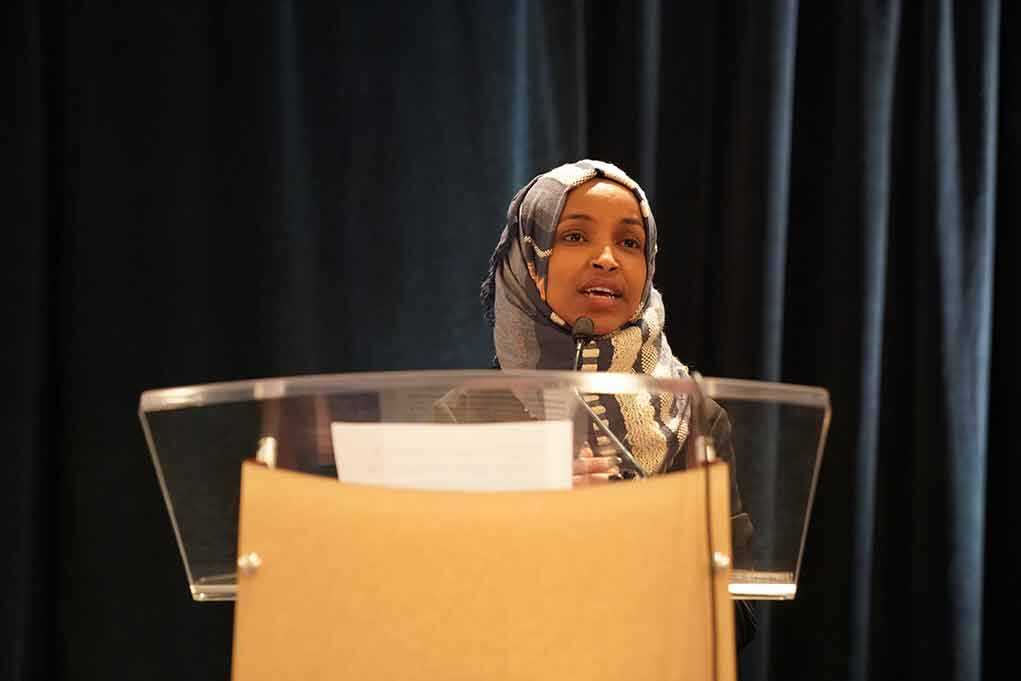
Royce White’s on-record call to deport Rep. Ilhan Omar collided with reports that federal immigration authorities are reviewing her file, pushing an already bitter fight over borders and citizenship into the spotlight.
Story Highlights
- Royce White said Ilhan Omar should be deported and tied his claim to alleged immigration fraud.
- Reports say federal officials are reviewing Omar’s immigration and naturalization history.
- Public records confirm Omar was born in Somalia and became a U.S. citizen in 2000.
- Experts and reports say deportation of a citizen requires first revoking citizenship in court.
Royce White’s Deportation Demand and Its Basis
Former National Basketball Association player Royce White said, “I think she should be deported,” in a new interview and claimed Rep. Ilhan Omar committed immigration fraud. White also used the phrase “back to Somalia,” tying his demand to her Somali birth and refugee background. White linked his charge to a long-circulating allegation about a sham marriage, which has not been proven in court. His remarks echo voter anger over border chaos and fraud, but they remain allegations, not legal findings.
The interview arrives as immigration enforcement is under sharper scrutiny. Conservatives want equal rules for all and consequences for fraud. White’s message taps that mood. He argues that if citizenship was obtained by lies, it should be revoked and removal should follow. That sequence reflects standard law: the government must first prove illegal procurement or material misrepresentation before any removal can occur, and that requires evidence that stands up in court, not just claims.
What We Know About Omar’s Status and The Reported Review
Public records state Omar was born in Somalia, fled civil war as a child, resettled in the United States, and later became a U.S. citizen in 2000. Those facts by themselves do not prove wrongdoing. They show a legal path many refugees follow. The current controversy centers on whether any part of that process involved fraud. The Washington Times reported former immigration official Tom Homan said Immigration and Customs Enforcement is probing possible immigration crimes tied to Omar’s history.
A review or investigation does not equal a charge or a conviction. It signals that officials are looking at records. Several outlets say the most discussed allegation is the supposed “marry her brother” claim. Even there, immigration officials quoted in reporting have said that, standing alone, such an allegation would not automatically make a U.S. citizen deportable without first proving fraud that undermined naturalization itself.
The Legal Bar: Denaturalization Before Deportation
United States law protects citizens, whether born here or naturalized, from routine deportation. If the government believes someone became a citizen through fraud, the government must persuade a federal court to revoke that citizenship first. Only then could removal proceedings begin. That is why experts and legal analyses emphasize proof of illegal procurement or material misrepresentation as the trigger for denaturalization, not political anger or rhetoric.
Reports reviewing this standard note that courts set a high bar for stripping citizenship. The burden rests on the government to present solid, specific evidence. That can include original immigration filings, sworn statements, and corroborating records. In public accounts about Omar, those source documents have not been released, and agencies rarely comment during active reviews. That silence can frustrate voters, but it is common in enforcement work and protects due process.
Politics, Public Trust, and What Comes Next
The clash reflects deeper public worries about border enforcement and fairness. Many Americans believe elites bend the rules for the powerful while citizens pay the price. White’s demand matches that frustration. The reported Immigration and Customs Enforcement review shows the government is at least looking at the file, which matters for public trust. But until a court weighs evidence, Omar remains a citizen under law, and deportation talk stays political, not legal.
Ex-NBA player Royce White wants Ilhan Omar deported: 'Don't Mogadishu my America'
👇https://t.co/cdkgQuhfVk— Stoned Ranger (@Stoned_Ranger_) September 27, 2026
For readers who want action and clarity, the path is straightforward. First, watchdogs and lawmakers can press for document preservation and lawful disclosure when allowed. Second, the Department of Justice can seek denaturalization only if evidence shows illegal procurement or material lies. Third, if a court agrees, removal can follow. That sequence treats fraud as serious while honoring due process. It also avoids turning citizenship into a political weapon, which would harm everyone, not just one member of Congress.
Sources:
thegatewaypundit.com, yahoo.com, britannica.com, nypost.com, lrl.mn.gov, heritage.org, aljazeera.com