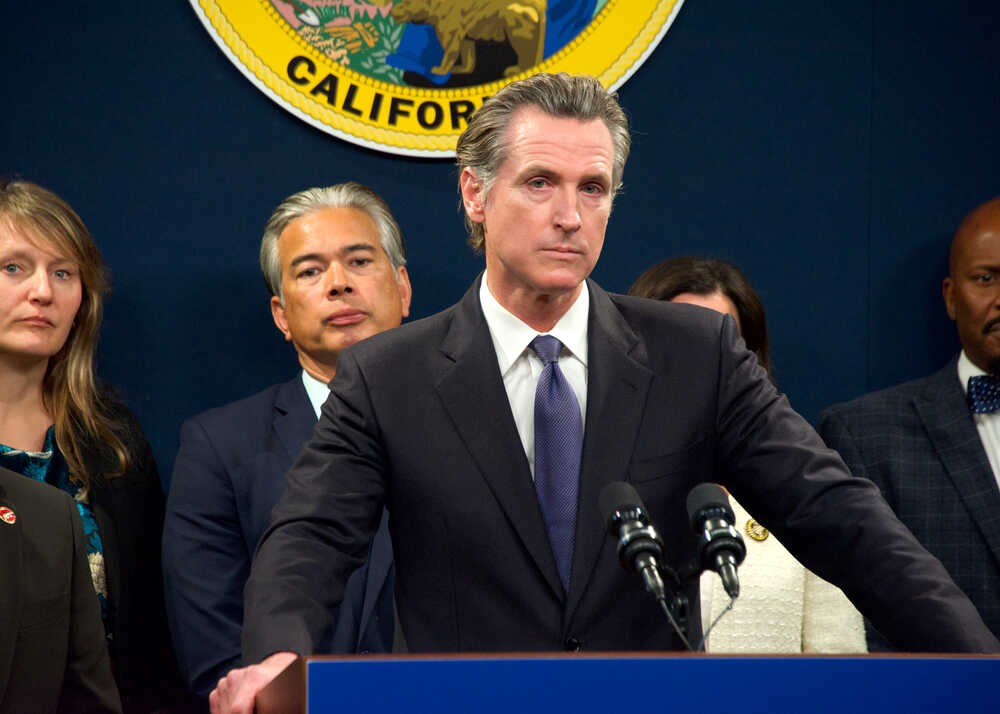
California Governor Gavin Newsom has repealed his own controversial law decriminalizing loitering for prostitution, a decision that sparks debate and speculation about his political ambitions.
Story Highlights
- Governor Newsom repeals 2022 law decriminalizing loitering for prostitution
- Repeal follows increased reports of street prostitution and sex trafficking
- Law now includes tougher penalties for soliciting minors
- Political implications for Newsom’s potential presidential run
Newsom’s Reversal and Its Implications
Governor Gavin Newsom’s decision to repeal the controversial 2022 law, which he had championed, has stirred significant reactions across California. The 2022 law, known as SB 357, aimed to decriminalize loitering for prostitution in an effort to reduce police harassment against marginalized groups, including women, transgender individuals, and people of color. However, the law faced criticism for allegedly contributing to a rise in street prostitution and sex trafficking, particularly involving minors.
Newsom, Eyeing Presidential Run, Repeals Own Law Decriminalizing Loitering, Which Had Led to Sex Trafficking https://t.co/BKYXYRx5Gj via @BreitbartNews
— Jeff Robinson, CEO and Chairman of $MRES and $RLAB (@contrariansmind) July 31, 2025
In July 2025, Newsom signed AB 379, which not only repeals SB 357 but also introduces tougher penalties for soliciting sex from minors aged 16 or 17. Newsom stated that the new law reflects California’s commitment to supporting trafficking survivors and holding sex predators accountable. This move comes amid Newsom’s rumored presidential ambitions, suggesting a shift in his public safety strategy to appeal to a broader electorate.
Political Context and Stakeholder Reactions
The repeal of SB 357 marks a rare political reversal for Newsom, who has been navigating pressure from both public safety advocates and political opponents. Critics of the original law, including moderate Democrats and Republicans, have argued that decriminalizing loitering exacerbated public safety issues and increased the vulnerability of minors to exploitation. Assemblymember Maggy Krell and Republican lawmakers such as Sen. Shannon Grove have been vocal in their support for restoring penalties, emphasizing the need for stronger protections for minors.
On the other hand, proponents of decriminalization, including sex worker and LGBTQ+ advocacy groups, argue that the original law aimed to reduce police harassment and violence against marginalized communities. Despite their concerns about the potential for increased discrimination, the repeal was passed with bipartisan support, reflecting a complex interplay of political and social dynamics within California’s legislature.