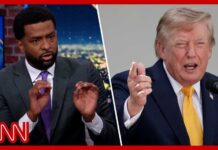
MSNBC is now celebrating polling that claims President Trump is less popular on inflation than Jimmy Carter—an absurd benchmark that still signals real political danger for Republicans heading into the next election cycle.
Quick Take
- MSNBC host Chris Hayes mocked Trump’s inflation and cost-of-living approval, highlighting net ratings reported at -40 and -49 in separate analyses.
- The segment leaned on data cited by pollster G. Elliot Morris and CNN analyst Harry Enten, framing Trump as polling worse than Carter on inflation.
- Even with inflation lower than the 2022 peak, voters’ frustration appears to be intensifying—suggesting prices and confidence, not just headline inflation, are driving sentiment.
- Media outlets are using the Carter comparison as a political weapon, but the underlying numbers still pressure the GOP to show tangible progress on costs.
Hayes spotlights inflation polling as a political weak point
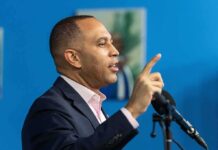
Chris Hayes used Thursday’s edition of MSNBC’s All In to ridicule President Donald Trump’s standing on inflation and the cost of living, pointing to charts that show a steep decline over the past year. Hayes emphasized a claim attributed to pollster G. Elliot Morris: Trump’s net approval on inflation sits around -40. The segment’s tone was openly mocking, with laughter and a “can you believe it?” cadence.
The most potent line in the segment was the comparison: Hayes said Trump is less popular on inflation than Jimmy Carter, whose presidency is widely associated with stagflation and the 1979 energy crisis. That framing matters because it’s designed to lodge a simple narrative in voters’ minds: “Trump equals economic pain.” Whether viewers trust MSNBC or not, the clip’s structure—chart, punchline, historical villain—makes it highly shareable.
CNN and Drudge comparisons amplify the same storyline from different angles
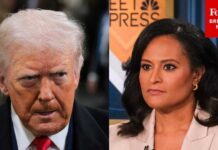
Hayes’ segment did not land in a vacuum. A day earlier, CNN data analyst Harry Enten cited a separate figure: Trump at roughly -49 net approval on inflation, described as lower than President Biden ever hit on the issue. Enten’s presentation was more analytical than comedic, but it reinforced the same headline conclusion. The research also notes Drudge Report ran a side-by-side comparison of Trump and Carter, underscoring how quickly the Carter analogy is spreading.
For conservatives, Drudge’s involvement is a reminder that this isn’t only a progressive-media attack line. When a right-leaning aggregation site highlights the comparison—even ironically—it can accelerate the narrative into broader political conversation. At the same time, the evidence base described here is narrow: the research summarizes claims from commentators referencing polling, but it does not provide full methodological detail, exact field dates, or crosstabs within the provided material.
Why “lower inflation” does not automatically translate into voter relief
The research indicates current inflation is about one-third of the 2022 peak, yet Trump’s numbers on inflation have continued to deteriorate. That gap points to a basic political reality: families experience the economy through accumulated price levels, not just the monthly rate of change. If groceries, insurance, rent, and borrowing costs remain elevated, voters can feel like they are still falling behind—even when inflation is cooling on paper.
This is where Republican governance collides with a broader anti-establishment mood shared by right and left. Many Americans see Washington as reactive, self-protective, and overly focused on messaging wars instead of measurable cost reductions. Conservatives often blame overspending, energy constraints, and regulation; liberals often blame inequality and corporate power. The polling storyline highlighted by Hayes functions as a single, sharp symbol of that deeper frustration: “the people in charge aren’t fixing it.”
The real takeaway for Republicans: governing results beat media narratives
Democrats and allied media will keep using inflation polling to paint Trump’s second-term agenda as out of touch, especially as elections approach. Republicans can dismiss the laughter, but ignoring the underlying sentiment is risky. If voters believe their paychecks still don’t stretch, opposition messaging becomes easier—no matter who controls Congress. The most durable answer is visible progress: sustained cost relief, credible fiscal discipline, and energy policies that cut bills without creating new vulnerabilities.
VIDEO – Chris Hayes Laughs at Trump Polling Lower Than Jimmy Carter: ‘The Guy Who Oversaw Stagflation!’ https://t.co/Bl2YMes8Di
— Grabien (@GrabienMedia) May 1, 2026
The available research does not include a response from the White House, nor does it document any specific policy announcement tied directly to this polling segment. That limitation matters because it keeps the story primarily in the realm of media framing and public sentiment rather than legislative action. Still, the episode is a useful warning light: when inflation becomes a late-night punchline, it means voters’ patience is already thin—and the next economic headline can swing opinions fast.
Sources:
Chris Hayes Laughs at Trump Polling Lower Than Jimmy Carter: ‘The Guy Who Oversaw Stagflation!’