A viral interview branding the Catholic Church’s “synodality” push as “diabolical” is forcing a blunt question: are reforms meant to listen to the faithful—or to rewrite the faith?
Story Snapshot
- A commentator identified as Pope Leo XIV’s former seminary classmate, Professor William A. Thomas, argues the synodality project is a politically engineered break from Scripture and Tradition.
- Other firsthand accounts from Pope Leo XIV’s classmates paint a very different portrait—humble, intelligent, and pastoral—without endorsing the “diabolical” framing.
- Available sourcing shows the sharpest allegations coming primarily from a single media interview, while multiple mainstream Catholic outlets focus on biographical background and reunions.
- The controversy highlights a broader institutional trust problem: many believers, left and right, suspect elite decision-making that feels detached from ordinary people in the pews.
What the “diabolical” claim actually rests on
Professor William A. Thomas, described in a widely shared interview as a longtime colleague and former seminary classmate of Pope Leo XIV, frames synodality as more than an administrative process. In that telling, the synodal direction is “not the Catholic Church,” but a “politically manufactured” crisis designed to displace Scripture and Tradition with outside ideological currents and emotional pressure. Those are sweeping claims, and the interview format matters because it provides allegation more than documentation.
The research summary also flags a key limitation: independent confirmation of Thomas’ precise relationship to the pope is not clearly established in the provided materials beyond the interview context, and the most inflammatory wording is not widely echoed in the other sources. That doesn’t disprove his critique, but it does mean readers should treat it as one insider’s interpretation rather than a settled factual record. When faith governance debates become personality-driven, the evidence base often gets thinner, not stronger.
Classmates’ public memories focus on character, not faction
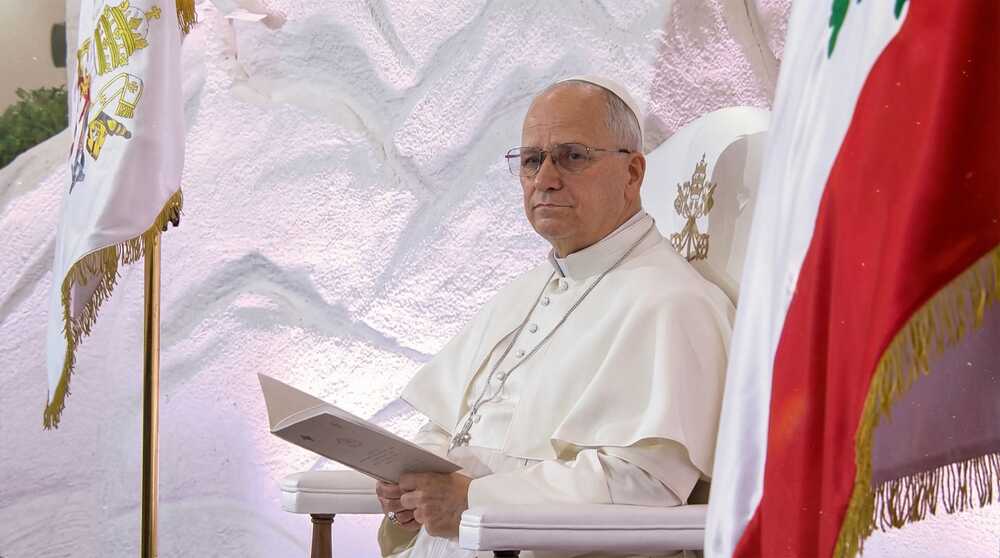
Separate reporting from Catholic outlets emphasizes Pope Leo XIV’s Midwestern roots and the impressions of men who knew him long before the papacy. A high school classmate, Fr. Becket Franks, OSB, describes him as smart, well-liked, and humble, pointing to leadership qualities rather than ideological maneuvering. That reporting also links the “Leo XIV” name choice to Leo XIII-style social teaching themes, including workers and migrants—priorities likely to shape how his papacy is received across political lines.
Another report describes Pope Leo XIV reuniting with eighth-grade classmates at a general audience, reinforcing a public image of continuity, relationships, and personal warmth. Those stories do not engage the synodality fight directly, but they matter because they highlight how the same papacy can be framed in two very different ways: as a pastoral figure with a familiar personal history, or as the focal point of a larger institutional struggle. The contrast underscores how quickly internal church debates become media narratives.
Why synodality triggers “deep state” suspicion—even in churches
Synodality, associated in the research with the 2021–2024 synodal process, is presented by supporters as consultation and participation, but critics interpret it as a mechanism for shifting doctrine by process rather than by clear teaching authority. Thomas’ interview argues senior leaders engineered a crisis and leaned on political-style tactics. Conservatives will recognize the theme: institutions using opaque procedures to achieve outcomes that would never survive direct, transparent debate. Liberals, too, often share the suspicion that powerful insiders steer outcomes.
That overlap—shared distrust of elites—helps explain why this story travels. Many Americans already believe major institutions are run for insiders first, whether in Washington, corporate boardrooms, universities, or legacy media. When church governance becomes a contest over who sets the terms of debate, it can look uncomfortably similar to secular politics. The risk for any institution built on moral authority is that procedural battles start to feel like power battles, and power battles erode trust faster than policy disputes.
What can be verified now, and what remains unproven
Based on the provided research, several facts are relatively solid: Pope Leo XIV is Robert Prevost, U.S.-born, with classmates and peers publicly discussing his background and character; multiple outlets confirm personal history and reunions. By contrast, the strongest accusations about synodality—corruption, cowardice, ambition, and a deliberate break from Catholic identity—are presented mainly through one prominent interview ecosystem and are not independently documented in the mainstream reporting cited.
For readers trying to stay grounded, the conservative takeaway is less about internal Catholic labels and more about governance. When leaders pursue major cultural and doctrinal shifts, the public’s demand is simple: clarity, transparency, and continuity with founding principles. Without that, people assume the worst—whether they call it “diabolical,” bureaucratic, or simply elite capture. Limited evidence for the most severe claims means the prudent posture is scrutiny, not certainty, while watching what Pope Leo XIV actually enacts.
Sources:
High school classmate recalls new pope as smart, caring and humble class leader
Pope Leo XIV Reunites With His Eighth-Grade Classmates
Pope’s Michigan high school classmate says he was smart, well liked and tutor of the school