
A sudden fuel-price shock tied to a foreign war just wiped out one of America’s biggest budget airlines overnight—stranding travelers and exposing how fragile “cheap travel” gets when Washington and global markets collide.
Quick Take
- Spirit Airlines stopped operating and canceled flights immediately after creditors rejected support for a proposed $500 million U.S. government bailout.
- Reports link Spirit’s final collapse to doubled jet-fuel costs amid the U.S.-Israeli war on Iran, on top of heavy debt and weakening demand.
- About 17,000 jobs are impacted as liquidation begins, with customers told not to go to the airport because Spirit’s customer service shut down.
- The shutdown renews debate over how prior federal merger decisions—especially the blocked JetBlue tie-up—can leave companies with fewer survival options.
Spirit’s Shutdown Shows How Fast a “Low-Cost” Model Can Break
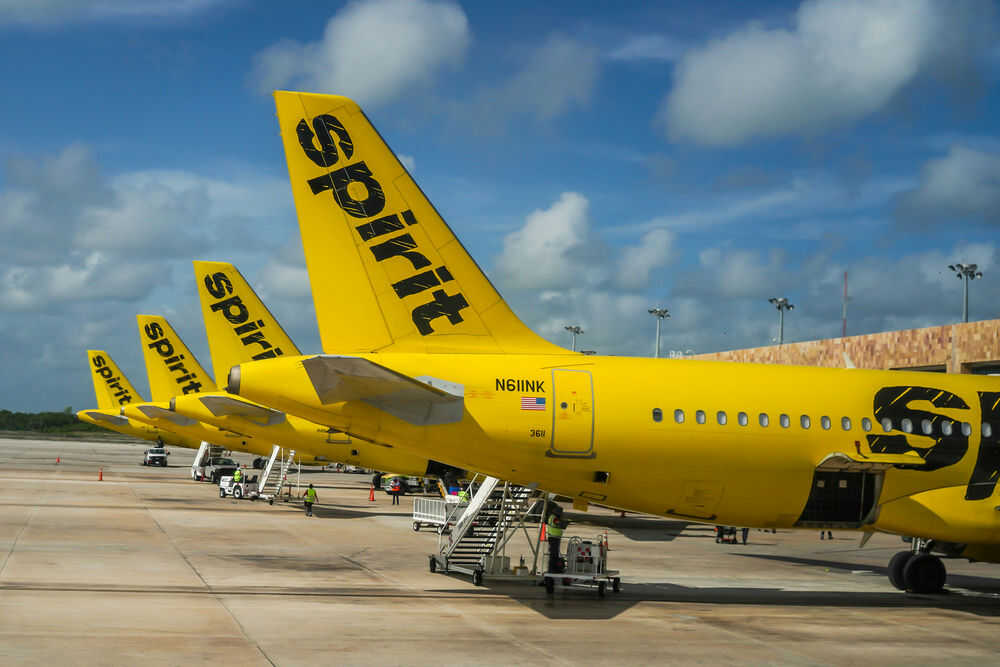
Spirit Airlines, the Florida-based ultra-low-cost carrier, ceased operations on a Saturday just before May 3, 2026, canceling flights immediately and telling customers to avoid airports as its customer service went offline. The shutdown followed a bankruptcy filing dated May 2, 2026, and came after Spirit failed to secure creditor backing for a proposed $500 million government bailout. Reports describe liquidation underway, turning a long, slow financial decline into an abrupt nationwide disruption.
https://www.youtube.com/@AIRLINEVIDEOS
Airline bankruptcies usually involve a messy restructuring period that keeps planes flying while negotiations grind on. Spirit’s case stands out because the end came suddenly and completely—no gradual schedule trimming, no prolonged wind-down. That kind of immediate stop matters for families counting on low fares, workers who can’t miss shifts, and small businesses that depend on predictable travel costs. It also leaves passengers scrambling for alternatives that are typically pricier, especially on routes Spirit served heavily.
Fuel Prices, Debt, and Demand: The Three-Pressure Squeeze
Recent reporting points to jet-fuel prices doubling in the weeks leading up to the shutdown, with the spike linked to geopolitical tensions tied to the U.S.-Israeli war on Iran. For a discount carrier built on razor-thin margins, fuel is not a background expense—it can be the expense. At the same time, Spirit reportedly carried roughly $8 billion in debt by August 2025, leaving little room to absorb higher operating costs or weaker travel demand.
Spirit had already entered Chapter 11 protection in 2025, reflecting broader structural risks in the airline business: high fixed costs, sensitivity to energy prices, and fierce competition. The United States has seen dozens of airline bankruptcies since the early 1980s, many tied to fuel shocks or downturns that hit revenue faster than airlines can cut costs. Analysts cited in reporting describe the fuel jump as a “nail in the coffin,” suggesting the final blow landed on an already weakened balance sheet.
The Failed Bailout and the Limits of Government as a Backstop
President Donald Trump proposed a $500 million bailout, but creditors reportedly refused to support the plan—an outcome that underscores how much power lenders hold once a company is heavily leveraged. Even when elected officials want to “save jobs,” capital markets can still veto the terms. That tension often frustrates voters across the political spectrum: some see bailouts as unfair to taxpayers, while others see Washington as unreliable when families and workers suddenly bear the cost of corporate failure.
The reporting also claims government aid would be provided for affected passengers and employees, but publicly available federal guidance focuses more on consumer protections and monitoring during service cessations than on automatic relief. That gap is where public anger tends to grow, because travelers often discover that “help is coming” does not equal immediate refunds, rebooking, or clear answers at the airport. When a carrier shuts down abruptly, normal expectations about customer service and continuity collapse along with the flight schedule.
Merger Politics Returns: What Happens When Regulators Say “No”
Spirit’s collapse is also being framed through a political lens because the Biden-era government blocked Spirit’s attempted merger with JetBlue around 2024. Supporters of the merger have argued that combining operations could have provided a lifeline—more capital, more routes, and better resilience against shocks like a fuel spike. Regulators, however, typically justify merger blocks as protecting competition, especially when consolidation could reduce consumer choice.
Major US airline goes bust and cancels all flights immediately https://t.co/bVo0T6lq0g
— robert block (@warwick13) May 2, 2026
Both arguments can be true in different time horizons: aggressive merger enforcement may preserve competition today, while also reducing the escape routes available when a weak firm faces a crisis tomorrow. The Spirit case will likely intensify that debate in a GOP-controlled Washington, particularly among voters who already distrust “expert” decision-making that feels disconnected from everyday consequences. The hard reality is that when the planes stop, ideology matters less than whether people can get home, get to work, and keep paychecks coming.
Sources:
https://www.thestreet.com/travel/airline-shuts-down-in-bankruptcy-runs-last-flight
https://www.khanlist.com/story/major-us-airline-goes-bust-and-cancels-all-flights-85725200
https://www.transportation.gov/airconsumer/service-cessations-bankruptcy