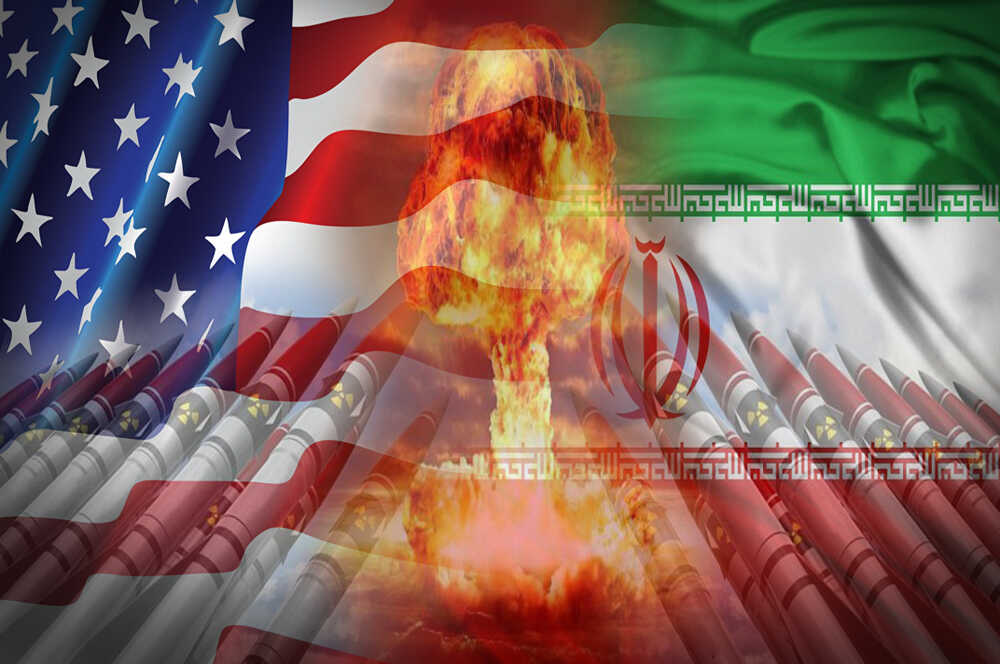
A U.S. war decision that should have required Congress is now being blamed on a familiar Washington cocktail of cable-news pressure, hawkish ideology, and executive power.
Story Snapshot
- President Trump ordered military strikes on Iran months after saying Iran’s nuclear capabilities had been “obliterated,” creating a fresh credibility gap around the stated rationale.
- Reporting and analysis argue media personalities and long-running neoconservative networks helped push the administration toward conflict despite “America First” voter skepticism.
- Iran’s reported response—closing the Strait of Hormuz—has triggered an energy supply shock that experts had warned was a predictable risk of escalation.
- The available coverage is heavy on criticism and light on official, detailed administration justification, limiting a full assessment of the case for war.
Why the Iran strikes are splitting the right—and not just the parties
President Trump’s 2026 strikes on Iran landed like a thunderclap inside a Republican coalition that has long been torn between “America First” restraint and interventionist instincts. The key tension is timing and rationale: several accounts emphasize that the strikes came roughly eight months after Trump publicly claimed Iran’s nuclear capabilities were already “obliterated.” If both claims are taken at face value, voters are left asking what changed—and whether the public case was built for strategy, politics, or momentum.
Critics across multiple outlets describe the action as unprovoked or illegal, while also arguing it delivered exactly the kind of open-ended conflict many conservatives opposed after Iraq and Afghanistan. Those characterizations remain contested without a detailed, public legal rationale from the administration in the provided materials. Still, the political reality is clear: when the executive branch can move quickly, a debate that should happen in daylight—costs, objectives, exit ramps—often happens after the first missiles fly.
The “Fox News cabinet” claim revives an old concern: who is steering foreign policy?
One of the most striking threads in the reporting is the emphasis on media influence—especially the idea that prominent voices on Fox News helped drive escalation. The coverage highlights Sean Hannity’s sustained on-air advocacy for action against Iran, including rhetoric that reportedly intensified in early 2026. If true, this is more than inside-baseball drama. It would suggest a national-security process vulnerable to the incentives of television: urgency, certainty, and ratings-friendly simplicity over measured risk analysis.
For conservatives who value limited government and constitutional checks and balances, that possibility is hard to shrug off. Foreign policy should be set through accountable institutions, not informal channels where access substitutes for scrutiny. At the same time, the research provided does not include a comparable set of sources defending the strikes as strategically necessary or detailing the administration’s internal deliberations. That imbalance matters because it limits what can be verified about the relative weight of media pressure versus intelligence or military assessments.
Strait of Hormuz disruption shows how fast “surgical” can become systemic
Analysts cited in the research point to an immediate consequence: Iran’s reported closure of the Strait of Hormuz, a key chokepoint for global energy shipping. The warning here is practical, not ideological. When energy flows are disrupted, the pain quickly reaches American households through higher fuel costs and broader inflation pressures, especially in goods that move by truck. The sources characterize this outcome as predictable—something experts had cautioned about for years in the context of U.S.-Iran escalation.
This is where domestic politics collides with geopolitics. Many working- and middle-class Americans—right and left—have little patience for wars that produce price spikes at home while the objectives abroad remain hard to explain. If the administration’s intent was deterrence, the near-term reality described in the research looks more like escalation with economic spillover. Absent specific public benchmarks for success, voters are left guessing what “winning” means and how long it will take.
The Iraq-era argument returns: selective history, mission creep, and blowback risk
Several sources draw parallels to the Iraq War era, arguing that the case for conflict tends to rely on selective historical narratives beginning with the 1979 revolution and emphasizing decades of proxy violence. That history is real and ugly, and Iran’s regional behavior has long been hostile to U.S. interests. The question raised by critics is whether that history automatically justifies launching a new war now—and whether escalation creates new incentives for Tehran to expand proxy attacks, repeating a cycle of blowback.
A Pointless War: How Iran Hawks Finally Got Their Way
President Donald Trump and his predecessors spent decades putting the U.S. on a path toward war against Iran.
Matthew Petti— Herb 1946 (@Fossil_Herb) May 2, 2026
From a conservative governance standpoint, the enduring lesson is that unclear objectives and centralized executive power can produce the worst of both worlds: higher risk to U.S. troops and taxpayers, and fewer guardrails against mission creep. The research also notes a basic limitation: the available material doesn’t provide detailed statements from war supporters laying out strategic goals, legal authority, or end-state planning. Until that case is made publicly, skepticism will remain rational—and bipartisan.
Sources:
A Pointless War: How Iran Hawks Finally Got Their Way
How the Fox News cabinet helped jumpstart
Iran war Trump neoconservativism
Feeble Criticism of War With Iran Echoes the Lead-Up to War With Iraq