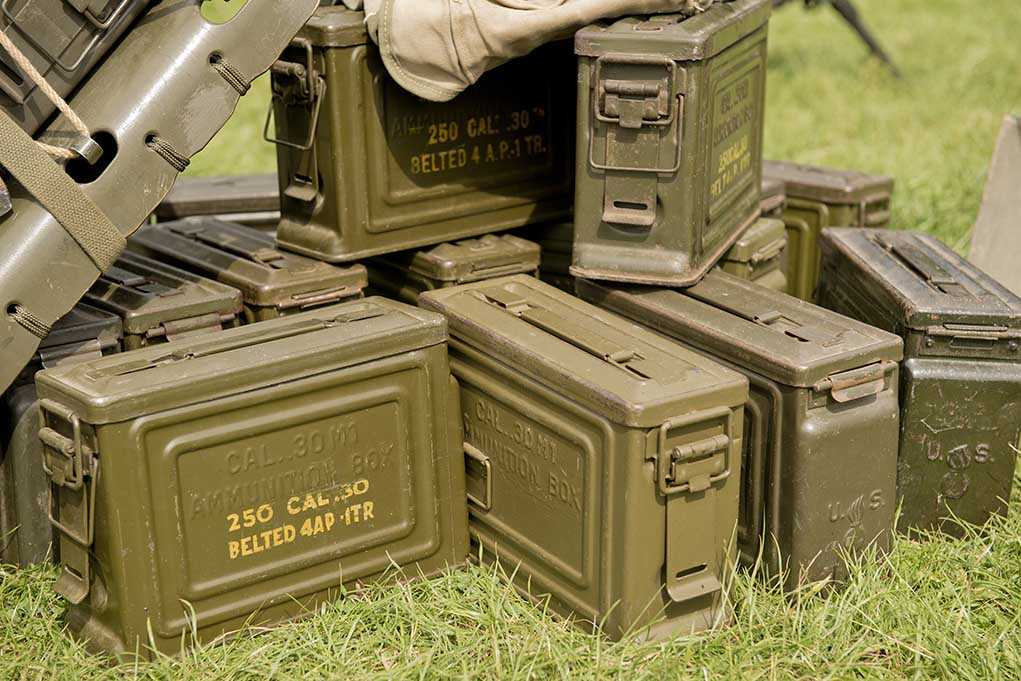
China’s ban on selling retired military equipment is not a narrow retail rule; it is a security measure aimed at controlling leakage, preventing imitation, and preserving the People’s Liberation Army’s institutional image. The state is treating surplus armor, components, ammunition, and related parts as a sensitive category of strategic property, not as ordinary scrap.
Key Points
- Six central Chinese bodies issued a joint notice banning the sale, assembly, and commercial promotion of retired or scrapped military equipment.
- The government says some vendors had been selling sensitive retired equipment online and offline, creating security risks and public disorder.
- The notice also bans using dismantled parts to make imitation military gear that could be mistaken for real equipment.
- Exemptions are narrow: only items on an officially published sales catalog, or other military-approved equipment, may still be sold.
A Security Rule Disguised as Market Regulation
The essential point is that Beijing is not merely policing resale; it is closing off an entire gray market around military surplus. The notice explicitly forbids any unit or individual from selling retired or scrapped military equipment, with limited exceptions for items already placed on a formal public sales catalog or otherwise approved by the military. It also extends beyond direct sales to the production, modification, reassembly, and commercial promotion of imitation equipment built from dismantled parts. That breadth matters. It shows the authorities are trying to block not just transactions, but the whole ecosystem that turns decommissioned hardware into a visible, tradeable commodity.
According to the official framing summarized in Chinese reporting, the rationale is straightforward: some vendors had been openly selling retired military equipment online and offline, including items carrying sensitive information, which created adverse effects and security hazards. The language is classic Chinese security-state vocabulary, linking market activity to leakage, fraud, and reputational damage. The state is also explicit that the policy serves the interests of the nation, the army, and the “positive image” of the people’s military. In other words, this is about control over symbols as much as control over hardware.
What the Notice Actually Bans
The notice is broad enough to cover the full life cycle of surplus military material. It treats retired or scrapped equipment as a defined category that includes hardware, ammunition, devices, components, and materials officially removed from service for disposal. From there, it prohibits direct sales, then goes further by prohibiting production, alteration, assembly, and imitation sales based on dismantled parts. That sequence is telling: Chinese regulators are not only worried about the original object, but about what can be reconstructed from its fragments. A stripped fuselage, a hull section, a scope, a firing mechanism, or even a convincing replica can still carry military value if it can be identified, copied, or misrepresented.
That concern is not theoretical. In military-industrial systems, decommissioned equipment can reveal procurement patterns, manufacturing tolerances, internal layouts, markings, and component relationships that outsiders can study for clues about capabilities and vulnerabilities. The notice’s reference to “military secrets” should be read in that broader sense, not as a claim that every decommissioned item contains a classified document. The security risk is cumulative: enough fragments, photographs, labels, and replicas can expose useful information, while counterfeit “military-style” goods can blur the line between authentic and imitation equipment.
Why Beijing Sees a Threat in Scrapped Hardware
China’s own explanation combines three separate concerns: information leakage, public safety, and image management. The first is the familiar defense-secrecy problem. Even retired equipment can contain design clues, serial identifiers, markings, or functional details that authorities do not want circulating outside controlled channels. The second is public safety. A market for old ordnance, components, or modified equipment carries obvious risks if items are defective, mishandled, or repurposed without military oversight. The third is institutional reputation. The notice says the goal is to protect the army’s good image, which means the state views unauthorized resale itself as a kind of embarrassment risk, especially if the items are treated as curiosities, collectibles, or props rather than controlled defense surplus.
This combination is characteristic of Chinese governance of sensitive sectors. The state does not separate security from prestige the way a laissez-faire regulator might. It treats them as mutually reinforcing. If a military artifact can be bought in public, displayed online, or reworked into a pseudo-military imitation, the party-state sees not just a commercial problem but a narrative one: an erosion of authority, discipline, and managed opacity. That is why the notice reads less like a consumer rule than an internal order aimed at preserving hierarchy around military property.
The Broader Pattern: Security-First Control of Military-Adjacent Commerce
This ban fits a broader Chinese pattern in which anything adjacent to defense, dual-use technology, or military symbolism is regulated through security language and centralized coordination. The notice was issued by six central bodies, including military and civilian regulators, which is significant because it shows the policy is meant to be comprehensive rather than symbolic. The government’s preferred method in these cases is not incremental enforcement through ordinary market rules; it is a multi-agency notice that defines the risk, closes the channel, and leaves little room for interpretation at the local level.
That approach also helps explain the limited public disclosure. The reporting available here does not identify the specific products, vendors, quantities, or incidents that triggered the move. That omission is not unusual in Chinese security policy, where the state often announces the category of risk without revealing the underlying cases in detail. The result is a policy that is clear in its prohibitions but opaque in its evidentiary record. For readers, the practical implication is simple: this is a real enforcement boundary, not a rhetorical warning, but the public is not being shown the full file behind it.
Several Chinese entities, including the Ministry of Public Security and the Central Military Commission, have announced a ban on the sale of retired military equipment to prevent its unauthorized circulation and strengthen oversight of defense assets.#China pic.twitter.com/1VDSSMq9lY
— 生态中国 (@EcologicalChina) July 29, 2026
What It Means for Collectors, Dealers, and the Gray Market
For collectors and dealers, the immediate significance is that the tolerated space for military surplus in China has narrowed sharply. The exception carved out in the notice is important but limited: it preserves sales of items on an officially published dismantled-parts catalog and other equipment explicitly approved by the military. Everything else is presumptively prohibited. That means the old informal logic of “it was decommissioned, therefore it is fair game” no longer applies. In Chinese regulatory terms, retirement from service does not equal release into the civilian marketplace.
For the state, the deeper consequence is control over interpretation. Once retired military material is reclassified as a security-sensitive object rather than scrap, it becomes easier to police online marketplaces, physical dealers, replica makers, and promotional content as part of the same enforcement chain. That is the durable logic of the policy. It is not just about preventing a sale; it is about preventing an object, and the story attached to it, from escaping the state’s custody.
Sources:
zerohedge.com, theepochtimes.com, money.udn.com, finance.sina.com.cn