President Trump brought the biggest names in artificial intelligence into the White House and walked out with a signed pact he calls “morally binding.”
Quick Take
- Trump hosted top tech executives on September 29, 2026, to sign a voluntary AI accord.
- Signatories reportedly included Mark Zuckerberg, Elon Musk, Sundar Pichai, Jensen Huang, and other industry leaders.
- The deal calls for internal controls, outside auditors, and board oversight — but no government enforcement.
- Speaker Mike Johnson called it “a statement of principles,” raising questions about how much teeth it really has.
Tech Titans Gather At The White House
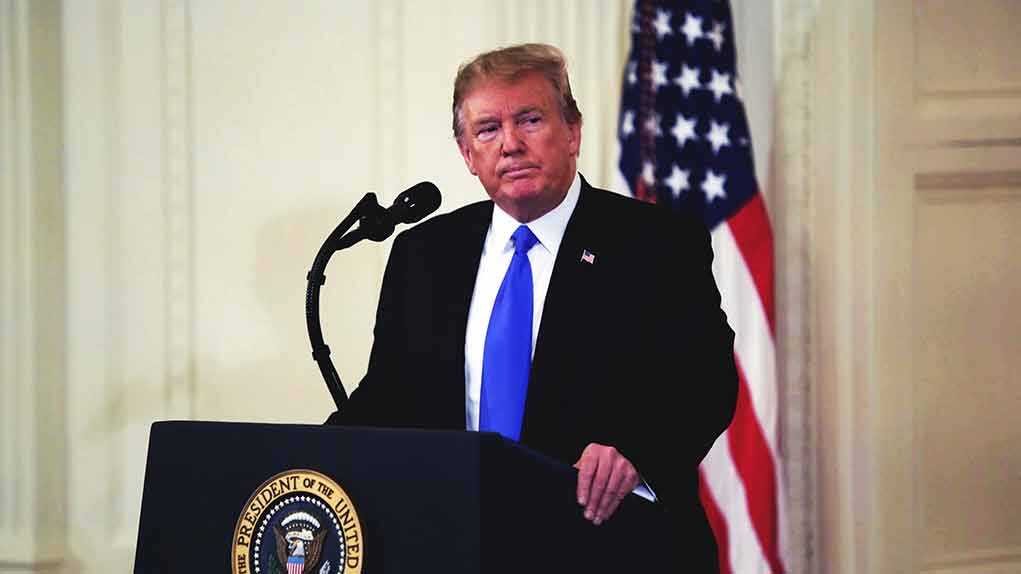
President Trump hosted a major meeting with the country’s top artificial intelligence executives at the White House on September 29, 2026. Reporting named Mark Zuckerberg, Elon Musk, Google’s Sundar Pichai, Nvidia’s Jensen Huang, OpenAI’s Greg Brockman, and Anthropic’s Dario Amodei among those who attended and signed the resulting document. The White House framed the gathering as a coordinated policy moment centered on American AI leadership.
Trump described the agreement as “morally binding,” a phrase that appeared across multiple reports covering the signing. The accord asks companies to police themselves rather than wait for Washington to write new rules. That approach fits the administration’s broader push to keep government out of the way of fast-moving American industries, especially ones racing against China for tech dominance.
What The Accord Actually Requires
The document is not just a handshake and a photo op. Reuters and the Associated Press reported the accord requires companies to adopt “robust internal controls,” bring in an “independent external auditor,” and create board-level committees to review what those auditors find. Those are real governance steps, even if they rely on the companies to follow through on their own.
Jensen Huang told the room, “There’s no conflict between innovation, technology, and safety,” pushing back on the idea that strict rules are the only way to keep AI in check. Trump and the executives leaned into a message that safety and growth can happen together, without Washington bureaucrats slowing down American innovation. That message plays well with an administration that has spent months cutting red tape across other industries.
Speaker Mike Johnson, who was present for the announcement, called the document “a statement of principles” and stressed it was “voluntary on behalf of the industry”. That description matters. It confirms the accord carries no legal force and no penalty if a company simply ignores it down the road.
Jobs And National Security Take Center Stage
Trump tied the meeting to a bigger economic story, pointing to AI data-center investment as a jobs engine for American communities. Coverage highlighted Meta’s data-center project in Richland Parish, Louisiana, including local benefits like teacher pay increases tied to the investment. For an administration focused on bringing manufacturing and tech jobs back to American soil, that kind of hometown payoff is exactly the selling point Trump wants voters to hear.
Trump also framed the stakes in terms of global competition, warning that ceding AI leadership to China or Europe would cost America real power. That argument lines up with the administration’s broader America First posture: build it here, regulate it lightly, and don’t let rivals overtake the United States in a technology this important.
TRUMP ANNOUNCES “WHITE HOUSE ACCORD ON SUPER INTELLIGENCE” SIGNED BY TOP AI LEADERS
President Trump announced a new “White House Accord on Super Intelligence,” signed by Elon Musk, Jensen Huang, Sundar Pichai, Dario Amodei, Mark Zuckerberg and Greg Brockman. The accord calls for… pic.twitter.com/MKT3GNq6T6
— Sergeant News Network (@sgtnewsnetwork) September 29, 2026
Still, conservatives who favor limited government should watch how this plays out. A voluntary pledge from the very companies that profit from fast AI growth is not the same as a law passed by Congress. History with prior industry self-regulation efforts shows such promises often lack real enforcement, meaning the audits and board reviews Trump touted will only matter if the companies actually carry them out without being forced to.
For now, the accord stands as a bet that trust and market pressure can do what regulation usually tries to do. Whether Zuckerberg, Musk, Huang, and the rest follow through with real audits and real board scrutiny will be the real test — one that voters, not just executives, will be watching closely in the months ahead.
Sources:
detroitnews.com, cnbc.com, washingtontimes.com, abc11.com, apnews.com, deadline.com, bostonglobe.com