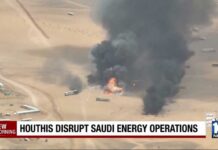

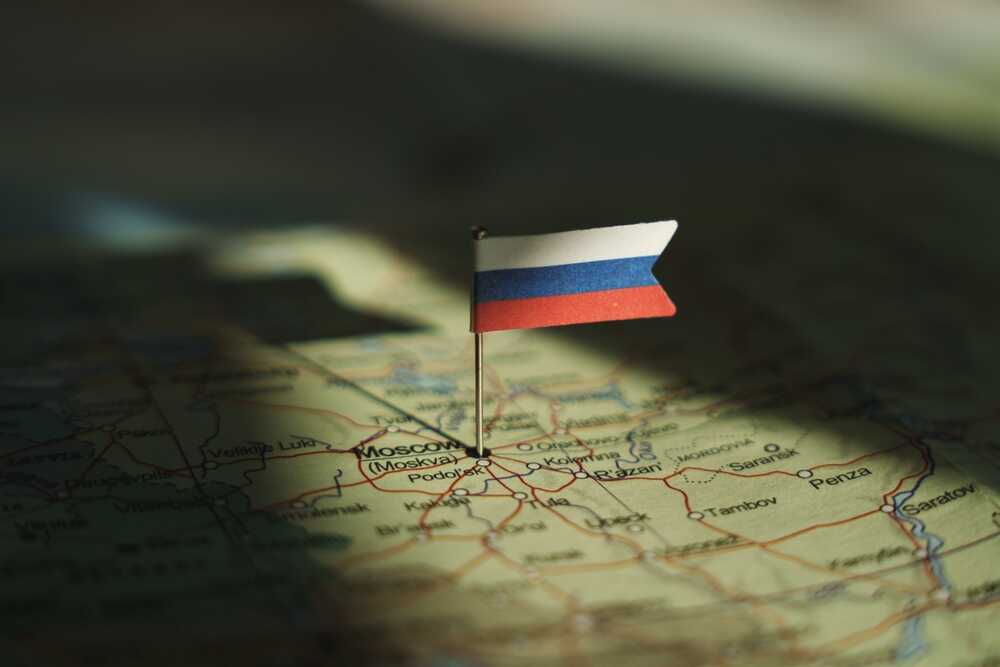
A record-setting drone barrage shattering Moscow’s sense of immunity is rewriting the war in Eastern Europe—and exposing how fragile global energy and security really are.
Story Snapshot
- Russian authorities claim more than 500 Ukrainian drones targeted Moscow and multiple regions in one night, forcing major air-defense responses and airport shutdowns.
- Moscow’s mayor confirmed dozens of drones shot down near the capital and debris falling onto residential and industrial areas, with deaths and injuries reported.
- Conflicting casualty counts and reliance on Kremlin statements highlight how difficult it is to verify facts inside Russia’s tightly controlled information space.
- The Moscow strike fits a wider drone war that now reaches deep into Russian oil and logistics hubs, raising long-term risks for global markets and U.S. security.
Russian Claims: Massive Overnight Drone Barrage Over Moscow
Russian defense officials announced one of the largest drone attacks of the war, saying air defenses intercepted at least 427 Ukrainian drones across several regions, while other reports quoted them claiming more than 550 drones shot down overnight.[1][4] Moscow framed this as a “major Ukrainian drone attack” and presented the operation as a defensive success, emphasizing interception counts rather than confirmed impact sites or damage assessments for the Russian public and international observers.[4]
Additional reporting stated that drones reached areas in and around Moscow, hitting residential buildings and industrial facilities.[1][3][4] Russian sources simultaneously highlighted the sheer scale of the attack and portrayed their systems as largely effective, a narrative that cannot yet be independently checked because no radar logs, debris inventories, or other technical records have been released in the material available.[1][4] For Americans used to transparent investigations, this gap is a reminder of how differently authoritarian states manage war information.
Moscow Mayor Confirms Drones Near Capital, Debris and Civilian Harm
Moscow Mayor Sergei Sobyanin publicly acknowledged that “at least 50 drones were shot down while flying toward the capital,” confirming that the city’s skies were contested and that air defenses were actively engaged.[4] He also reported emergency services responding to multiple locations where falling drone debris was reported, supporting accounts that intercepts occurred close enough to populated areas to threaten ordinary residents rather than only isolated military sites or airfields.[4]
Other reports, drawing on Russian and international sources, described deaths and injuries in the wider Moscow region linked to the strikes.[1] One account stated that at least three people were killed as drones hit residential areas, while another cited at least four killed and twelve injured in various strikes.[1] Those discrepancies show how early wartime reporting often produces shifting numbers until hospital, morgue, and emergency records can be reconciled—records that are not present in the material currently available to outside readers.
Air Travel Disruption and Economic Signals Behind the Spectacle
Coverage of the overnight attack noted that Moscow airports suspended hundreds of flights following the drone waves, though operations later mostly resumed.[1] Other outlets likewise pointed to closures and delays at multiple Moscow-area airports, describing the disruption as significant but without providing underlying civil aviation notices, airport operator logs, or air-traffic-control records in the excerpts we have.[1][5] That means we can see the broad economic and logistical signal, but not yet verify the precise scope or duration of the shutdowns.
Even with partial data, the pattern is clear: long-range drones are being used not only to damage specific targets but to force Russia to spend money on air defense, rattle civilians in the capital, and interfere with transportation.[1][2][3][4][5] Analysts observing the broader conflict note that both sides increasingly use such strikes for psychological pressure and political messaging, creating “news events” that echo globally, even when the hard military impact is narrower than the headlines imply.[1][2][3][4][5]
Who Launched the Drones? Attribution Questions in an Information War
International broadcasts and Russian officials repeatedly described the Moscow assault as a Ukrainian drone operation, with phrases like “Ukraine has launched” or “Ukrainian drones targeted” Moscow and other regions.[1][2][3][4] However, in the excerpts available, that attribution rests on statements and commentary rather than on released forensic evidence such as serial numbers, telemetry traces, or independently verified launch-site data, leaving a gap between what is asserted and what has been publicly proven.[1][2][3][4]
At the same time, the counter-position—skepticism about official Russian claims—also lacks primary technical documentation in the record we have, relying instead on pointing out inconsistencies and the absence of proof.[1][2][3][4][5] For citizens in the United States who value transparency and truth, this is a sobering look at how modern conflicts are fought both with weapons and with narrative, and why America must remain wary of relying on any authoritarian government’s word without independent verification.
Market News: Drone Attack on Moscow Hits Refinery, Oil Supply at Risk
Record drone strike on Moscow targets oil refinery, disrupting airport operations.
– Moscow's oil refinery was directly hit in the attack.
Watch crude oil prices for spike on supply disruption fears.— snipy.in (@snipy_in) May 17, 2026
Sources:
[1] YouTube – Ukraine targets Moscow in ‘one of largest ever’ drone attacks, killing …
[2] YouTube – Ukraine pounds Moscow in blistering drone attack in huge blow for …
[3] YouTube – Ukraine launches one of its biggest-ever drone strikes on Russia
[4] Web – Dozens of Ukrainian drones target Moscow, mayor says, amid …
[5] Web – Kremlin drone attack – Wikipedia