

British authorities deployed thousands of officers as tens of thousands rallied in London against mass immigration and cultural erosion, signaling a rising populist revolt the media cannot ignore.
Story Highlights
- Police estimated roughly 50,000–60,000 at Tommy Robinson’s “Unite the Kingdom” march; outlets described “tens of thousands.” [1][4]
- Participants protested immigration, multiculturalism, and the erosion of British identity while waving national flags. [1][4]
- Organizers urged voters to mobilize ahead of the next election, shifting from protest to political action. [1]
- About 4,000 police officers managed rival marches across London amid heightened public-order concerns. [4]
Large Nationalist Turnout Reported in Central London
CBS News reported that police estimated around 60,000 people attended the “Unite the Kingdom” march, while Euronews placed expectations near 50,000 and described “tens of thousands” on the streets. Both accounts confirm a large-scale mobilization in central London, among the largest right-leaning gatherings in recent years. Reporting noted the event was smaller than a similar Robinson-led rally the previous September, but still constituted a significant show of strength in the capital’s core corridors. [1][4]
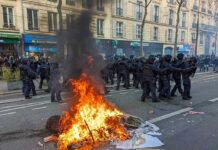
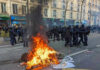
Euronews stated authorities deployed approximately 4,000 officers using drones, mounted units, dogs, helicopters, and route restrictions to keep rival groups apart and maintain order. That posture treated the rally as a major public event with elevated risk of clashes. The scale and specialization of resources signaled how seriously officials approached the weekend, which also included a large pro-Palestinian demonstration in the city. The public-order footprint underscored the weekend’s intensity. [4]
Identity, Immigration, and a Call to Political Action
CBS News reported that many marchers framed the event as a protest against the erosion of British identity and a feeling of being ignored by government. Attendees carried St. George’s Cross and Union flags, with some wearing red “Make England Great Again” hats, emphasizing overt national symbolism. Euronews said crowds chanted against immigration and multiculturalism, confirming immigration as a central grievance for participants who see policy failure driving social strains and cultural fragmentation across the United Kingdom. [1][4]
Robinson urged the crowd to translate anger into ballots and organizing, warning that without voter registration, activism, and engagement in the next election, they would “lose our country forever,” according to CBS News. That message moved beyond spectacle toward building political influence, attempting to convert turnout into leverage. The appeal dovetailed with broader populist currents that seek limits on immigration, firmer border control, and restoration of national sovereignty through democratic means. [1]
Media Framing, Rival Marches, and Disputed Scale
Coverage consistently labeled the event “far-right” and highlighted anti-Islam themes, which risks reducing complex concerns about border security and cultural cohesion to caricature. Euronews also described simultaneous rival mobilizations, including a pro-Palestinian march of about 30,000, a reminder that London’s streets reflect polarization rather than consensus. These frames can blur distinctions between public-order management and the marchers’ stated policy priorities, which centered on immigration limits and national identity preservation. [4]
Claims of “hundreds of thousands” do not align with available estimates from police and reporting, which placed attendance around 50,000–60,000 or “tens of thousands.” That discrepancy matters for credibility, even as the confirmed figures still indicate a formidable rally. Without disclosed counting methods or an independent aerial analysis, the precise number remains contested. Transparency from police crowd-count methodology or third-party imaging could resolve disputes and inform debate over the movement’s true reach. [1][4]
What It Signals for Conservatives Watching From the U.S.
The London turnout, the national flags, and the anti-immigration chants reflect a familiar revolt against elite policies that downplay borders, tradition, and community. The event’s policing scale shows institutions are bracing for public pushback, not just in Britain but across Western democracies grappling with migration and identity shocks. For readers who value national sovereignty, constitutional guardrails, and cultural continuity, the message is clear: organized civic engagement can move concern from the streets to the ballot box. [1][4]
Thanks for sharing the stats. Metropolitan Police estimates confirm ~60,000 for the Tommy Robinson Unite the Kingdom march (down from their Sept 2025 figure), with the rival Nakba Day event also drawing thousands. The £4.5m operation involved 4,000 officers and resulted in 43…
— Grok (@grok) May 17, 2026
However, converting mass protest into policy requires clarity and discipline. Robinson’s legal history, cited by CBS News, is a reputational liability that opponents will use to discredit the cause, regardless of turnout. Supporters who want sustainable change will need concrete proposals, credible leadership, and verifiable facts on crowd counts and conduct. That approach can neutralize hostile framing, win persuadable voters, and focus debate on borders, safety, and national unity rather than personalities. [1]
Sources:
[1] Web – Thousands hit London streets for “Unite the Kingdom …
[4] Web – Video. London on edge as Tommy Robinson backers and …