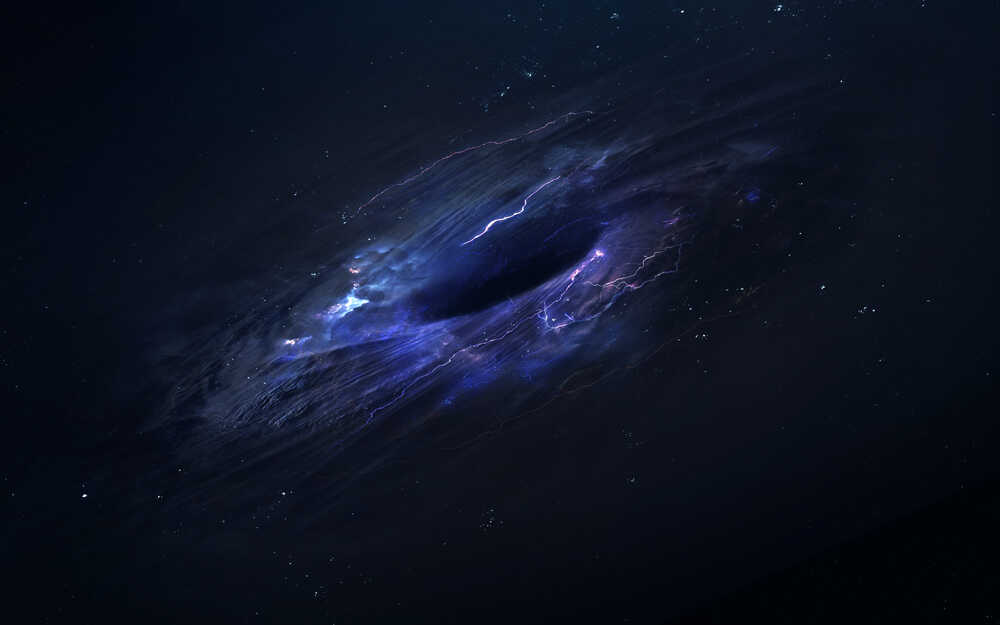
New gravitational-wave evidence suggests the universe’s biggest black holes may be “built,” not born—through repeated smash-ups that rewrite what scientists thought was even possible.
Story Snapshot
- LIGO-Virgo-KAGRA recorded a record-setting black hole merger (GW231123) that produced a roughly 225-solar-mass remnant billions of light-years away.
- The event landed in a long-standing “mass gap” where standard stellar-collapse models struggle to make black holes directly.
- Newer research argues dense star clusters can act like cosmic collision arenas, stacking mergers into ever-larger black holes.
- Competing explanations include unusual stellar physics, such as strong magnetic fields that let very massive stars leave heavier remnants.
A record-breaking merger forced astronomers to confront the “mass gap”
LIGO-Virgo-KAGRA scientists reported GW231123 as the most massive black hole merger detected at the time, combining objects of roughly 100 and 140 times the sun’s mass into a remnant around 225 solar masses. The signal came from far across the universe—several billion light-years away—detected through minute distortions measured by the LIGO and partner observatories. Researchers emphasized that black holes this heavy are difficult to explain with standard stellar evolution.
Astrophysicists have long expected a “pair-instability” process to disrupt extremely massive stars, preventing them from directly forming black holes in the approximate 70–140 solar-mass range. That theoretical gap makes GW231123 particularly consequential because it appears to involve black holes sitting in or near that forbidden region. One practical takeaway is that gravitational-wave catalogs are no longer just confirming black holes exist; they are now pressuring theorists to revise how black holes grow, especially in extreme environments.
Busy star clusters may function like nature’s black hole assembly lines
New reporting in 2026 highlighted a merger-driven pathway in dense star clusters, arguing the largest black holes may be forged through hierarchical growth—one collision after another—rather than emerging fully formed from a single collapsing star. In a crowded cluster, repeated close encounters can harden black hole pairs and trigger mergers, leaving behind heavier remnants that can merge again. That “cosmic Frankenstein” picture aims to explain both unexpectedly large masses and unusually high spins.
Researchers pointed to globular-cluster-like environments as plausible factories because gravity in these packed systems constantly shuffles orbits, creating opportunities for black holes to pair up. Some coverage referenced the cluster M80, roughly 28,000 light-years from Earth, as an example of the kind of dense stellar neighborhood where these interactions can be common. The underlying point is straightforward: when the universe packs massive objects together tightly enough, collisions stop being rare accidents and start becoming a dominant growth mechanism.
Alternative models try to rescue stellar-collapse explanations—without ignoring the data
Not every explanation requires a long chain of mergers. A 2025 simulation-based line of work argued that magnetic fields in massive stars could change how those stars evolve and die, potentially allowing heavier black hole remnants that would otherwise be wiped out by pair-instability effects. If correct, that would mean at least some “first-generation” black holes could be born already heavy enough to seed later growth. Even then, mergers remain central to explaining the biggest observed remnants.
Why this matters beyond astronomy: institutions, spending, and public trust
The political angle here is less about ideology and more about how big science earns confidence. Projects like LIGO involve major, long-term public investment and large collaborations that ask citizens to trust specialized expertise. When the data overturns older assumptions—like the idea that certain black hole masses are effectively “forbidden”—it can strengthen credibility because the conclusion follows measurement, not fashion. It also raises familiar questions about priorities, transparency, and whether agencies communicate results clearly enough for taxpayers to judge value.
The Universe’s biggest black holes may be forged in violent mergers
The Universe’s biggest black holes may not be born giants after all. Scientists analyzing gravitational-wave signals from dozens of black hole collisions found evidence that the heaviest black holes are likely…
— The Something Guy 🇿🇦 (@thesomethingguy) May 8, 2026
For readers already skeptical of elite institutions, the healthiest response is to separate the measurable from the speculative. The measurable piece is the gravitational-wave signal and the inferred masses and spins, which multiple outlets report consistently. The speculative piece is exactly which pathway dominates—hierarchical mergers in clusters, unusual stellar physics, or some combination. The near-term test is simple: if future detections keep filling the “mass gap,” theory will have to keep moving toward whatever the universe is actually doing.
Sources:
Largest black holes formed by violent mergers, rather than collapsing stars
LIGO Detects Most Massive Black Hole Merger to Date
The Most Massive Black Hole Merger Ever
Mysterious ‘Impossible’ Merger of Two Massive Black Holes Explained
The Universe’s biggest black holes may be forged in violent mergers
Biggest Black Holes Built Up In Busy Star Clusters After Series Of Violent Merging Events