

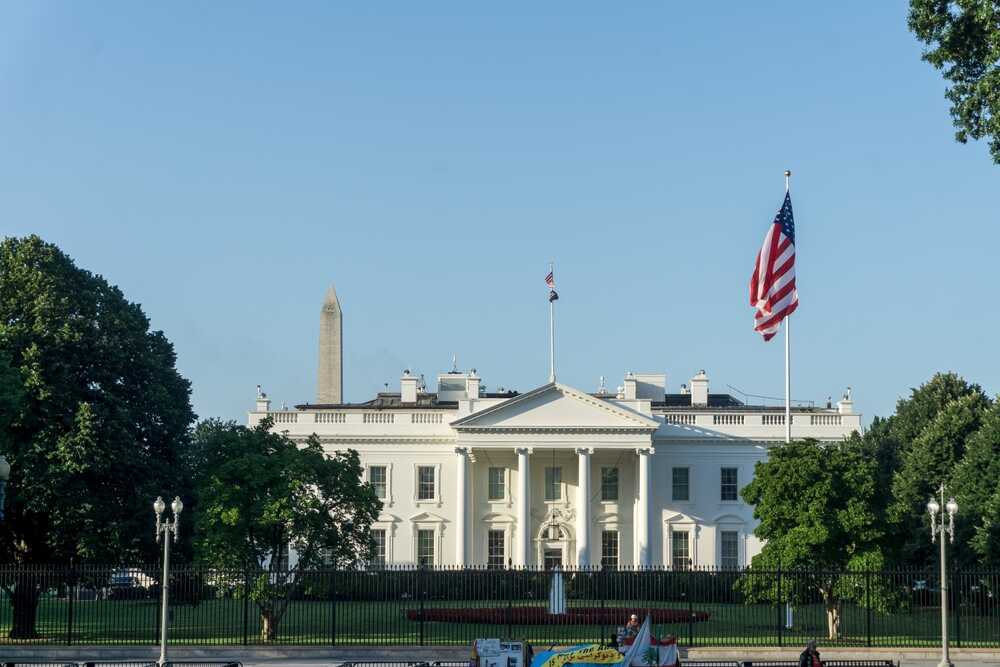
The White House is weighing whether the federal government should get a first look at powerful AI models before the public ever does—a move that could protect national security or quietly expand bureaucratic gatekeeping.
Story Snapshot
- The Trump administration is reportedly discussing an executive order that would create a pre-release review process for frontier AI models.
- The vetting would involve national security and cyber agencies and could include an AI working group with tech executives.
- A White House official described executive-order talk as “speculation,” and Reuters said it could not independently verify the original report.
- Supporters frame the idea as risk management; critics worry it could slow innovation and favor large incumbents that can navigate Washington.
What the White House Is Considering—and What’s Confirmed
Reports say the Trump administration is deliberating an executive order that would establish a government review process for advanced AI models before they are released publicly. The concept centers on “frontier” systems—models that could introduce new risks if misused or if their capabilities outpace safeguards. As described, the approach would not necessarily ban releases outright, but it would give federal agencies early access to evaluate models against safety benchmarks.
The status of the plan remains uncertain. A White House official characterized talk of an executive order as “speculation,” adding that any formal announcement would come directly from President Trump. Reuters also reported it could not immediately verify the New York Times account that first surfaced the deliberations on May 4, 2026. That combination—unnamed sourcing plus an on-the-record pushback—means the story is real enough to watch, but not final policy.
Which Agencies Would Gain Influence Over AI Releases
The reported structure places national security and cyber-focused offices close to the center of review. Coverage indicated agencies such as the National Security Agency, the Office of the National Cyber Director, and the Director of National Intelligence could be involved in evaluating models. From a governance standpoint, that signals the White House is treating advanced AI less like a consumer tech product and more like strategic infrastructure—something that can affect defense, cyber operations, and critical systems.
Another reported component is an AI working group that would bring tech executives together with government officials to examine how oversight procedures should work. That sounds collaborative on paper, but it also raises a familiar concern for voters across the spectrum: when “working groups” set rules, the public often sees outcomes that benefit insiders with access and compliance budgets. If pre-release review becomes a de facto permit system, smaller startups could face longer timelines and higher legal and operational costs.
Why “Pre-Release Vetting” Is a Big Shift From Past AI Oversight
Most prior U.S. approaches have leaned on post-deployment guardrails—rules and norms that apply after systems are already in the market. The reported idea moves the federal role upstream into the development cycle, escalating from advisory frameworks to something closer to a formal gate. That matters politically because it tests two competing imperatives: limiting government interference in private-sector innovation while acknowledging that some technologies can create real national security exposure.
The proposal is also described as drawing inspiration from the United Kingdom’s AI Security Institute model, which evaluates frontier models against safety benchmarks before and after deployment. For Americans already wary of globalized rulemaking, that comparison will land differently depending on trust: some will see a pragmatic template; others will see a path toward an international-style regulatory regime where accountability is diffuse and decisions shift away from elected lawmakers into permanent agencies.
The Flashpoint: Powerful Models That Could Be “Too Dangerous” to Release
One cited catalyst for the discussion was Anthropic’s announcement of a model the company reportedly described as capable of identifying thousands of critical software vulnerabilities and too dangerous for public release. That kind of capability is exactly what makes AI both economically transformative and potentially weaponizable. If systems can accelerate vulnerability discovery, they can help patch America’s digital infrastructure—or, in the wrong hands, speed up attacks on hospitals, utilities, and government networks.
Former Trump administration AI adviser Dean Ball described the policy challenge as a “tricky balance” between avoiding overregulation while keeping pace with the technology. That is the central tension: conservatives generally want limited government and competitive markets, but they also expect the federal government to take core national defense seriously. The hardest part will be designing a process that targets genuine high-risk models without turning routine software iteration into a slow, centralized approval pipeline.
What to Watch Next: Proof, Process, and Practical Limits
Three unresolved questions will determine whether this becomes a narrow security tool or a broad regulatory lever. First is proof: will the White House publicly confirm a draft order, agencies involved, and basic criteria? Second is process: how would iterative development, A/B testing, and rapid model updates work under pre-release checks? Third is scope: would the system apply only to the most capable models or gradually expand to cover more products?
White house considers vetting AI Models before they are released, NYT reports https://t.co/TngauV5QTw https://t.co/TngauV5QTw
— Reuters (@Reuters) May 4, 2026
Politically, the fight lines are predictable even with Republicans controlling Congress. Democrats are likely to push for more federal control and transparency mandates, while many Republicans will emphasize innovation and limiting regulatory drag. But the deeper public mood—left and right—will be suspicion that “safety” can become a catch-all rationale for empowering unelected reviewers. If an order emerges, the credibility of the safeguard will depend on clear boundaries, measurable standards, and oversight that prevents mission creep.
Sources:
White House Considers Vetting AI Models Before They Are Released
White House mulls AI model vetting amid US-China tech tensions
Trump administration considers mandatory pre-release vetting of AI models
White House considers vetting AI models before they are released, NYT reports