

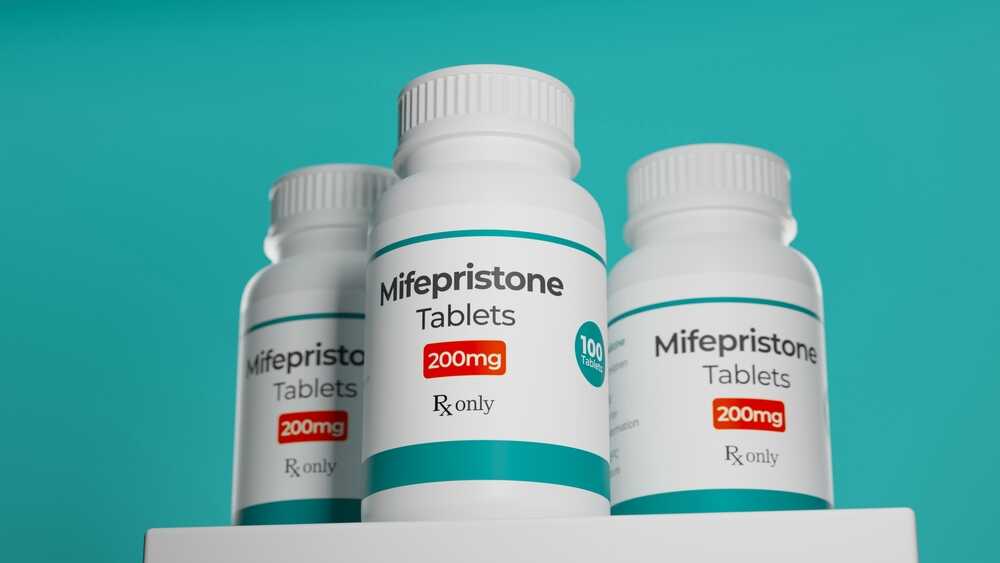
A federal appeals court just reimposed a nationwide ban on mailing abortion pills, potentially setting the stage for a Supreme Court showdown that could fundamentally reshape access to medication abortion in America.
Story Snapshot
- 5th Circuit Court reinstates in-person dispensing requirement for mifepristone nationwide, blocking mail and telehealth distribution
- Temporary ruling affects 63% of U.S. abortions while Louisiana’s lawsuit against FDA proceeds through courts
- Decision reverses 2023 Biden-era FDA deregulation that allowed mail-order abortion pills without in-person visits
- Trump administration conducting safety review but has not repealed mail-order policy, creating legal uncertainty
- Case likely headed to Supreme Court given nationwide scope and conflict over federal agency authority
Court Overrides District Judge to Block Mail Distribution
The U.S. Court of Appeals for the 5th Circuit issued an emergency ruling on May 1, 2026, temporarily reinstating the requirement that mifepristone must be dispensed in person, effectively shutting down mail and telehealth distribution nationwide. The decision overturned a lower court’s April 7 stay that had allowed the FDA’s 2023 policy to remain in effect while the agency conducted a promised safety review. Louisiana Attorney General Liz Murrill sought the emergency injunction, arguing the mail-order policy enables violations of state abortion bans and poses unregulated health risks. The court found Louisiana demonstrated irreparable harm and a high likelihood of success on the merits.
FDA Policy Change Created State Enforcement Challenges
In 2023, the FDA eliminated the in-person dispensing requirement that had governed mifepristone distribution since its 2000 approval under Risk Evaluation and Mitigation Strategies. The change allowed patients to receive the abortion pill through mail-order pharmacies and telehealth consultations, a shift the Biden administration framed as expanding access after the Supreme Court’s 2022 Dobbs decision overturned Roe v. Wade. For states like Louisiana that enacted abortion bans post-Dobbs, the mail-order system created an enforcement nightmare, enabling residents to circumvent state restrictions by obtaining pills across state lines. The Trump administration inherited this policy but promised an FDA safety review without providing a timeline, leaving the legal status in limbo.
Ruling Disrupts Half of U.S. Abortion Procedures
Mifepristone accounts for approximately 63 percent of abortions nationwide, and telehealth requests for medication abortion doubled after the Dobbs decision as clinic access disappeared in 14 states with near-total bans. The 5th Circuit’s temporary block immediately halts this distribution method across all states, not just Louisiana, forcing patients to obtain the drug through in-person pharmacy visits. Reproductive rights advocates warn the ruling disproportionately harms low-income and rural women who relied on telehealth to avoid travel costs and clinic protests. The decision reverts access to pre-2023 conditions while the case proceeds, though the FDA review could eventually make the restrictions permanent if safety concerns are validated.
Constitutional Clash Over Federal Agency Authority Looms
This case differs fundamentally from the Supreme Court’s 2024 decision in Alliance for Hippocratic Medicine v. FDA, which upheld mifepristone’s approval but dismissed the challenge on standing grounds without addressing the mail-order policy. Legal analysts note the 5th Circuit’s finding of irreparable harm signals a strong case on the merits for Louisiana’s argument that the FDA exceeded its authority by eliminating safety requirements Congress established. The nationwide scope of the temporary injunction raises the likelihood of Supreme Court review, particularly as the ruling tests the limits of federal agency deference in an era when the conservative majority has shown skepticism toward administrative overreach. Pro-life groups are urging the Trump administration to abandon defense of the Biden-era rule and align with states enforcing abortion restrictions.
Deep State Regulatory Games Leave Citizens in Crossfire
What’s emerging here is a familiar pattern: unelected federal bureaucrats making sweeping policy changes that affect millions of Americans, only to have courts step in years later to sort out the constitutional mess. The FDA’s 2023 rule change didn’t go through Congress, where elected representatives could debate the merits and trade-offs of mail-order abortion pills versus state sovereignty and safety protocols. Instead, agency officials simply removed restrictions, forcing states to sue and citizens to live with regulatory uncertainty while judges decide who actually has authority. Whether you support abortion access or state restrictions, the process itself demonstrates how the administrative state operates beyond democratic accountability, leaving ordinary people to navigate conflicting rules while political appointees and judges battle over power that arguably belongs with voters and their elected representatives in the first place.
Sources:
5th Circuit Limits Telehealth Provision of Abortion Pill – Center for Reproductive Rights
Appeals Court Temporarily Blocks Policy Permitting Distribution of Abortion Pill by Mail – OSV News
Fifth Circuit Blocks Mailing of Abortion Pill Nationwide – Courthouse News