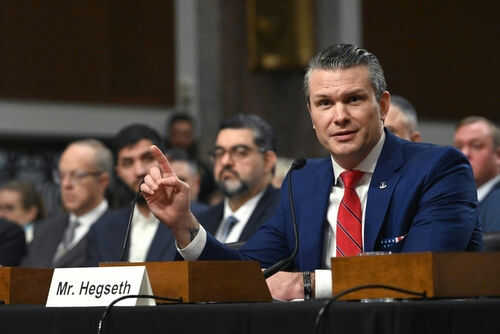
Defense Secretary Pete Hegseth demands $1.5 trillion for the Pentagon amid bipartisan grilling over the Iran war, exposing tensions between wartime needs and fiscal accountability that frustrate taxpayers on both sides of the aisle.
Story Highlights
- Hegseth and Gen. Dan Caine testified May 12 before Capitol Hill committees on the $1.5 trillion FY2027 defense budget and ongoing Iran conflict.
- Hegseth calls the proposal a “historic” negotiation floor to sustain military operations against Iranian threats.
- Bipartisan lawmakers question costs, with Democrats decrying a “blank check” and some Republicans pushing China priorities.
- Iran war strains munitions stockpiles, like 70% JDAM depletion, justifying the massive spending hike from FY2026’s $1.1 trillion baseline.
Hearing Details Emerge from Capitol Hill
On May 12, 2026, Defense Secretary Pete Hegseth and Joint Chiefs Chairman Gen. Dan Caine appeared before Senate and House committees. Lawmakers pressed them on the Trump administration’s $1.5 trillion fiscal year 2027 defense budget proposal. Hegseth framed it as a starting point for talks, essential for wartime demands. The session marked Hegseth’s first major public testimony since his 2025 confirmation. Gen. Caine provided operational details on Iran engagements.
Iran War Drives Budget Surge
The war in Iran escalated after Iranian missile attacks on U.S. bases in late 2025, leading to U.S. airstrikes on nuclear sites and oil infrastructure by February 2026. This conflict depleted key munitions, with Caine reporting 70% exhaustion of JDAM stocks. Hegseth defended the budget as a “non-negotiable floor” for sustainment. The proposal represents a 30% increase over FY2026 levels, citing needs for Iran operations and threats from China and Russia.
Historical precedents include the 2019 Soleimani strike and Ukraine aid hearings. Iran’s proxy attacks prompted U.S. involvement, aligning with Trump’s America First reforms under Hegseth, a former Fox News host and Army veteran confirmed despite experience critiques.
Bipartisan Pushback Highlights Oversight Role
Democratic lawmakers challenged the request as a blank check for endless war, demanding fiscal restraint. Republicans voiced support for strength but raised deficit concerns and urged more focus on China. This rare bipartisan scrutiny underscores Congress’s power over the purse amid GOP control of both chambers. Hegseth and Caine faced questions echoing Hegseth’s past confirmation controversies.
https://t.co/Gv7A907ZnW War Secretary Pete Hegseth and Joint Chiefs Chairman Gen Dan Caine face questions from lawmakers on military funding amid the war with Iran
— KM (@KM5436681152801) May 12, 2026
Impacts Strain Taxpayers and Troops
The $1.5 trillion equates to roughly $12,000 per American family, ballooning the deficit past $3 trillion. Troops face extended deployments, while defense contractors like Lockheed and Raytheon see stock gains of 5-10%. Long-term, it risks entrenching U.S. involvement in Iran for 5-10 years, straining non-defense spending on VA and diplomacy. Public polls show 55% war support, fueling midterm debates.
Experts diverge: Heritage Foundation backs deterrence funding, while CSIS calls it overkill favoring allies over trillions. RAND warns of Iraq-like overstretch. Both conservatives weary of overspending and liberals skeptical of endless wars share frustration with elite-driven decisions over American interests.
Sources:
Watch: Pete Hegseth faces lawmakers’ questions as he vies for $1.5 trillion defense budget