

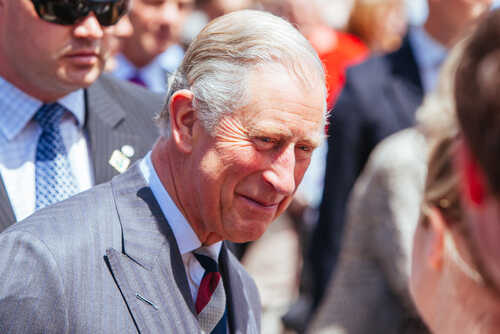
King Charles III embarks on a high-stakes diplomatic mission to salvage the crumbling U.S.-UK alliance as President Trump’s policies continue to strain the historic “Special Relationship” that has anchored Western security for generations.
Story Snapshot
- King Charles III makes first British royal address to Congress in 35 years amid deteriorating U.S.-UK relations under Trump administration
- Four-day state visit coincides with America’s 250th independence anniversary, symbolically addressing centuries of shared history and recent tensions
- Trade disputes, NATO commitment disagreements, and Middle East conflicts have created deepest transatlantic rift in decades
- Trump publicly praises Charles as bridge-builder while administration policies continue undermining traditional alliance structure
Royal Diplomacy Tackles Transatlantic Crisis
King Charles III arrived in Washington on Monday for a four-day state visit designed to repair severely damaged U.S.-British relations during Trump’s second term. The monarch’s itinerary includes a historic address to Congress on Tuesday, the first by a British royal since Queen Elizabeth II spoke in 1991, alongside a private meeting with President Trump and a state dinner. Buckingham Palace officials describe the visit as a “defining moment” for Charles’s reign, acknowledging the significant diplomatic challenges posed by ongoing trade disputes, disagreements over NATO commitments, and tensions surrounding recent U.S.-Israel-Iran conflicts.
Trump-Era Strains Test Historic Partnership
The U.S.-UK “Special Relationship” faces unprecedented pressure as Trump’s America First agenda clashes with traditional alliance priorities. Trade imbalances and Trump’s repeated criticism of NATO allies’ Afghanistan commitments have created friction reminiscent of his first term, compounded by recent Middle East developments requiring what British officials call “thoughtful and balanced” diplomacy. Many Americans across the political spectrum recognize a troubling pattern: elected officials prioritizing political survival over substantive problem-solving that affects ordinary citizens. This dynamic extends to international relations, where bureaucratic inertia and entrenched interests often prevent meaningful reforms to outdated alliance structures that fail to serve contemporary American interests.
Congressional Address Highlights Symbolic Reset
Charles’s Tuesday address to Congress represents more than ceremonial pageantry in an era when many Americans question whether government institutions serve the people or perpetuate elite interests. The speech focusing on “unity, shared values, and historical alliances” occurs during America’s semiquincentennial celebration, 250 years after colonists declared independence from British rule. Buckingham Palace and Downing Street coordinated messaging to emphasize renewed partnership while navigating political sensitivities. British officials express “cautious confidence” about potential outcomes, though skeptics note that symbolic gestures rarely translate into substantive policy shifts addressing core disagreements over trade, defense spending, and global security priorities that impact American workers and taxpayers.
Beyond Washington: Climate and Social Cohesion
The royal visit extends beyond Washington to New York and Virginia, where Charles will engage indigenous communities on climate change and social cohesion issues. These stops coincide with reflections on the upcoming 25th anniversary of the September 11 attacks, evoking memories of Queen Elizabeth’s solidarity during that crisis. Trump publicly praised Charles as a “man of courage and character” capable of “bridging divisions,” suggesting openness to diplomatic progress. However, the fundamental tensions between Trump’s nationalist policies and traditional globalist alliance frameworks remain unresolved, leaving many Americans questioning whether ceremonial diplomacy addresses their real concerns about jobs, security, and accountability from leaders more interested in maintaining power than delivering results.
Uncertain Outcomes Amid Deeper Questions
Whether Charles’s visit produces meaningful change beyond photo opportunities remains uncertain as conflicting interests persist between American sovereignty advocates and institutional defenders of post-World War II alliance structures. The Wall Street Journal characterized the effort as a “high-wire diplomatic act” reflecting the complexity of reconciling Trump-era disruptions with establishment expectations. Americans on both left and right increasingly share frustration with government failures to prioritize citizens’ wellbeing over bureaucratic self-preservation and elite networking. This royal visit exemplifies that tension: lavish state dinners and congressional ceremonies proceed while fundamental questions about fair trade, equitable burden-sharing, and genuine accountability remain unaddressed, reinforcing perceptions that the system serves those inside the palace gates rather than working families struggling to achieve the American Dream.
Sources:
King Charles Hopes to Salvage U.K. Relations With Trump – Political Wire
Can King Charles III Heal the Growing U.S.-British Rupture – Streamline Feed