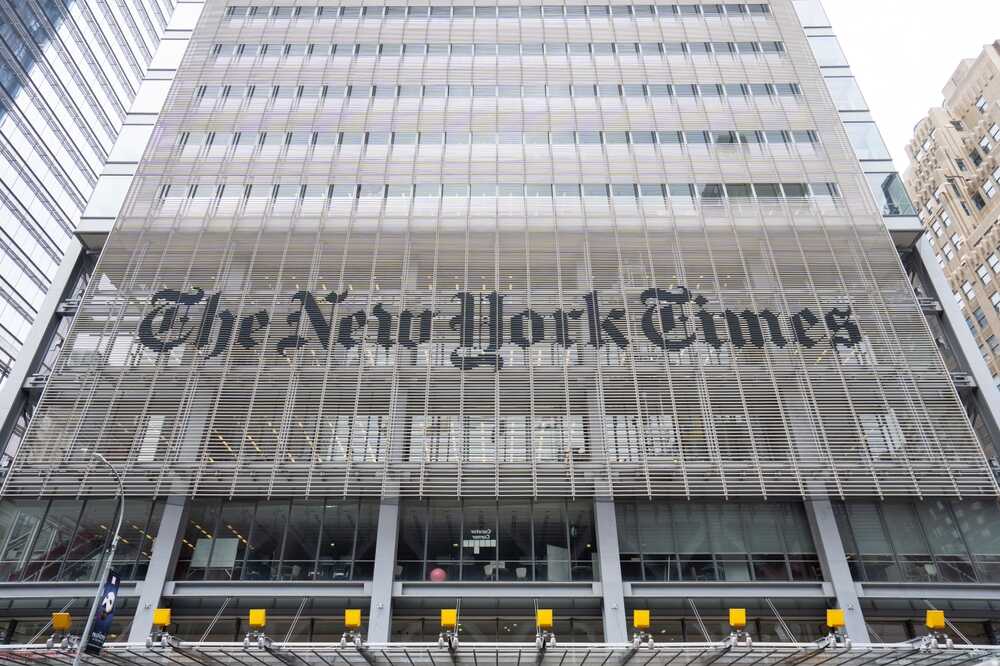
A major media brand is facing backlash after a podcast discussion that critics say flirted with morally justifying shoplifting—and even excusing violence against a health-care executive.
Quick Take
- A New York Times opinion podcast episode sparked outrage for discussing “microlooting” as morally tolerable when aimed at corporations.
- The same episode drew scrutiny for commentary around the 2024 murder of UnitedHealthcare executive Brian Thompson.
- Columnist Jonathan Turley and other critics argue the framing reflects a broader slide into moral relativism in elite institutions.
- The controversy highlights a trust gap: many Americans believe powerful institutions apply one set of standards to the public and another to themselves.
What the episode said—and why it detonated
Late in April 2026, a New York Times audio segment under “The Opinions” banner ignited a New York City backlash after discussing “microlooting,” described as small-scale shoplifting, in a way that sounded sympathetic to the idea that stealing from corporations is not a serious moral wrong. The episode also raised alarms by revisiting the 2024 killing of UnitedHealthcare executive Brian Thompson, a father of two, in a broader debate about inequality and accountability.
Critics focused on specific remarks attributed to participants. Writer Jia Tolentino was quoted saying she did not view stealing from a big-box store as “significant as a moral wrong,” and that she “didn’t feel bad about it at all” partly because the target was a corporation. Host Nadja Spiegelman’s line—“It is so hard to live ethically in an unethical society”—became a lightning rod because it was read as shifting responsibility away from the individual and onto the system.
The moral relativism dispute, in plain English
Jonathan Turley’s critique centered on the claim that the podcast reflected “moral relativism,” treating right and wrong as flexible depending on the target’s wealth or status. His argument, as summarized in coverage and republications, is that this framing can dehumanize people who represent institutions—executives, managers, owners—until harm against them feels “understandable.” Turley also linked the rhetoric to an anger-driven political culture he has written about, where outrage crowds out civic restraint.
How the debate borrowed from Marxist ideas
Another reason this episode drew intense attention is the ideological language reportedly used to interpret both theft and violence. Commentary in the controversy referenced Friedrich Engels’ concept of “social murder,” a framework arguing that capitalist systems cause death and suffering through deprivation. Influencer Hasan Piker was described as using that lens to portray Thompson’s murder as “perfectly understandable.” The available reporting does not include full transcript context, which limits how precisely outside readers can judge tone and intent.
A perceived double standard inside legacy media
The political sting for many moderates and conservatives is not only the content, but the contrast with the Times’ past editorial posture. Critics pointed to 2020, when the paper condemned and then effectively barred a U.S. senator’s op-ed supporting military intervention during unrest tied to the George Floyd protests, and the controversy reportedly led to the ouster of its opinion editor. In today’s argument, opponents say the paper enforced strict boundaries on one kind of speech but now platforms arguments that appear to soften the moral stigma around crime.
Why this matters beyond one podcast episode
Retail theft is not an abstract debate for workers, neighborhoods, and small businesses. Hoodline’s reporting described the episode setting off a “citywide firestorm” in New York, with critics saying it normalized theft and minimized public safety concerns. For Americans already convinced that elites live under different rules, this episode lands as cultural confirmation: the same institutions that preach “accountability” can appear strangely forgiving when the target is a faceless corporation—or when the speaker shares the right politics.
The Moral Malaise: The New York Times Makes The Case For "Microlooting" To Murder https://t.co/QXpJjQDEDl
— zerohedge (@zerohedge) April 28, 2026
The Wall Street Journal’s editorial response, as relayed by Deseret News, framed the episode as an attempt to legitimize theft and excuse murder—language that underscores how sharply divided the public is about moral boundaries. The larger political takeaway is not that disagreement about inequality is illegitimate; it’s that collapsing personal responsibility into a grievance narrative can corrode civic order. Without clear, consistent norms—don’t steal, don’t celebrate violence—trust deteriorates, and government and media look even more detached from everyday people.
Sources:
The Monsters Among Us: The New York Times Makes That Case For “Microlooting” To Murder
Moral Malaise: New York Times Makes Case For “Microlooting” To Murder
NYT Podcast’s “Microlooting” Talk Triggers NYC Firestorm
New York Times’ moral case for theft? Hasan Piker?