A Sacramento man allegedly tried to walk onto a commercial flight with a working bomb in his carry-on, raising fresh questions about how many threats are still slipping through America’s airports.
Story Snapshot
- A 49-year-old Sacramento man is charged with bringing a viable improvised explosive device into Sacramento International Airport.
- Transportation Security Administration (TSA) screeners reportedly found a bomb, knife, blades, zip ties, butane torch lighter, aerosol can, and five cell phones in his carry-on bag.
- Federal investigators say the device was “viable and energetic” and could have damaged an aircraft window at altitude.
- The case highlights persistent homeland-security vulnerabilities while the justice system must still honor the presumption of innocence.
Federal Complaint: What Prosecutors Say Happened at the Checkpoint
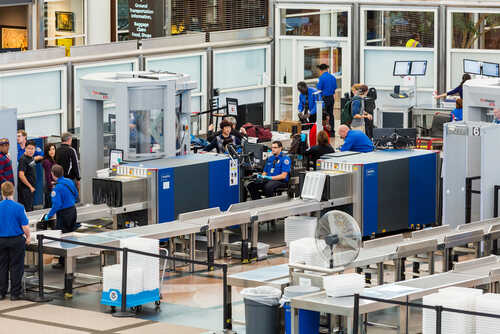
Federal prosecutors say 49-year-old Kimani Osayande Jones, also known as Kimani Osayande Jackson, showed up at Sacramento International Airport on the night of May 30 attempting to board an American Airlines flight to Charlotte, North Carolina.[3][5] According to the criminal complaint, Transportation Security Administration officers screening his carry-on bag around 9 p.m. found what they believed to be a homemade explosive device, along with other alarming items.[3][2][5] Jones was arrested on the spot and later booked into the Sacramento County Jail.[2]
The United States Attorney’s Office for the Eastern District of California has charged Jones with unlawfully possessing explosive material in an airport, a federal crime that carries a maximum of five years in prison and a $250,000 fine if he is convicted.[3][5] The government’s filing describes the device as an “M-type” improvised explosive, meaning a small but powerful charge using flash powder and a fuse rather than consumer-grade fireworks.[3] Prosecutors emphasize that the charge is about bringing explosive material into the secure area of an airport, not just simple possession.[3]
The Alleged Bomb, the Phones, and the “Very Ominous” Details
According to the complaint and media summaries, TSA officers and bomb technicians found more than a single suspicious object in Jones’s backpack.[2] Reports state that agents discovered a knife, other bladed weapons, zip ties, a butane torch lighter, an aerosol can, and five cell phones, some with tape covering the front cameras.[1][2] A local television report quoting the United States Attorney’s Office said officers located a torch-style lighter and a flash-powder explosive in the carry-on bag.[1]
The Los Angeles Times reports that the improvised device was a brown cylinder roughly 2.5 inches long with a one‑inch green fuse, later tested by bomb technicians.[5] Investigators from the Federal Bureau of Investigation (FBI) and the Sacramento County Sheriff’s Office removed the device, rendered it safe, and sent the fuse and powder for laboratory analysis.[2][5] According to the complaint, those components tested “viable and energetic,” meaning they could in fact detonate rather than being inert or a novelty.[5] An FBI bomb technician concluded that, if detonated above 10,000 feet, the device had the potential to damage an aircraft window and possibly cause a loss of cabin pressure.[2][5]
Defense Posture, Presumption of Innocence, and Gaps in the Public Record
Public reporting indicates that, when confronted, Jones told officers he did not know the weapons and explosive were in his bag and that he would be “fine discarding them.”[2] After that brief statement, he reportedly invoked his Miranda rights and declined further interviews with the Sacramento County Sheriff’s Office or the FBI.[2] So far, there is no publicly available defense filing that directly challenges the government’s description of the device, its functionality, or why it was in his luggage.
The materials currently available to the public, including the United States Attorney’s press release and local news coverage, overwhelmingly reflect law enforcement and prosecutor narratives.[1][2][3] There is no defense expert report in the record disputing the “viable and energetic” finding or questioning the chain of custody for the seized items. Legal analysts note that in federal explosive cases, early coverage usually centers on the criminal complaint and press conference, while any defense investigation into alternative explanations, forensic weaknesses, or context for the suspicious items often happens quietly and later in the process.[5]
Airport Security, Government Priorities, and Conservative Concerns
This case highlights a recurring pattern that many conservative voters find troubling: federal agencies aggressively flex their power in some areas while struggling to stop obvious, real-world threats. Here, front-line Transportation Security Administration officers appear to have done their job by catching a dangerous device before it got on the plane, but they did so inside the same broader system that often seems more focused on hassling law‑abiding travelers than stopping determined bad actors.[1][2] The public will watch closely to see whether prosecutors pursue this case with the same intensity they sometimes reserve for speech-related or political cases.
For Americans who care about law and order, secure borders, and a strong but accountable security state, two principles can be true at once. First, if the government’s allegations hold up in court, bringing a working explosive into an airport is a serious crime that must be punished to protect innocent passengers and crew.[3][5] Second, the Constitution’s due‑process guarantees mean Jones is presumed innocent until proven guilty, and any conviction must rest on solid forensic evidence, not just frightening headlines or bureaucratic fear‑mongering.[5]
Sources:
[1] Web – Man nabbed with bomb in California airport
[2] Web – Sacramento man facing explosives charge after SMF arrest
[3] Web – Sacramento man found with explosive during airport security check …
[5] YouTube – Sacramento man charged with bringing explosive to …