A Democrat‑leaning appeals court has stopped President Trump’s mail‑ballot integrity order in 23 states just months before the midterms, keeping loose voting rules in place where they are most vulnerable.
Story Snapshot
- A federal appeals court refused to lift a block on Trump’s mail‑in voting order for 23 Democratic‑led states, calling key parts unconstitutional.
- The order would have used federal citizenship lists and Postal Service controls to tighten who receives mail ballots and improve ballot tracking.
- Democratic officials and voting‑rights groups argue Trump’s plan is “illegal interference,” while conservatives see courts shielding shaky mail‑ballot practices.
- A separate D.C. appeals court gave the Postal Service a temporary green light to keep developing Trump‑backed ballot rules in other states.
Appeals court blocks Trump mail‑ballot order in 23 states
The First United States Circuit Court of Appeals in Boston has refused the Trump administration’s request to enforce key parts of President Trump’s executive order on mail‑in voting in 23 Democratic‑led states ahead of the 2026 midterms. The court left in place a June injunction from U.S. District Judge Indira Talwani, who found major parts of the order unconstitutional and beyond the president’s authority. The decision means those states will head into high‑stakes elections with current mail‑ballot rules intact.
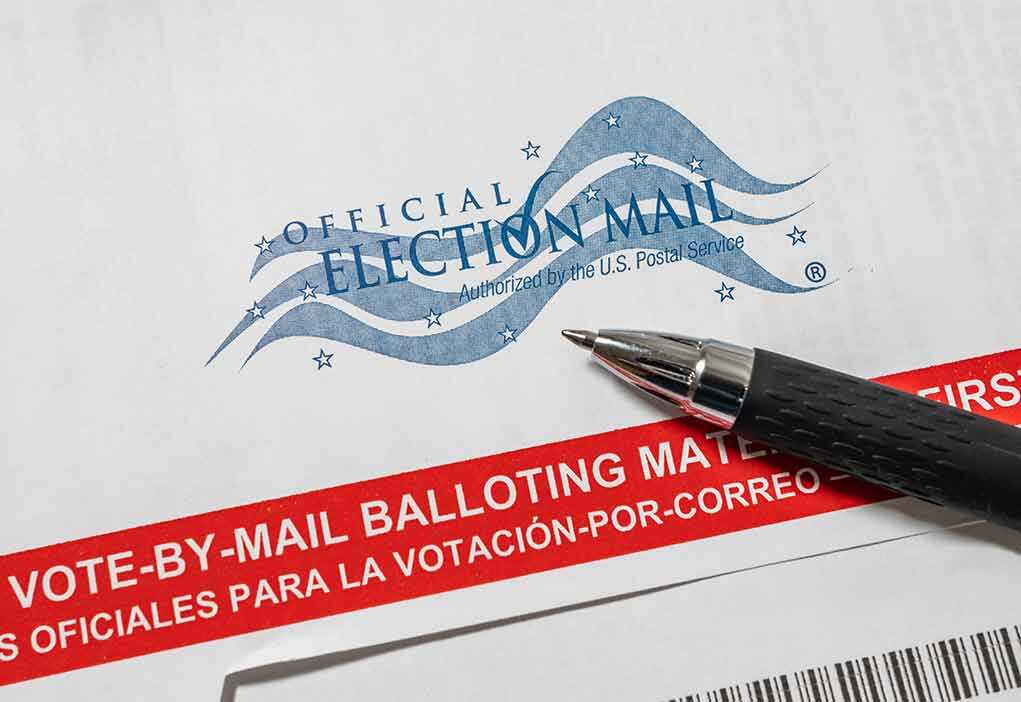
President Trump’s order, issued in March, was designed to tighten mail‑in voting by building a federal list of eligible voters and directing the Department of Homeland Security to compile confirmed citizenship data for each state. The order also leaned on the United States Postal Service to control which voters could receive mail ballots and to set nationwide standards for mail‑ballot handling. Supporters saw this as a way to protect election integrity after years of ballot chaos and mistrust. Opponents called it a federal “power grab” over state‑run elections.
Judge says Trump overstepped while other courts signal support
Judge Talwani, an appointee of former President Barack Obama, ruled that the Constitution gives states and Congress the power to run elections, not the president, and declared core parts of the order “legally void” for violating separation of powers. She said Trump could not force the Department of Homeland Security to create voter eligibility lists or have the Postal Service impose binding mail‑voting rules on states. Her decision echoed claims from Democratic‑led states that the order was unlawful interference with local election officials.
At the same time, not every court has moved against Trump’s effort. Earlier, a federal judge in Washington, D.C., agreed with the administration that one Democratic lawsuit was premature because agencies had not yet fully implemented the order. More recently, a D.C. Circuit appeals panel paused a separate ruling that had blocked Postal Service ballot procedures tied to Trump’s directive, giving the agency a temporary green light to keep developing its proposed rule while the case continues. These mixed rulings show some judges accept the need to at least consider tighter mail‑ballot controls.
Midterm stakes: state control vs. mail‑ballot security
The Boston appeals court stressed that Trump’s order would lead to “unprecedented” federal involvement in how states run elections and warned that sudden changes before the midterms could cause confusion and disenfranchise eligible voters. Democratic‑led states like California, Massachusetts, Nevada, and Washington argued that the order would let federal officials decide who can vote by mail and threaten criminal charges against local election workers who refuse to rely on incomplete citizenship lists. Voting‑rights groups praised the ruling as a strong defense of broad mail‑ballot access.
Federal appeals court rejects Trump bid to enforce mail ballot order ahead of midterm elections
California, Massachusetts, Nevada and Washington state led the lawsuit challenging the executive orderA federal appeals court on Saturday refused to let the Trump administration…
— News News News (@NewsNew97351204) July 26, 2026
For conservatives, the fight highlights a deeper problem: courts and blue‑state officials are quick to protect expansive mail‑in voting rules but slow to accept reasonable safeguards. Years after chaotic elections and close races decided by late‑arriving mail ballots, President Trump is pushing for clear standards, better voter verification, and stronger tracking so every legal vote counts and illegal ballots do not. Yet repeated court losses in Democratic‑leaning circuits keep federal tools for ballot security off the table in the very states where trust is already weakest.
Sources:
nypost.com, theguardian.com, abcnews.com, finance.yahoo.com, thehill.com, reuters.com, facebook.com