

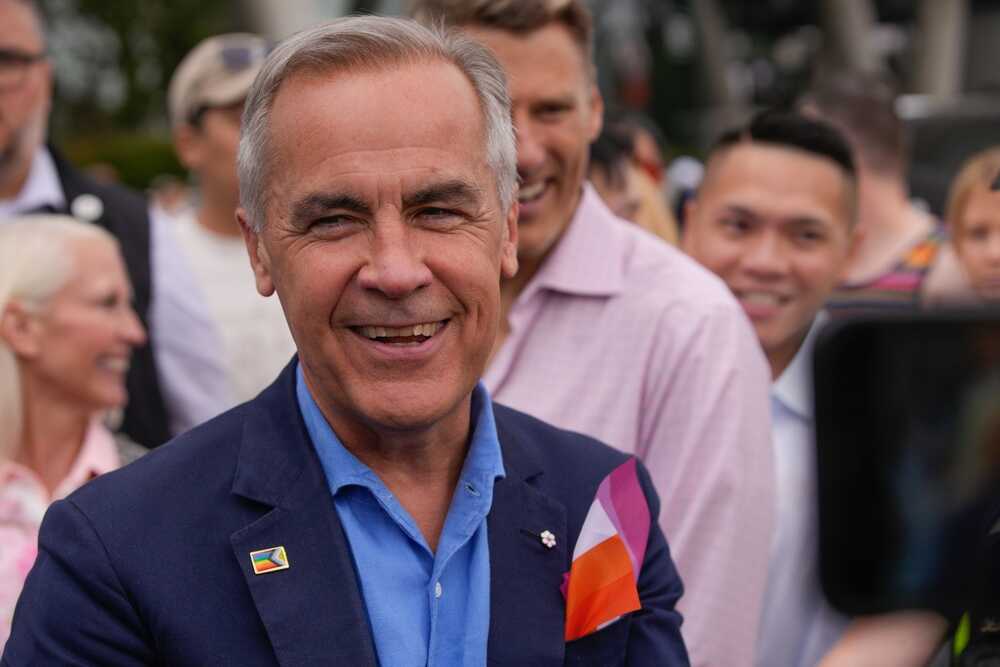
Canada’s new prime minister is telling voters the “old relationship” with the United States is over—while a 25% U.S. tariff wall is already up.
Quick Take
- Prime Minister Mark Carney has escalated public criticism of President Donald Trump as U.S. tariffs on Canada take effect.
- Carney argues Canada’s heavy economic reliance on the U.S. is a “weakness” and says future talks depend on Washington ending threats.
- The dispute lands as the USMCA review approaches in July 2026, raising the stakes for cross-border trade and supply chains.
- Critics point to Canada’s long-running defense-spending shortfalls and warn anti-U.S. rhetoric could backfire economically.
Tariffs hit first, then the rhetoric hardens
President Trump’s 25% blanket tariffs on Canada took effect April 2, tied to U.S. complaints about border security and subsidy disputes, according to reporting and public remarks captured across multiple outlets. Prime Minister Mark Carney, sworn in earlier in April after a special election win, responded by framing Trump’s pressure campaign as “disrespectful” and by signaling he will not resume trade discussions while threats remain on the table.
Carney’s posture matters because Canada’s economy is deeply intertwined with the U.S. market. Reporting cited in the research indicates roughly three-quarters of Canadian exports go to the United States, meaning tariffs can ripple quickly from factories and farms into consumer prices. That reality creates a political squeeze: Canadian leaders feel compelled to project toughness, but the immediate costs of disrupted trade tend to land on ordinary households first.
Carney’s core message: dependence is a national vulnerability
Carney’s comments from Davos in January through speeches in London and his victory address in April build a consistent theme: Canada should treat its reliance on the U.S. as a strategic weakness and diversify away from it. In April 19 remarks, he said Canada does not need another country to “validate” its sovereignty and argued trade talks should restart only after threats stop. The message plays as a nationalist reset.
From a conservative American perspective, the clash highlights a basic reality of international politics: trade dependence can translate into leverage. Trump’s approach—tariffs tied to border security and broader disputes—fits an America First style of using economic pressure to force negotiation. Carney’s response frames that leverage as coercion. Both are speaking to domestic audiences, but the economic math remains stubborn: tariffs function like a tax on cross-border commerce.
Defense and alliance politics complicate Canada’s stance
The rhetoric also lands in the middle of long-running NATO tension over burden-sharing. Canada has remained below the alliance’s 2% of GDP defense-spending target for decades, and Carney has reportedly pledged to reach that threshold by 2030. U.S. commentary highlighted in the research argues it is politically risky for Ottawa to take a sharp tone toward Washington while benefiting from the broader U.S.-led defense umbrella that protects North America.
That debate is not just about pride; it shapes negotiating credibility. When allies appear unwilling to fund their own defense at agreed levels, U.S. policymakers often read that as a willingness to free-ride. In that context, Carney’s push to redefine the U.S.-Canada relationship collides with practical questions: how Canada secures its borders, protects Arctic interests, and sustains supply chains without the same scale of military and economic power.
USMCA review clock is ticking, and both sides face political pressure
The next inflection point is the scheduled USMCA review in July 2026, a deadline that could intensify brinkmanship. Carney faces internal pressure from Canadian conservatives and business voices to secure a workable deal, while Trump’s coalition expects follow-through on border and subsidy demands. Kevin O’Leary, cited in the research, criticized Carney’s “crazy, anti-US rhetoric” and warned that tariff escalation could invite painful reciprocity.
How much could that backfire?https://t.co/97kb6Y5Lq2
Canada's Prime Minister Doubles Down On Militant Anti-US Rhetoric
— Blair T. Longley (@blair_t_longley) April 21, 2026
For Americans watching from the outside, the key question is whether leaders can move from speeches to measurable outcomes: clearer border enforcement, transparent trade rules, and predictable energy and industrial policy. The research does not include detailed tariff carve-outs or sector-by-sector impacts, so the clearest takeaway is directional: public positions are hardening as formal trade deadlines approach, increasing the odds of higher prices and deeper mistrust before any breakthrough.
Sources:
Canada’s prime minister says economic ties with U.S. are a weakness that must be corrected
Morning Glory: Canada small power biting the hand that protects