
Washington is racing to contain Ebola exposure abroad before it turns into another border failure.
Quick Take
- The Centers for Disease Control and Prevention says it is using targeted travel and monitoring measures to keep Ebola from entering the United States.[3]
- Reuters reports the Trump administration is expected to staff a potential quarantine facility in Kenya for Americans exposed to Ebola.[1][4]
- The proposed site is still pending approval from the Kenyan government, so the plan is not yet a completed operation.[1][4]
- The CDC says the immediate risk to the general United States public is low, even as it keeps screening and containment steps in place.[3]
CDC Puts Containment Ahead of Complacency
The Centers for Disease Control and Prevention says it is taking “targeted public health measures” to reduce the risk of Ebola caused by the Bundibugyo virus entering the United States.[3] The agency says those steps include screening travelers from affected areas, supporting state and local health departments, strengthening port-of-entry protections, and continuing personnel deployments in outbreak regions.[3] That is a cautious posture, but it also underscores how quickly a foreign outbreak can become a domestic concern.
The CDC also says its actions are based on current epidemiological evidence and ongoing risk assessment.[3] At the same time, the agency says the immediate risk to the general United States public is low.[3] That combination matters because it shows the government is trying to thread a narrow line: act early enough to stop spread, but avoid creating unnecessary panic. For readers tired of federal overreaction, the low-risk language will raise a fair question about how much extraordinary intervention is truly needed.
Reuters Report Points to Kenya Planning
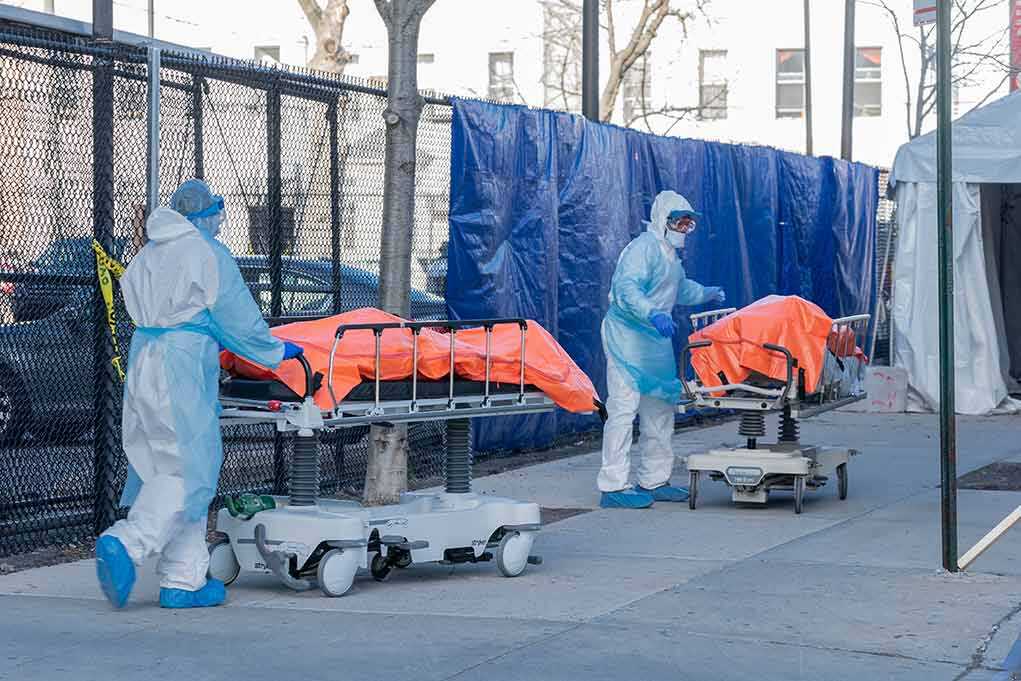
Reuters reports that the Trump administration was expected to deploy United States public health officers to Kenya to staff a potential quarantine facility there amid the outbreak in the Democratic Republic of Congo.[1][4] According to the report, the facility would be used for Americans who had been exposed to Ebola or were at high risk of testing positive, including those who later test positive.[1][4] The reporting indicates the administration is preparing for real operational use, not merely floating a political talking point.
The same reporting says the facility was still pending approval from the Kenyan government.[1][4] That detail is important because it means the plan has not yet crossed the line from preparation to implementation. It also leaves unanswered questions about jurisdiction, medical authority, and the exact rules that would govern American personnel operating on Kenyan soil. With those details still missing, the public is being asked to trust a process that has not yet been fully disclosed.[1][4]
Sovereignty, Transparency, and Public Trust
The strongest criticism of the plan is not medical, but political and legal. The available reporting relies on unnamed people familiar with the matter, not on a released agreement or public framework setting out the terms of the facility.[1][4] That leaves room for doubts about whether Kenya has formally approved the idea, what conditions it may impose, and whether the United States has a clear legal basis for any extraterritorial quarantine role. For a policy this sensitive, secrecy invites suspicion.
#US to set up #quarantine facility in #Kenya for #Americans exposed to #Ebola . . . #Bundibugyo #BDBV #outbreak . . . https://t.co/qiOyjudlMb
— Resilience and Health Informatics (@rahinformatics) May 27, 2026
Public-health quarantine can be justified when the threat is serious, but it remains a coercive tool that limits liberty before symptoms appear.[2] A 2020 review of Ebola quarantine argued that such measures can become ineffective, disproportionate, and mistrust-generating when they are imposed without strong support or consultation.[2] That critique does not prove the Kenya proposal is wrong, but it does explain why critics are already framing it as a sovereignty issue as much as a disease-control measure.
What Remains Unknown
The public record provided here does not include Kenyan approval, a memorandum of understanding, or a bilateral operating agreement for the facility.[1][4] It also does not provide case counts, exposure counts, or a comparison showing why a quarantine site in Kenya is better than alternatives such as in-region monitoring, repatriation, or domestic entry screening.[1][3] Until those facts are released, the plan should be treated as a developing response rather than a settled policy.
Sources:
[1] Web – US to set up quarantine facility in Kenya for Americans exposed to …
[2] Web – Ebola, quarantine, and the need for a new ethical framework – PMC
[3] Web – US to set up quarantine facility in Kenya for Americans exposed to …
[4] Web – CDC Statement on the Use of Public Health Travel Restrictions to …