A new naval deployment signals a bold U.S. stance against Iranian aggression.
Story Highlights
- President Trump has deployed a massive naval armada to Iran.
- The move comes in response to Iran’s planned executions of protesters.
- This deployment marks a significant escalation in U.S.-Iran tensions.
- Iran has threatened retaliation with advanced missile systems.
Trump Announces Naval Deployment to Counter Iran
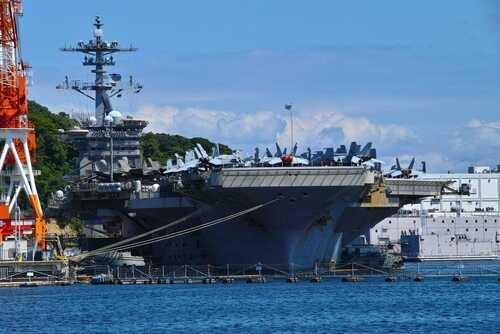
On January 22, 2026, President Donald Trump announced the deployment of a major naval force towards Iran, including the USS Abraham Lincoln carrier strike group. This action comes as a response to Iran’s internal unrest and the planned execution of over 800 protesters, which was canceled just hours before its implementation. The deployment serves as a deterrent against Iran’s oppressive actions and highlights the U.S.’s commitment to protecting human rights and maintaining regional stability.
The U.S. Department of Defense redirected the USS Abraham Lincoln from the South China Sea to the Middle East, accompanied by additional air support from F-15E Strike Eagles. This strategic maneuver underscores the gravity of the situation and the U.S.’s readiness to defend its interests and allies in the region. The tension escalates as Iran’s Islamic Revolutionary Guard Corps (IRGC) warns of potential retaliation using their advanced missile arsenal.
Watch:
Background of U.S.-Iran Tensions
Historical grievances between the U.S. and Iran date back to the 1979 Islamic Revolution. Recent tensions have been fueled by Iran’s economic hardships and oppressive regime policies, sparking widespread protests in 2025 and 2026. These protests have often been met with severe crackdowns, leading to mass arrests and executions. The Strait of Hormuz remains a critical point of interest, as it is a vital transit route for global oil supplies, prompting heightened military focus from both sides.
In previous incidents, such as the 2019 tanker attacks and the 2020 “12-day war,” the U.S. has demonstrated its capability and willingness to project power in the region. The current deployment, however, is directly linked to the domestic protest situation in Iran, reinforcing the U.S.’s stance on human rights and international law.
Potential Implications and Reactions
The immediate implications of this deployment could result in heightened tensions and potential miscalculations that might disrupt the global oil market. Long-term effects may include increased pressure on the Iranian regime and the possibility of a broader conflict involving regional allies such as Israel. The deployment also tests President Trump’s deterrence strategy, potentially rallying Iranian hardliners while offering a lifeline to protesters seeking international support.
The Navy Is Sending a ‘Supercarrier’ and Warship Armada to Iran’s Backyardhttps://t.co/knqyHu6tSV
— 19FortyFive (@19_forty_five) January 24, 2026
Economic consequences could ripple through global markets, affecting energy prices and defense sector dynamics. As the situation unfolds, the international community watches closely, assessing the potential for diplomatic resolutions or further military engagements. The U.S.’s posture serves as a clear message of strength and a commitment to defending democratic values against authoritarian threats.
Sources:
U.S. Sends Major Naval Force Toward Iran as President Trump Signals Possible Military Action
What is Trump’s Objective Behind Deploying Forces to the Region?
Military Buildup in the Middle East Continues