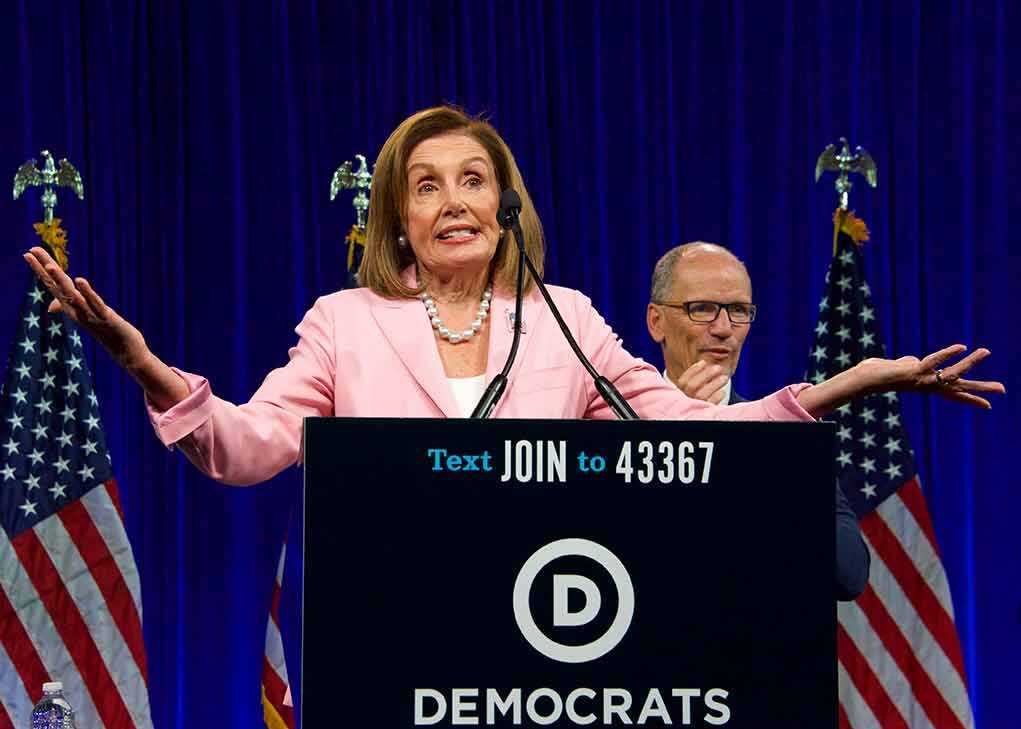
On a national podcast, Nancy Pelosi said two high-profile Democrats’ Israel remarks were “wrong” and not reflective of House Democrats, exposing a widening rift inside her party.
Story Snapshot
- PelosI rejected Zohran Mamdani’s and Abdul El-Sayed’s Israel remarks as “wrong” and unrepresentative of House Democrats.
- Mamdani declined to support Israel as a specifically Jewish state, citing equal rights in all countries.
- El-Sayed questioned whether Israel is a true U.S. ally and criticized U.S. support.
- The clash shows a growing divide on Israel policy inside the Democratic Party.
Pelosi Draws a Public Line Against Party Left on Israel
On October 29, Nancy Pelosi told host Donny Deutsch that comments by Zohran Mamdani and Abdul El-Sayed about Israel were “wrong” and “not a reflection of the Democrats in the Congress of the United States.” The former House Speaker’s statement put clear distance between the party’s establishment and its left flank. Her remarks underscored a live struggle over Israel policy that is shaping primaries, fundraising, and how Democrats talk about American allies.
Mamdani, a prominent New York figure, has said he supports Israel “as a state with equal rights” while refusing to endorse Israel as a Jewish state. He framed it as a general rule against any nation privileging one religion over another. He cited the same standard for places like Saudi Arabia. His wording avoids denying Israel’s existence, but it rejects the idea of a Jewish nation-state, which many see as central to Jewish self-determination after the horrors of the twentieth century.
El-Sayed Questions U.S.-Israel Alliance and Funding
Abdul El-Sayed, now a Senate candidate, has questioned whether Israel is truly an ally of the United States. In remarks reported by multiple outlets, he argued that an ally should not take U.S. money and push America into wars it should not fight. He linked his view to ending military aid, placing himself well left of mainstream bipartisan support for Israel’s security partnership with the United States.
Pelosi’s public rebuke matters because it signals a boundary for Democrats serving in Congress. But her claim describes her view, not a formal House Democratic position adopted by vote or caucus statement. The reporting cites her on-record words, yet it does not offer a tally of members who agree or a resolution defining caucus policy. That gap leaves room for ongoing fights inside the party over what Democrats actually stand for on Israel.
Why This Divide Matters for Voters and U.S. Policy
Israel is not a niche issue. It is a test of how leaders define allies, fight terror, and defend shared values. When a rising wing of Democrats questions Israel’s status or U.S. aid, it signals a broader shift on national security. For conservatives, this confirms a trend: the left keeps drifting from America’s traditional alliances while demanding conditions, cuts, or redefining terms that have kept the region more stable and our friends safer for decades.
Nancy Pelosi has publicly drawn a line.
The former Speaker of the House criticized Michigan Senate candidate Abdul El-Sayed and NYC Mayor Zohran Mamdani over their positions on Israel, calling those views "wrong" and saying they do not represent Democrats in Congress.
This is…
— Chaya Eitan (@ChayaEitan) October 30, 2026
For many Jewish Americans and pro-Israel voters, rejecting Israel as a Jewish state crosses a bright line. Israel was founded as the world’s lone Jewish homeland after genocide. Saying you back Israel only if it is not a Jewish state feels like opposing the core of that national project. Pelosi labeled the comments “wrong,” but stopping at rhetoric will not end the dispute. The Democratic coalition now includes leaders who use words like “genocide” and push to halt military aid.
What the Record Shows—and What It Does Not
The available reporting provides clear, on-record pieces. Pelosi called the remarks “wrong.” Mamdani said he cannot endorse a state that privileges one religion, naming Israel and others. El-Sayed cast doubt on Israel as a true ally and criticized U.S. funding. At the same time, the coverage does not present full transcripts of each interview or a formal congressional statement defining caucus policy. Those limits mean the debate will likely continue through Election Day.
Bottom Line for Constitution-Minded Readers
Allies matter, clarity matters, and values matter. When leaders hedge on Israel’s Jewish character or on America’s support, they invite confusion among enemies and fear among friends. Pelosi’s words show Democrats feel the pressure. But the policy test is simple: Will the United States stand by a free ally against terror and tyranny, or drift with activists who demand we pull back? Voters who want strength abroad and peace at home should watch how Democrats answer.
Sources:
news.meaww.com, thehill.com, mediaite.com