
A 100,000-ton, nuclear-powered supercarrier just hit a milestone—but the Navy says real combat duty is still months away.
Story Highlights
- The Navy took “preliminary acceptance” of USS John F. Kennedy, enabling more sea testing.
- Formal delivery is planned for spring 2027 after final systems checks and certifications.
- The ship completed acceptance trials in August after four days at sea.
- Ford-class growing pains with new tech have driven schedule shifts in past years.
Preliminary Acceptance Enables Testing, Not Combat Duty
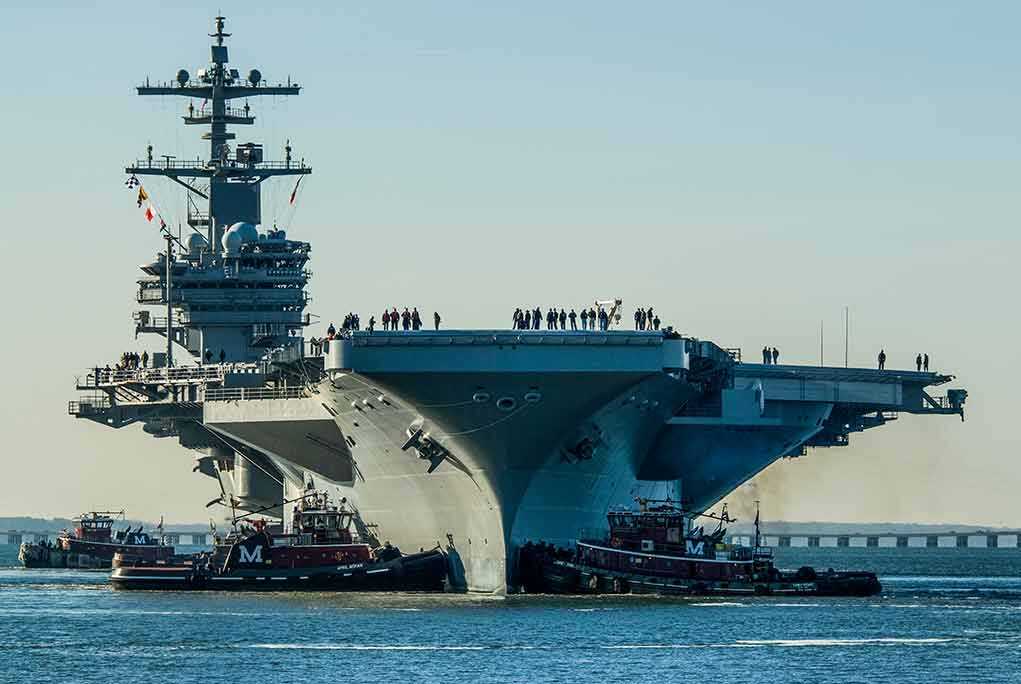
U.S. Navy officials said the future USS John F. Kennedy (CVN-79) reached “preliminary acceptance” after completing acceptance trials in August. That status lets the crew conduct at-sea testing and build skills while shipbuilders finish final system checks before formal delivery in spring 2027. The Navy framed the carrier as about 99 percent complete, but not yet combat-ready. The service separated this step from delivery to avoid confusion about when the ship can deploy.
Program managers described a clear sequence: trials, preliminary acceptance, delivery, certification, and then full operations. The ship’s move from the yard to a naval station supports this next phase of work reported by industry and defense outlets. The Navy’s messaging aims to set expectations now. Leaders want sailors to train at sea and prove gear under real conditions, while the builder finishes remaining tests. That pacing seeks to reduce risk before the carrier joins the fleet.
Sea Trials Mark Progress Toward Delivery
Navy statements said acceptance trials wrapped up August 15 after four days at sea off the Atlantic coast. Those events checked propulsion, navigation, basic flight deck systems, and core ship functions. Completion of acceptance trials triggered the preliminary acceptance milestone that followed in late September. Open-source schedules place formal delivery in March 2027, aligning with the service’s plan to close out remaining testing and crew certifications before turning the ship fully over to operations.
Industry reports highlighted follow-on steps, including more at-sea periods to stress systems and train the crew. This includes continued work to qualify advanced launch and recovery equipment and to finalize shipboard logistics and weapons movement. The program’s focus is predictable readiness, not headlines. Leaders want the carrier delivered with working gear, trained sailors, and fewer surprises. That approach reflects lessons learned on the lead ship, where new technologies needed extra time to mature.
Why “Almost Done” Does Not Mean “Ready to Fight”
Navy language matters on a platform this large and complex. “Preliminary acceptance” is not “delivery,” and “delivery” is not “combat-ready.” Officials have stressed these differences to keep the public and Congress aligned on real capability. The Congressional Research Service noted that the delivery date for Kennedy moved from July 2025 to March 2027 to finish certification of the Advanced Arresting Gear and continue work on Advanced Weapons Elevators, underscoring the need to complete critical systems before fleet duty.
On October 13, the U.S. Navy (@USNavy) landed an F-35C aboard the future USS John F. Kennedy (CVN-79), the second Ford-class carrier, which hasn't been delivered yet. The Navy said it was the first F-35C landing on a Ford-class carrier. A Navy photo caption dates the catapult… pic.twitter.com/spTYmwEqvQ
— fox hsiao (@pirrer) October 31, 2026
Government Accountability Office reporting on the Ford-class warned years ago about risks from immature tech and tight schedules on the lead ship, which led to predictable delays and early shortfalls. The Navy’s current plan for Kennedy addresses those past issues by extending testing and training before full turnover. That is a sober course. It aims to deliver a stronger, more reliable carrier to deter China, stand with allies, and back President Trump’s push for ready, hard power at sea.
Sources:
19fortyfive.com, paemaritime.navy.mil, en.wikipedia.org, janes.com, thedefensepost.com, gao.gov