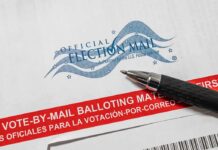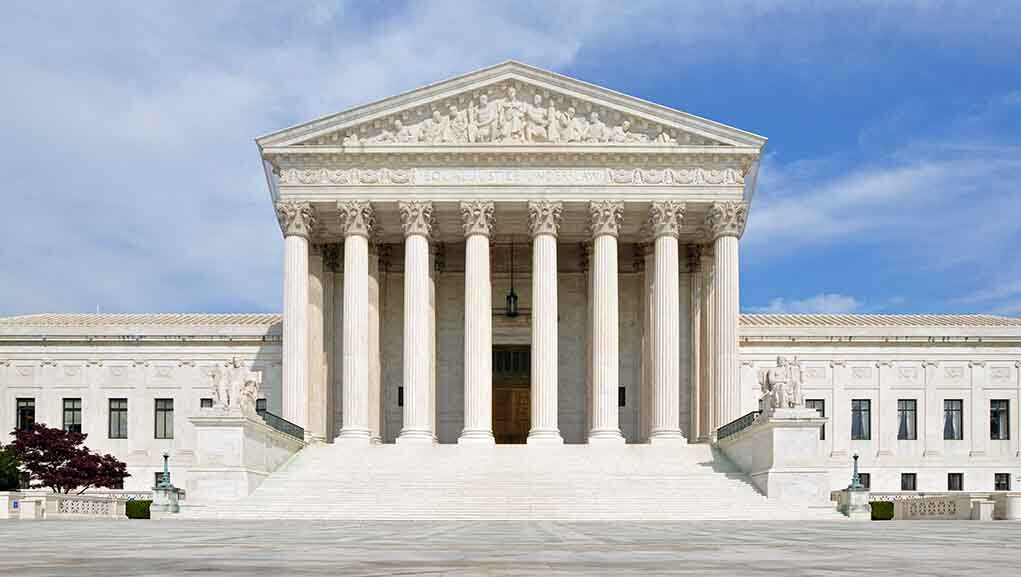
The Supreme Court just gave states more time to count mail-in ballots, and President Trump says that move is “very detrimental to honest elections.”[9]
Story Snapshot
- Supreme Court upholds Mississippi’s rule letting mail ballots arrive up to five business days after Election Day if postmarked on time.[5]
- President Trump warns the ruling “gives people more time to vote illegally” and calls it “very detrimental to honest elections.”[6]
- Trump urges Congress to pass the SAVE America Act with photo voter ID, proof of citizenship, and tight limits on mail-in ballots.[1][5]
- Research cited by media critics claims mail-in ballot fraud is extremely rare, deepening the clash between election integrity concerns and access arguments.[16]
Supreme Court backs late-arriving mail ballots, undercuts Trump’s election overhaul
The United States Supreme Court ruled 5–4 that states like Mississippi can keep counting mail-in ballots that arrive after Election Day, as long as they are postmarked by Election Day. The case, often referred to as Watson v. Republican National Committee, centered on Mississippi’s five-business-day grace period for absentee ballots in federal races. Justice Amy Coney Barrett wrote the majority opinion, joined by Chief Justice John Roberts and three liberal justices, and stressed that federal election statutes do not block these state rules.[5][10]
The Court’s decision means Mississippi can continue counting absentee ballots received within five business days after Election Day if they were mailed on time. Similar grace-period laws exist in roughly 30 states and the District of Columbia, so the ruling reaches far beyond one southern state. States such as Alaska, California, Texas, Virginia, Washington, and West Virginia, as well as territories like Puerto Rico and Guam, allow certain ballots to be counted after Election Day under similar conditions. This keeps the patchwork of state mail-voting rules largely intact for now.[5][7]
Trump blasts ruling as “detrimental,” presses for SAVE America Act
President Trump responded quickly, telling reporters the ruling was “very detrimental to honest elections” and saying it “gives people more time to vote illegally.” He argued that by allowing late-arriving ballots, the Court is “basically keeping it a little bit the way it is now,” and not fixing what he sees as a deeply flawed system. In his remarks, Trump linked the decision to long-standing concerns about mail-in voting, repeating warnings that cheating through mailed ballots can sway close races in key states.[2][3][6]
Trump used the moment to double down on the proposed SAVE America Act, which he is urging Congress to pass in response to the ruling. He explained that the plan would require photo voter identification, proof of United States citizenship, and would end mass mail-in balloting except for clear, narrow cases. Under his outline, mail voting would remain for deployed military members, people who are disabled or ill, and voters who are away from home, including on vacation, but not for wide no-excuse absentee systems. He told supporters that these steps are “not too much to ask” if the country truly wants honest elections.[1][5][6]
Access for voters vs. fears of fraud: a growing clash over mail ballots
Civil-liberties groups and many state officials welcomed the Supreme Court’s decision, arguing it protects voters who rely on the mail and cannot control postal delays. Advocates say older voters, people with disabilities, rural residents, and working families benefit when states can count ballots that arrive a few days late but were mailed on time. For these groups, strict cutoffs on Election Day can mean losing their voice because of slow delivery, not because they failed to follow the rules.[7]
Election researchers and media outlets that are critical of Trump’s claims point to data showing documented mail voting fraud is extremely rare. One widely-cited study found about four cases of mail ballot fraud per ten million mailed votes cast in major elections between 2016 and 2022, a rate of 0.000043 percent. Reports from organizations such as the Brennan Center for Justice likewise describe overall voter fraud rates as “infinitesimal,” stressing that most problems come from clerical errors instead of organized schemes. These numbers are used to argue that broad limits on mail voting may block far more legal votes than they ever stop illegal ones.[13][16][18]
Conservatives weigh next steps: tighten laws, gather hard evidence
For many conservatives, the core worry is not just isolated fraud cases, but systemic weak points in how states handle mailed ballots and grace periods. The Mississippi rule counts ballots for five business days after Election Day, raising questions about chain of custody, verification standards, and how late-counted votes might swing close contests. Justice Samuel Alito’s dissent warned that adding ballots received after Election Day to the totals means the real choice of the electorate no longer happens on that single, fixed day.[5][7]
Going forward, Trump allies are likely to push Congress and state legislatures to write clear laws that shut down late-counting windows and lock in photo voter identification and citizenship proof nationwide. Some are calling for detailed audits of mail ballot records, looking closely at postmarks, delivery times, and any documented fraud during grace periods to build a stronger case for reform. Until lawmakers act, the Supreme Court’s ruling leaves states wide freedom to keep using mail voting systems that many patriots feel erode trust in the simple idea that every legal citizen’s vote should count once, on Election Day.[5][10][16]
Sources:
[1] Web – Trump Calls Supreme Court Mail Ballot Ruling ‘Detrimental to Honest …
[2] Web – Supreme Court allows late-arriving mail-in ballots in defeat for Trump
[3] Web – Federal Court Blocks Key Portions of Trump’s Order Targeting Mail …
[5] Web – President Trump on Monday called mail-in ballots “detrimental to …
[6] Web – Analyzing the President’s Executive Order on Mail Voting
[7] Web – The US Supreme Court ruled 5-4 Monday that states can count mail …
[9] Web – Federal judge blocks Trump effort to restrict mail voting – Votebeat
[10] Web – Supreme Court Mail Ballot Ruling Deals New Blow to Trump’s …
[13] Web – [PDF] 24-1260 Watson v. Republican National Committee (06/29/2026)
[16] Web – Table 11: Receipt and Postmark Deadlines for Absentee/Mail Ballots
[18] Web – How Associating Mail-in Ballots with Voter Fraud Became a Political …