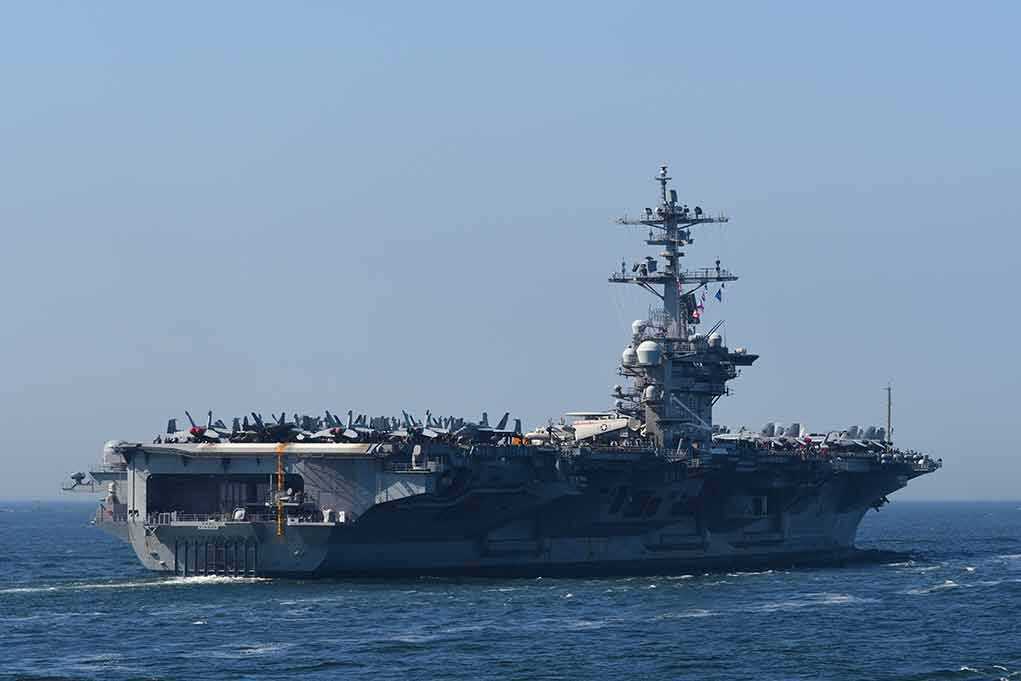
President Trump said nine months at sea for the USS Abraham Lincoln is “not nearly long enough,” sharpening a high-stakes fight over readiness and sailor welfare during a record-stretch deployment.
Story Snapshot
- Trump backed longer carrier presence as the Lincoln endures an unusually long, port-starved stretch.
- Navy leaders said conditions were misrepresented and the crew remains resilient and supported.
- Families reported low morale and shortages as lawmakers pressed for answers and relief timing.
- A relief by USS George Washington was signaled as the Navy added mental-health resources.
What Sparked The Clash: Trump’s Comment And A Long Deployment
CNN reported that President Trump said nine months at sea was “not nearly long enough,” a remark that drew sharp reactions as the USS Abraham Lincoln pressed through an extended deployment in the Middle East. Stars and Stripes and other outlets said the carrier spent more than 200 days without a port call, far beyond the 30 to 45 day rhythm sailors usually expect for rest and resupply. The length and lack of breaks raised public concern about morale, strain, and basic quality-of-life.
Defense reporting described this as a near-record or record-like stretch that tested crew endurance and family patience. Families and some legislators asked when relief would arrive and why the schedule had slipped beyond earlier expectations. The debate now pairs a White House push for deterrence and forward presence with real questions about the human cost and the Navy’s plan to balance mission needs and sailor well-being.
Navy Response: Resilience, Support Teams, And Denials Of Crisis
Navy officials stressed that the crew remained ready and that leadership had not seen an increase in suicidal ideation or attempts aboard the ship, while also emphasizing religious, medical, and mental-health support on deck. Fifth Fleet messaging said the deployment was challenging but manageable and that sailors stayed resilient and mission focused. Defense Secretary Pete Hegseth said reports about conditions were “completely misrepresented,” claiming the service gave every ship and every captain all needed support.
Coverage noted the Navy’s focus on concrete support staff, including chaplains and behavioral health professionals, and on maintaining operational tempo despite wear and tear. That stance, aimed at signaling strength to adversaries, also sought to reassure families at home. Officials balanced the message by acknowledging strain while rejecting claims of systemic breakdown, promising continued resources and attention to welfare even as operations pressed on.
Families And Lawmakers: Morale Complaints And Calls For Relief
Military Times reported that more than 200 family members met with acting Navy Secretary Hung Cao in San Diego to raise concerns about mental health, exhaustion, and safety. CNN detailed allegations from families about food, water, plumbing, and mail problems, plus stress from the uncertain end date. Stars and Stripes said carriers typically pull into port every 30 to 45 days, but the Lincoln went far longer, fueling fears about burnout and frayed morale.
Amid pressure, Stars and Stripes reported that the USS George Washington was headed to relieve the Lincoln in the Middle East, signaling a path to rotation and recovery. That step aligned with reports that the Navy added mental-health support to the ship as the deployment dragged on. The relief timeline, once executed, would address the most pressing family concern: predictability. Lawmakers continued to seek details on conditions, incident reports, and how the Navy will prevent repeats.
What Conservatives Should Watch: Strength With Accountability
Conservatives want peace through strength, but also fair treatment for those who serve. Trump’s call for robust presence underscores deterrence against Iran and other threats, which demands carriers on station. Yet families’ reports show how long, uncertain deployments can strain morale and readiness at the deck-plate level. The mission must stay firm while leadership enforces clear schedules, honest communication, and strong habitability standards that match our values and keep the fleet lethal.
My $.02 on the "quality of life" issues aboard the aircraft carrier USS Abraham Lincoln (CVN-72). It's COMPLETELY UNSAT and a complete DISGRACE and this POTUS bears responsibility because HE started the extended shooting war! I DIRECTLY BLAME him and SECDEF – sorry I don't call… pic.twitter.com/JTjGQEmTFY
— Mark Ferri (@MarkFerri6267) August 16, 2026
Key guardrails are simple and tough: set realistic deployment windows, publish relief plans when possible, and surge support teams early when port calls slip. Demand transparent metrics on mental-health visits, chaplain contacts, and habitability fixes without revealing sensitive data. The Navy’s promise of resilience should rest on proof and results, not just talking points. That is how we deter enemies, respect families, and keep faith with the Constitution’s charge to provide for the common defense.
Sources:
zerohedge.com, stripes.com, forbes.com, cnn.com, migflug.com, drawpie.com, ir-ia.com, wsws.org, militarytimes.com