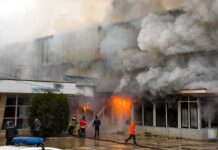
Los Angeles officials say the burned Boyle Heights warehouse still held tens of millions of pounds of rotting food as a city cleanup deadline hit amid a flood of odor complaints and violations.
Story Highlights
- City set a 45-day order to remove biohazard food; officials said the deadline hit Friday.
- Reports say more than 85 million pounds of spoiled food were at issue after the fire.
- Air regulators logged over 4,200 odor complaints and 25 violations tied to the site.
- Lineage disputes the clock and targets full food removal by August 20-27.
City Order, Clock Dispute, and What Officials Expected
Mayor Karen Bass issued an emergency order on June 29 that required full biohazard food waste removal within forty-five days of site transfer, setting up a mid-August finish line for a massive haul-out at the burned warehouse. News reports on August 13 and 14 said the deadline was Friday and that the operator, Lineage, did not appear able to finish on time. The company counters that the clock started later and says it remains within its window, creating a narrow but important dispute over timing.
Lineage says it had only thirty-seven days into a forty-five-day period by August 14, placing completion later in August rather than mid-month. The company also says it is targeting completion of bulk food removal by August 20, followed by cleaning and disinfecting by August 27, which it argues aligns with air district guidance. City officials, meanwhile, treated the Friday date as binding, and public statements urged faster action as neighbors continued to report odors and flies near homes and schools.
Scale of the Waste and Neighborhood Impact
Officials and news outlets reported that more than eighty-five million pounds of spoiled food had to be removed after the fire, an extraordinary quantity that demanded hundreds of truckloads and special handling. The South Coast air district recorded more than 4,200 odor complaints and issued twenty-five violation notices to Lineage between July 12 and August 5, reflecting a significant and ongoing nuisance footprint across Boyle Heights and East Los Angeles. Residents told local stations the smell, flies, and sleepless nights became routine, pushing families indoors during the hottest weeks of the summer.
County health enforcement also moved ahead. The Los Angeles County Department of Public Health issued multiple citations to Lineage and imposed daily fines over unsanitary conditions and pest control failures, signaling that basic mitigation was not keeping up with rot and infestation. Coverage described a continuing fly problem and concerns about breathing issues as the clock ticked on removal work. While these reports capture the lived experience in the neighborhood, neither the county nor the city has released a comprehensive toxicology study linking specific symptoms to the site during the same period.
Progress, Penalties, and the Road to Rebuild
Reports in early to mid-August said the cleanup was only partly finished, with about half of the roughly eighty-eight million pounds removed weeks into the effort. That pace drew sharp criticism and fueled calls for clear accountability. Mayor Bass issued a separate order freezing city processing of any plans to rebuild the Lineage facility until a full report on site impacts is complete, signaling that the city would not greenlight a return to business as usual before the waste problem is solved and documented. Lineage has said submitting repair permits is normal and would not distract from cleanup.
Lineage publicly pledged to finish bulk removal by August 20 and to complete disinfecting by August 27, and said it was about ninety-three percent of the way through bulk removal as of August 14, while also committing funds to local relief. The company’s pledge—along with claims of around-the-clock work—does not erase the enforcement trail of odor violations and county fines, or the reality that families could not open windows without inviting flies into their kitchens. The dispute over the exact start date remains, but the core problem—rotting food on a vast scale—is not in doubt.
What Conservative Readers Should Watch Next
City agencies owe the public clear, verified numbers: how many pounds removed by which dates, where it all went, and who signed off on each load. Air district data and county health citations show the harm that slow bureaucracy and corporate delay can cause to working families living nearby. Transparency and enforceable deadlines matter most here, not political posturing. President Trump’s team has pushed for accountability and common-sense standards; Los Angeles leaders should match that urgency with full documentation and steady enforcement.
Lineage is under fire as the company misses L.A. City's food cleanup deadline at their Boyle Heights warehouse. What's next? https://t.co/haGCWFWnal pic.twitter.com/UQne0ukAv9
— ABC7 Eyewitness News (@ABC7) August 15, 2026
Neighbors also deserve a straight answer on when odors will end and when schools and homes will be fully protected. That requires fence-line monitoring, clean truck routes, and proof of disinfection before any rebuild proceeds. The city’s freeze on processing rebuild plans until the impact report is done is a prudent step, provided it is tied to measurable milestones and public reporting, not headlines alone. Facts, manifests, and inspection records—not spin—should decide the next move for this troubled site.
Sources:
nypost.com, nbclosangeles.com, latimes.com, mayor.lacity.gov, yahoo.com, cbsnews.com, laist.com