
United Nations officials now say a tsunami in the Mediterranean is “100% certain,” but the same global bureaucracy cannot clearly explain the science or guarantee that its warning systems will actually protect coastal families.
Story Snapshot
- UNESCO publicly claims a 100% chance of a Mediterranean tsunami of at least one meter within 30–50 years, while offering little technical proof.
- United Nations-backed systems cover only some tsunami causes and admit blind spots for landslides and volcanic events.
- Media hype has turned a long-term statistical risk into a narrative of inevitability, raising questions about fear-based climate and funding politics.
- For Americans, the episode is a reminder to distrust global bureaucracies, demand transparency, and strengthen local, accountable preparedness.
UN Agency Declares “Inevitable” Tsunami Without Showing Its Work
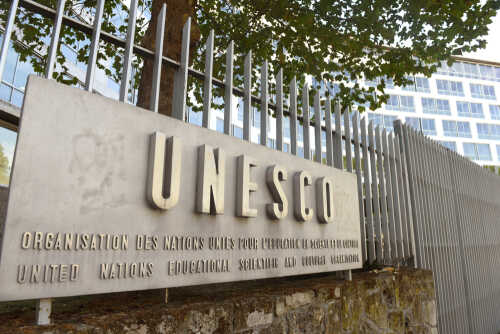
The United Nations Educational, Scientific and Cultural Organization (UNESCO) now states there is a “100% chance” that the Mediterranean will see a tsunami of at least one meter within the next 30 to 50 years, a phrase repeated on its own North-East Atlantic and Mediterranean tsunami page and echoed by multiple media outlets.[3][1][2][5] The claim sounds absolute, yet none of the publicly highlighted material provides the underlying technical report, model assumptions, or confidence intervals that would let independent experts verify this level of certainty.
UNESCO’s Intergovernmental Oceanographic Commission presents the Mediterranean warning system as a mature, operational safety net linking governments, warning centers, and coastal communities.[7] Its messaging stresses that tsunami early warning “reduces the risk of catastrophic coastal hazards that can cause death and destruction,” and celebrates a global network that now spans the Pacific, Indian Ocean, Mediterranean, Caribbean, and North-East Atlantic.[5] This framing encourages the public to trust that an extensive, well-tested system already stands between ordinary families and disaster.
Warning Architecture Has Gaps That Bureaucrats Downplay
Public-relations language about comprehensive protection sits uneasily beside what national technical documents quietly admit. The Hellenic National Tsunami Warning Center in Greece, which helps serve the eastern Mediterranean, explicitly states that the regional system operates only for tsunamis generated by earthquakes and that events caused by aseismic landslides or volcanic processes are “beyond the current operation status.”[5] In other words, the same United Nations-linked network used to justify confident soundbites does not fully cover the very range of hazards often cited in dramatic media stories about Mediterranean mega-tsunamis.
The Greek center does provide real capacity: it runs a round-the-clock monitoring and alerting service for Greece and the eastern Mediterranean, issuing warning messages to authorities when earthquakes hit.[5] UNESCO also points to recent events where its Intergovernmental Oceanographic Commission issued a tsunami alert within ten minutes of a tremor, proof that the core system can work quickly when the trigger is a conventional quake.[4] Yet those successes do not change the stated blind spots, and they do not answer whether landslide or volcanic scenarios—such as flank collapses on active volcanoes—would provide enough warning time for crowded coastal cities.
From Probabilistic Risk to Media Panic Narrative
UNESCO’s technical staff repeatedly describe tsunami warning as “preparing for the unpredictable,” stressing evolving early-warning tools, community drills, and coastal mapping rather than precise forecasts.[5] That is standard hazard-management thinking: because the cost of being surprised is so high, agencies naturally favor strong language to push governments into planning. Media outlets then translate that precautionary posture into simplified headlines claiming a tsunami is “100 per cent certain” in the Mediterranean within thirty years, a tighter and more dramatic window than UNESCO’s own thirty- to fifty-year phrasing.[1][2][3][5] This shift turns nuanced, long-horizon risk into the impression of imminent doom.
Such language inflation carries real credibility risks. The absence of a clearly cited technical paper behind the 100% figure, combined with small but public inconsistencies in how the time window is described, gives skeptics ammunition to question not just the messaging but the science itself.[2][3] When people repeatedly hear absolute words like “inevitable” without transparent evidence, they may either panic unnecessarily or tune out future warnings as alarmism. Both outcomes undermine serious preparedness work and strengthen public suspicion that global bodies are more focused on headline-driven influence than on clear, accountable communication.
Climate Framing, Centralized Control, and What It Means for Americans
Some coverage links the Mediterranean tsunami risk to rising sea levels from climate change, blending seismic and volcanic hazards with long-running political narratives about carbon policy and global governance.[2] UNESCO’s broader tsunami program is now wrapped into the United Nations “Decade of Ocean Science for Sustainable Development,” with goals such as making one hundred percent of at-risk communities “Tsunami Ready” by 2030 and mapping one hundred percent of the seabed.[5] These ambitions require funding, data access, and policy influence—levers that naturally flow toward centralized institutions when fear of catastrophe is high.
George McInerney finds this interesting 👍 UNESCO warns a tsunami in the Mediterranean is inevitable https://t.co/zX430k745t
— George McInerney (@gmcinerney) May 21, 2026
For American conservatives who remember how unelected experts pushed pandemic mandates, climate regulations, and global compacts, this episode is a familiar pattern in another domain. A real but complex risk is reduced to a slogan—“100% chance”—while the same institutions downplay system gaps and the absence of transparent technical backing.[3][5] The lesson for U.S. citizens is not to dismiss tsunami danger; it is to insist that any warnings affecting our coasts or military assets abroad be grounded in open data, peer review, and decisions made by accountable national and local authorities, not by distant bureaucracies using fear to expand their reach.
Sources:
[1] Web – Mediterranean Mega-Tsunami? Experts Say It’s 100% Certain – Surfer
[2] Web – The vulnerable European city that is preparing a tsunami evacuation …
[3] Web – North-Eastern Atlantic and Mediterranean – IOC Tsunami – UNESCO
[4] Web – Wait… UNESCO Does What? The UN’s Surprising Role Leading …
[5] Web – Tsunami Warning Services – HL-NTWC
[7] Web – Tsunami risk mitigation and early warning systems … – UNESCO