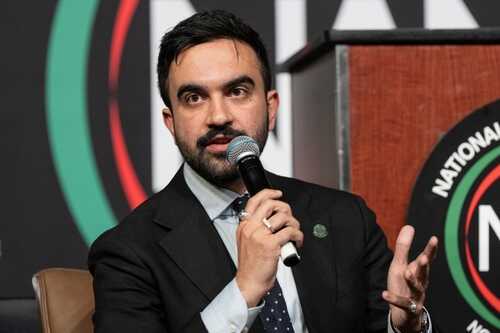
Zohran Mamdani’s proposal for government-managed grocery stores in each of New York City’s boroughs raises more questions than answers, leaving taxpayers and critics astounded at the potential pitfalls lurking beneath its noble façade.
At a Glance
- Mamdani proposes city-run grocery stores in food deserts.
- Critics term it “radical socialism” akin to Soviet policies.
- The $140 million financial plan relies heavily on private investments.
- Examples from Chicago’s shelved feasibility study cast doubt on success.
A Radical Proposal or Symbolic Gesture?
Zohran Mamdani’s plan to establish city-owned grocery stores is sparking intense debate. Critics, including John Catsimatidis, see it as “radical socialism,” reminiscent of Soviet-style governance. This proposal is intended to combat food deserts without harming private stores. Yet, some view it as an impractical, symbolic move lacking the robust financial support necessary for execution.
Watch a report: NYC bodegas fear Mamdani plan for city-run grocery stores
John Catsimatidis further denounced the concept, fearing it “would collapse our food supply, kill private industry, and drag us down a path toward the bread lines of the old Soviet Union.” Such concerns highlight the potential clash between government management and market dynamics.
Funding Concerns and Feasibility
Mamdani’s financial strategy is under severe scrutiny. Despite announcing a $140 million allocation, much of it is sourced from private investments, not public funds. Significant reliance on higher taxes and Albany’s approval casts doubt on the proposal’s feasibility, revealing Mamdani’s possible misinterpretations regarding “Food Retail Expansion to Support Health.” His past projects, like the failed fare-free bus pilot, suggest challenges in project execution.
To complicate matters more, Chicago’s trial run with municipal grocery stores ended in a shelved feasibility study, suggesting a repeat could spell failure for New York. Grocery operations demand efficient management, a quality often elusive in government-run entities.
The Clash of Idealism and Reality
Mamdani’s critics suggest his broader political program lacks depth and practical grounding. The plan to socialize grocery stores, presented as an initiative to modernize consumption, ignites questions of intent versus effectiveness. Megan McArdle echoed such sentiment, arguing, “Mamdani wants to socialize the means of consumption.”
Watch a report: New York’s Mamdani—Genius or Disaster? His 3 Big Proposals
Mamdani’s ambitious tax-the-rich approach needs Albany’s green light, where he faces limited backing. New York’s dense political web, driven by powerful special interests, hints at significant obstructions likely to ensnare Mamdani’s visionary attempts.