The White House’s whiplash messaging on whether Vice President J.D. Vance is leading Iran talks is a reminder that high-stakes diplomacy can get tangled in politics, optics, and credibility all at once.
Quick Take
- The White House confirmed Vance will lead a second round of U.S.-Iran talks in Pakistan starting April 20, despite Trump initially suggesting he wouldn’t go.
- The first round in Islamabad ran about 21 hours and produced no agreement, with Iran refusing to budge on core demands.
- Special envoy Steve Witkoff and presidential advisor Jared Kushner are slated to join Vance, signaling a larger, more layered negotiating push.
- The talks unfold amid heightened regional risk tied to the Strait of Hormuz and a looming ceasefire deadline.
White House Clarifies Vance Will Lead Delegation After Trump’s Mixed Signal
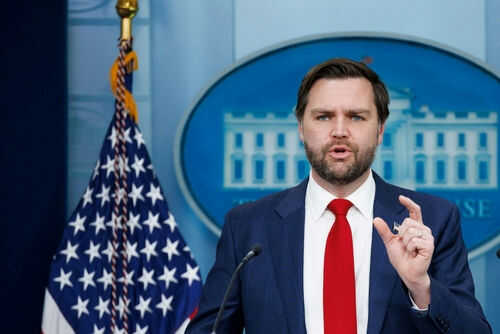
The White House confirmed April 19–20 that Vice President J.D. Vance will travel to Pakistan to lead a second round of talks with Iran, after President Trump’s earlier comment suggested Vance would not attend. Press Secretary Karoline Leavitt said Vance will go alongside Steve Witkoff and Jared Kushner. A White House official later said “things changed,” but offered no public detail on what drove the reversal.
The episode matters because U.S. negotiating leverage often depends on disciplined, consistent signals. When the president and the press office appear out of sync, adversaries can probe for division while allies wonder who is steering the ship. The administration has not released a full explanation beyond short references to security and shifting circumstances, so outside observers are left to interpret the gap without definitive facts.
What the First Round Showed: Time, Pressure, and No Deal Yet
The first round of negotiations took place about a week earlier in Islamabad and lasted roughly 21 hours, but it did not produce an agreement. Reporting in the research indicates Tehran refused to compromise on key demands, leaving the U.S. team with little to show publicly beyond continued engagement. For Americans weary of endless foreign entanglements, that outcome reinforces a hard truth: diplomacy can consume time and attention even when the other side stays dug in.
Pakistan’s role as host underscores how the administration is trying to keep the channel open without relocating talks to venues that carry heavier political baggage. The talks are also described as the highest-level U.S.-Iran engagement since the 1979 Islamic Revolution, which raises the stakes for both substance and symbolism. A breakthrough could reshape regional dynamics; failure could accelerate escalation, especially if deadlines and military posturing close the window for compromise.
A “Carrot and Stick” Approach Raises the Stakes for Both Sides
The negotiations are unfolding amid broader regional tension, including reports that Iran fired near the Strait of Hormuz and that a ceasefire agreement was nearing expiration, creating time pressure. Defense Secretary Pete Hegseth’s public promise of “unprecedented strikes” in coming days adds a coercive edge to the diplomacy. The structure is familiar: offer talks as an off-ramp, but maintain credible force to deter stalling or provocation.
For conservatives who prioritize national security and energy stability, the Strait of Hormuz is not an abstract talking point. Any disruption there can ricochet through global oil markets and hit U.S. consumers, worsening inflation pressures that already frustrate voters. At the same time, many Americans across the political spectrum distrust open-ended conflicts and want clear objectives, defined limits, and transparent measures of success before the U.S. commits further.
Why Witkoff and Kushner Joining Vance Changes the Optics
Vance is still positioned as the lead, but the presence of Witkoff and Kushner adds an unmistakable “full-court press” feel. That can be read two ways based on the available reporting: the administration may be escalating diplomatic weight to strengthen leverage, or it may be hedging because the first round did not land a deal. The research also notes Trump checked in multiple times during the initial talks and sought assessments of Vance’s performance.
Those internal dynamics matter because negotiation teams telegraph priorities and confidence. When a vice president is paired with multiple senior figures, it can broaden lines of communication and speed decision-making, but it can also blur accountability. The White House’s insistence that Vance remains in charge suggests continuity, yet the earlier public uncertainty invites questions about how tightly messaging and strategy are coordinated at the very top.
What to Watch Next: Deadlines, Signals, and Verifiable Outcomes
The next round beginning April 20 will be judged less by headlines than by concrete, verifiable outcomes: whether the ceasefire holds, whether escalation around Hormuz cools, and whether negotiators can define enforceable terms instead of vague commitments. With Republicans controlling Washington, Democrats have limited leverage to shape policy directly, but they can amplify any perceived inconsistency. For voters skeptical of “deep state” drift, transparency and results will matter more than spin.
Sources:
Trump Benches Vance in ‘Humiliating’ Move
U.S.-Iran peace talks: Vance to lead in Pakistan
Why JD Vance could be called back from Islamabad after Trump’s latest Iran talks update — explained
Vance is on standby in Iran talks
Despite Trump remarks, White House says Vance will go to Pakistan talks
Vance to lead US delegation for Iran talks in Pakistan, confirms White House
Trump, JD Vance, Pakistan, Iran ceasefire talks, threats, infrastructure, Hormuz
Iran war live updates: US-Iran ceasefire talk, Donald Trump, Khamenei, Strait of Hormuz news
Trump announces talks would resume in Pakistan