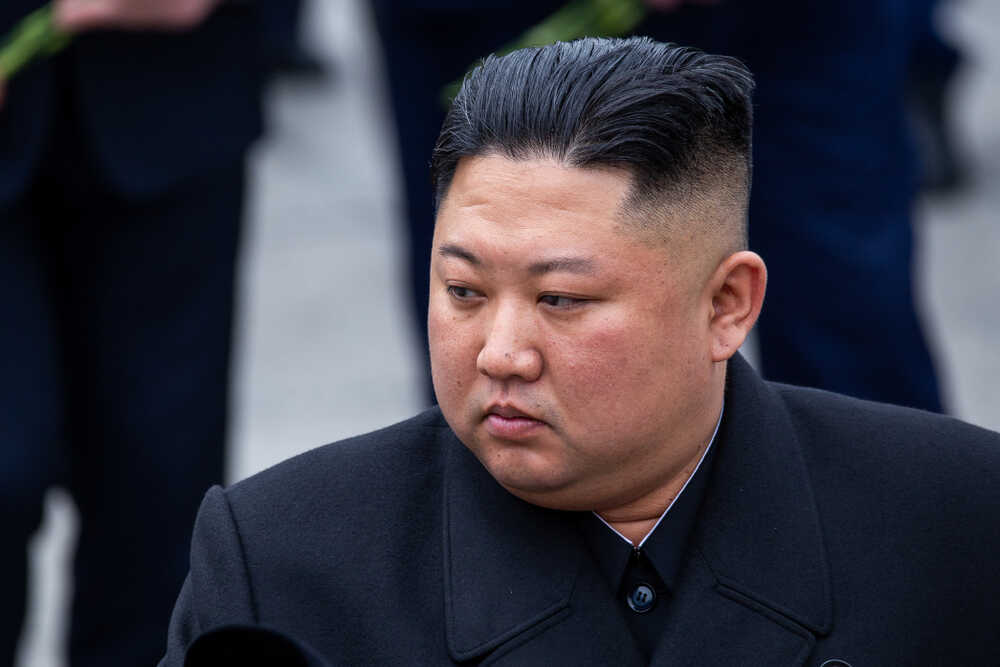
North Korea is publicly blasting the U.S. while quietly pulling away from Iran—an unusually pragmatic split that suggests Kim Jong Un wants a path back to deal-making with President Trump.
Quick Take
- South Korea’s intelligence service says Pyongyang has avoided weapons shipments to Iran and even broke protocol by staying silent after Iran’s supreme leader died.
- Kim Jong Un paired that quiet restraint with loud rhetoric, calling the U.S. a “terrorist state” after U.S.-Israeli strikes on Iran.
- Analysts see a dual-track strategy: keep anti-U.S. messaging for domestic control while limiting actions that could poison future Trump diplomacy.
- China is expanding economic links with North Korea again, a reminder that Beijing still holds leverage if U.S.-North Korea talks restart.
North Korea’s rare cold shoulder to Iran
South Korea’s National Intelligence Service has assessed that North Korea is deliberately keeping Iran at arm’s length even as the Middle East heats up. The key signals are what Pyongyang has not done: it reportedly has not shipped weapons to Tehran, and it broke diplomatic protocol by not acknowledging the death of Iran’s Supreme Leader Ali Khamenei. That silence stands out because North Korea and Iran have long traded missile know-how despite sanctions.
That reported restraint matters because North Korea usually treats anti-U.S. partners as useful bargaining chips. If the NIS assessment is correct, Pyongyang is trying to reduce the risk of becoming Washington’s next urgent target while still preserving relationships it can revive later. The research does not provide independent confirmation beyond the NIS-linked reporting, so readers should treat the “no weapons” and “silence” points as intelligence-based claims, not verified shipping manifests.
Kim’s harsh rhetoric signals deterrence, not necessarily escalation
Kim Jong Un’s March 23–24, 2026 parliamentary remarks condemned the U.S. over strikes against Iran, with language describing Washington as a “terrorist state” and framing U.S. actions as “state terrorism.” At the same time, Kim reaffirmed that North Korea’s nuclear program is “irreversible,” a message consistent with Pyongyang’s long-running demand: any talks start from the premise that North Korea keeps its arsenal. That posture narrows the room for traditional denuclearization-first diplomacy.
38 North also reported that North Korea’s initial response to the Iran strikes included stepped-up anti-U.S. rhetoric compared with its usual pattern, suggesting Pyongyang wanted audiences—at home and abroad—to see it as defiant. The contradiction is obvious: the words are more extreme, but the alleged actions toward Iran are more cautious. The simplest explanation supported by the research is a dual-track approach—maximalist propaganda for regime stability paired with tactical restraint to avoid provoking direct U.S. retaliation.
Why Trump remains the strategic prize for Pyongyang
The research points to a consistent theme: Pyongyang believes personalized Trump diplomacy could yield sanctions relief, international legitimacy, or at least a pause in pressure—without surrendering the nuclear deterrent it views as regime insurance. NK News cited an expert view that Kim could be open to Trump if Washington accepts North Korea’s nuclear status, even if the Iran conflict does not fundamentally change Kim’s core goals. No direct Trump-Kim contact is confirmed in the provided material.
From a U.S. conservative perspective, the bigger issue is leverage. The Washington Examiner argument emphasizes that U.S. action against Iran can shape adversaries’ calculations and potentially deter a separate crisis with North Korea by demonstrating consequences for nuclear brinkmanship. That claim remains an interpretation rather than a measurable outcome, but it fits a broader reality: adversarial regimes watch U.S. willingness to use force, and they adjust their risk-taking accordingly when they believe the alternative is costly.
China’s renewed economic pull complicates any reset
While North Korea tests messages toward Washington, it is also strengthening its economic connection to China. The research describes Beijing-Pyongyang train service resuming for the first time in about six years and trade hitting a multi-year high, paired with border and infrastructure activity. Those developments give Kim a backstop if Trump talks stall, and they give Beijing another lever to shape outcomes on the peninsula—especially if China prefers stability over a U.S.-brokered breakthrough.
The net effect is a familiar but still dangerous pattern: a nuclear-armed dictatorship juggling partners and propaganda to maximize regime survival. North Korea’s apparent distancing from Iran—if verified over time—would be a meaningful sign that U.S. pressure and the prospect of Trump diplomacy can change behavior at the margins. But Kim’s repeated insistence that his nuclear status is permanent sets a hard ceiling on what any agreement can realistically achieve, regardless of who sits in the Oval Office.
Sources:
Trump Iran war preventing North Korea crisis
North Korea quietly breaks with Iran to keep door open with Trump
North Korea Steps Up Anti-US Rhetoric in Initial Response to Strikes Against Iran