

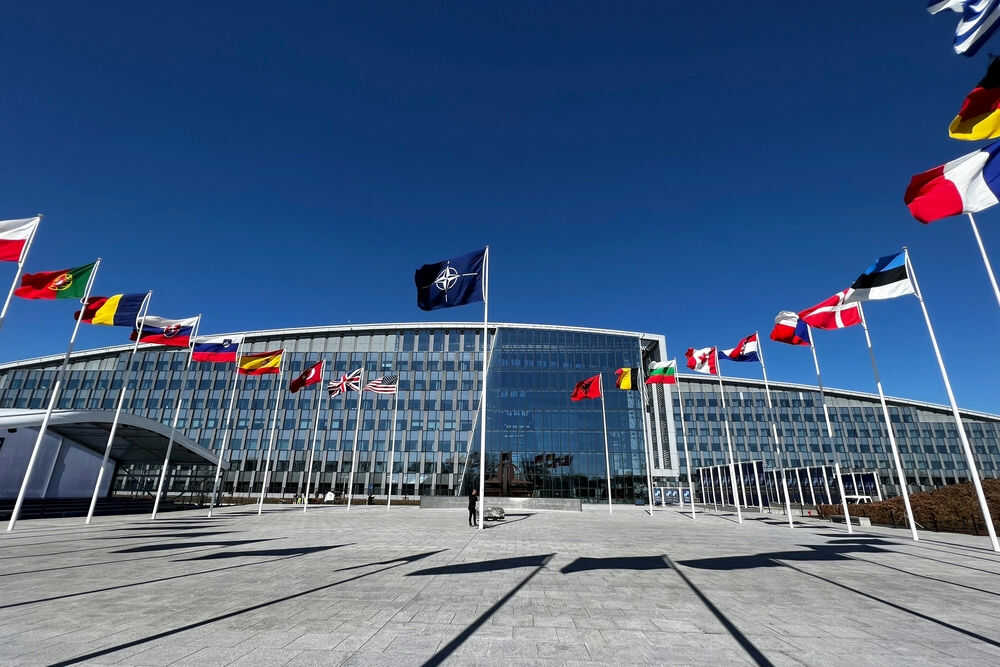
Washington’s quiet talks about putting more U.S. nuclear-capable assets in additional NATO countries could reshape Europe’s security map—and put Moscow on notice that deterrence is getting tougher, not softer.
Story Snapshot
- Reports say the United States is weighing nuclear-related deployments in more European NATO states, including on the alliance’s eastern flank [1][2][3].
- NATO’s doctrine explicitly relies on U.S. nuclear weapons forward-deployed in Europe and allied infrastructure to deter aggression.
- Roughly 100 U.S.-owned nuclear bombs are already stored across six bases in five allied countries under exclusive U.S. custody [4].
- Talks are described as confidential and not yet final, with some allies publicly opposed to peacetime hosting [1][7].
What Is Reportedly Under Consideration
Financial Times-sourced reporting indicates the United States is discussing expanding nuclear-related deployments to additional European members of the North Atlantic Treaty Organization, with interest on the alliance’s eastern flank such as Poland and Baltic states [1][3]. Separate coverage describes options that include positioning more nuclear-capable aircraft and support infrastructure to strengthen visible deterrence [2]. Officials emphasize that discussions are ongoing and may not result in immediate changes, underscoring that no final basing decisions have been announced [1][3].
NATO’s own description of its nuclear posture frames why these talks matter. The alliance states that its deterrence relies on United States nuclear weapons forward-deployed in Europe, combined with allied capabilities and infrastructure that enable the mission. That doctrine signals continuity: the question at issue is not inventing a new model, but deciding whether to widen a familiar one as Russia’s aggression and coercion persist. Reporting links the discussion to reassurance for vulnerable allies and to deterrence signaling [1][2][3].
How NATO’s Current Nuclear Sharing Works
Public sources describe an existing network of forward-deployed U.S. B61-series gravity bombs stored at multiple sites in allied countries, with estimates of about 100 U.S.-owned weapons across six bases in five NATO states [4]. NATO affirms that the United States maintains absolute control and custody of these weapons, while allies provide aircraft, bases, and support as part of the shared mission. This arrangement balances tight U.S. control with allied participation to strengthen deterrence credibility and political cohesion [4].
Analysts note that because the structure already exists, expanding host nations would extend a known framework rather than create an untested system [3][6]. Advocates argue that dispersing capabilities improves survivability, reduces single-point vulnerabilities, and makes any adversary’s calculus riskier. Skeptics counter that the current posture already provides a credible deterrent and that moving nuclear-capable assets eastward could invite escalation concerns or domestic political backlash in potential host countries [4][7]. Reporting indicates the debate remains active and unresolved [1][3][7].
Eastern Flank Reassurance Versus Alliance Frictions
Coverage highlights that countries nearer Russia have pressed for stronger visible guarantees, with reported interest from Poland and the Baltic region in hosting or supporting nuclear-capable operations [1][3]. These allies argue that forward presence reduces response time and underlines that aggression would trigger a united response. However, not all allies agree on peacetime hosting; some governments have publicly rejected basing arrangements, reflecting longstanding national policies and domestic sensitivities around nuclear deployments [7]. That split complicates alliance negotiations [1][7].
🇺🇸🇪🇺🇨🇦🛰️
The First Order Consequence:
U. S. officials and senior NATO counterparts accelerate planning to position U. S.-linked nuclear delivery support and associated defense sustainment in additional allied countries, increasing near-term demand for interoperable… https://t.co/4hvgqOy7rq
— U.S.A.I. 🇺🇸 (@researchUSAI) June 2, 2026
The timing intersects with broader burden-sharing and force posture shifts. Reporting connects the nuclear discussion to European concerns about reduced U.S. conventional deployments, suggesting some see nuclear visibility as reassurance amid adjustments in other force categories [1][2][7]. Supporters say a firmer nuclear umbrella deters Moscow at lower overall cost than sustaining large conventional footprints. Critics warn that overreliance on nuclear signaling could mask needed investments in air defense, munitions stockpiles, and industrial capacity that make deterrence durable [2][4].
What To Watch Next
Officials have signaled that decisions are not imminent, and details remain closely held, which limits public visibility into the scale or type of potential changes [1][3]. Watch for formal statements from the United States government, North Atlantic Treaty Organization ministerials, and candidate host nations clarifying legal, safety, and parliamentary requirements for any peacetime basing. Also track whether allied split views persist, and whether French nuclear outreach alters demand for U.S. deployments or simply adds a parallel deterrent track within Europe’s overall security posture [7].
Sources:
[1] Web – U.S. Weighs Nuclear Deployments in More Euro. NATO States
[2] Web – FT: US considers expanding nuclear deployments in Europe
[3] Web – US considering expanding nuclear weapons deployments in Europe
[4] Web – Nuclear Disarmament NATO
[6] YouTube – Trump’s NATO Nuclear Move? More European Allies Could Host US …
[7] Web – NATO – Learn About Nuclear Weapons