
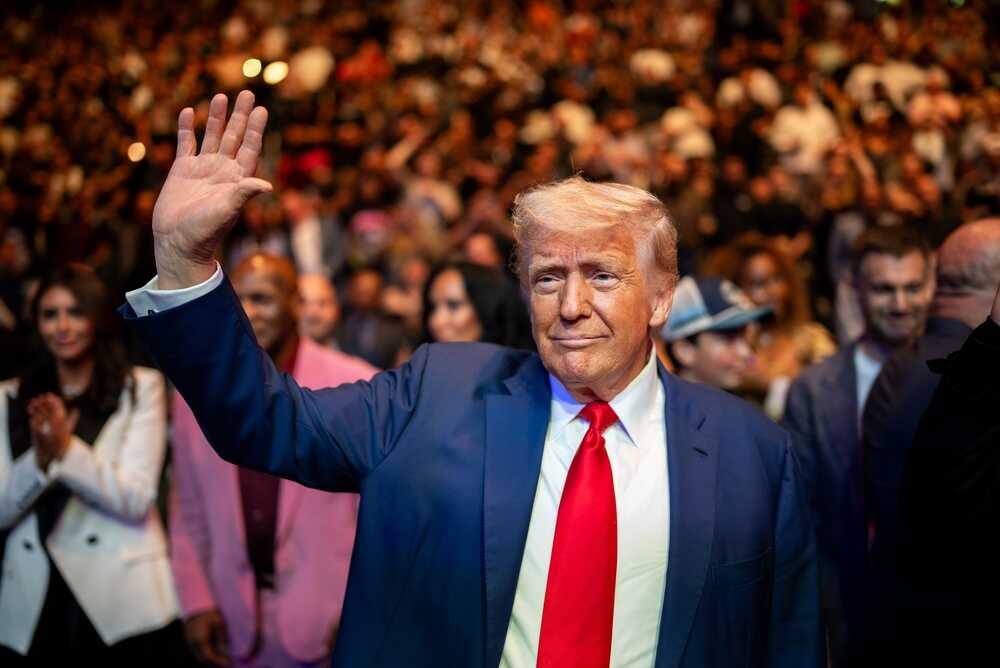
President Trump used Mount Rushmore to frame the Founding Fathers as a living force behind American freedom.
Quick Take
- Trump said the nation’s founders still shape the country’s freedom and identity.
- He tied Mount Rushmore to Washington, Jefferson, Lincoln, and Theodore Roosevelt.
- He announced the National Garden of American Heroes in the same address.
- Critics in the press called the speech divisive and linked it to culture-war politics.
Trump Ties The Founders To Today’s Fight
President Trump told the crowd at Mount Rushmore that the Founding Fathers started a revolution that still matters today. He praised the men carved into the mountain as symbols of American strength and lasting liberty. The speech centered on the idea that the country’s freedom did not survive by accident. It survived because Americans kept defending it, generation after generation.
Trump also said the nation’s story is bigger than one election or one moment in time. He pointed to George Washington, Thomas Jefferson, Abraham Lincoln, and Theodore Roosevelt as examples of American greatness. The White House archive of the 2020 remarks shows him telling the audience that these leaders represent the “exceptional lives” and “extraordinary legacies” that shaped the republic. That message fit his broader effort to link patriotism with respect for history.
National Garden Of American Heroes Pushes The Message Further
Trump used the same event to announce an executive order creating the National Garden of American Heroes. He said the project would honor great Americans with a physical tribute, not just speeches or slogans. For conservatives, that idea fits a simple argument: a country that forgets its heroes will soon forget its principles. The order aimed to make American achievement visible and permanent.
The speech also drew a sharp line against forces Trump said were trying to erase the nation’s past. The New York Times reported that he warned of a “relentless effort to erase our history, vilify our heroes, obliterate our values, and indoctrinate our youth.” That wording made the address more than a celebration. It turned the event into a fight over whether American history should be honored or torn down by activists and elites.
Critics Framed The Event As A Culture War Flashpoint
Major media coverage focused less on Trump’s defense of the Founders and more on the conflict around the speech. The New York Times described the address as grim and polarizing, and said Trump barely acknowledged the pandemic surge. The same report noted that many supporters were not wearing masks. That split-screen image gave critics an easy way to attack the event as reckless and divisive rather than patriotic.
Donald Trump open his remarks at Mount Rushmore for American 250th anniversary. pic.twitter.com/PMZkrZ7K3Q
— Mrs. Nostrand Amber (@ManagerbyAmber) July 4, 2026
Social media reactions also reflected the same divide. Posts on Instagram and Facebook labeled the speech “extreme” and “fascist,” showing how fast the left framed a patriotic message as dangerous. Trump supporters saw something different: a president speaking plainly about national identity, family, history, and freedom. The dispute shows a larger battle over who gets to define America’s past and what that past means for the future.
Sources:
youtube.com, trumpwhitehouse.archives.gov, nytimes.com, facebook.com