The central issue is not whether cheaper imports once lowered prices; it is that the bargain also encouraged a long, measurable shift in American production capacity, and that shift left the United States more exposed, less self-sufficient, and politically harder to govern. Marco Rubio’s argument is that deindustrialization was not an accident of history but the result of policy choices that traded industrial depth for consumer cheapness and supply-chain dependence.
Key Points
- Rubio frames deindustrialization as a policy choice, not an inevitability, and ties it to offshoring, weak supply-chain sovereignty, and the loss of working-class jobs.
- His current push is not just rhetorical; it shows up in tariffs, reshoring proposals, and legislation aimed at penalizing companies that offshore production.
- The debate is less about whether manufacturing employment fell than about what that decline means: critics emphasize output and consumer prices, while Rubio emphasizes industrial capacity, resilience, and regional damage.
- His case has become more than a trade argument; it is now a national-security and industrial-strategy argument about who controls essential production.
What Rubio Is Actually Arguing
Rubio’s core claim is blunt: the United States did not simply drift into deindustrialization, it chose it through decades of trade policy, offshoring incentives, and tolerance for a global system that rewarded moving production abroad. In his telling, the result was predictable. Plants closed, millions of manufacturing jobs disappeared, and the country surrendered leverage over critical supply chains to foreign competitors and adversaries. That is why he keeps returning to the same phrase, in one form or another: what looked like efficiency in the short run became dependence in the long run.
That argument is easy to flatten into nostalgia, but Rubio is making a more specific case than “bring back old factory jobs.” He is arguing that manufacturing is a strategic asset, not just another sector. Once you lose it, you do not merely lose paychecks; you lose the capacity to make medicines, components, machine tools, and defense inputs at scale when crisis arrives. His statement at Munich linked industrial decline directly to weakened sovereignty, and that is the conceptual spine of his politics.
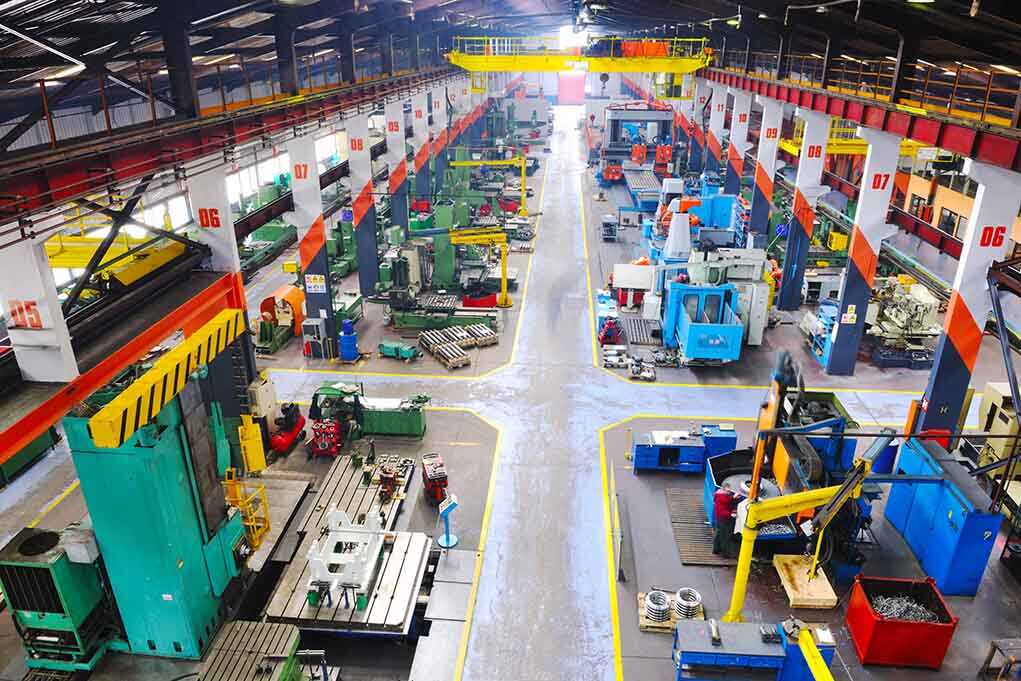
The economic logic behind his position is straightforward even when the politics are not. If firms can arbitrage labor and regulatory costs across borders, they will often do so. Consumers benefit from lower sticker prices, but the gains are diffuse and immediate, while the costs of factory closure are concentrated, delayed, and regional. That asymmetry is why deindustrialization has remained such a durable grievance in trade politics: the benefits are spread across everybody, but the damage lands hardest on particular workers, towns, and industrial ecosystems.
How the Story Grew Beyond Trade Policy
Rubio has been making this argument for years, and the through-line is consistent. Earlier campaign and Senate materials from his office describe a manufacturing peak around 1980, followed by a sharper break around the turn of the century, when globalization and the China trade opening accelerated the loss of industrial jobs. He has also been unusually willing, for a Republican, to turn that diagnosis into an affirmative industrial agenda rather than a purely anti-regulatory one. That matters because it distinguishes his position from the older free-trade orthodoxy that dominated both parties for decades.
His latest framing goes further than the older “trade hurts workers” line. Rubio now speaks of industrial policy, supply-chain security, and economic sovereignty in the same breath, treating manufacturing as a form of national power. That is why he has backed or promoted measures to restrict benefits for firms that offshore production, including efforts aimed at automakers and other sectors tied to federal incentives. He is not only criticizing offshoring in theory; he is trying to alter the price structure that made offshoring attractive in the first place.
In other words, Rubio’s position has evolved from complaint to governance. He is no longer arguing merely that trade produced losers. He is arguing that the state should actively shape where production happens, because the market will not naturally preserve strategic capacity on its own. That is the heart of his reindustrialization argument, and it is why he has become a significant voice in a post-orthodox Republican economic debate.
Where the Real Disagreement Lies
The sharpest dispute is not over whether manufacturing employment fell. It did. The dispute is over what metric should carry the most weight. Rubio and like-minded proponents emphasize jobs, communities, and strategic capacity. Critics respond that the United States did not “lose” industrial power in any simple sense, because manufacturing output remained substantial even as employment fell, thanks in part to productivity gains and automation. On that view, the tragedy is real, but the diagnosis is overstated if it treats fewer factory workers as proof of economic collapse.
This is the central tension in the deindustrialization debate. One side counts factory towns, labor-force participation, and dependence on foreign supply; the other counts output, efficiency, and consumer surplus. Both are looking at real parts of the same economy, but they are not asking the same question. Rubio’s answer is that cheaper goods were bought at too high a strategic price. The counterview is that consumers, firms, and the broader economy benefited from lower costs, even if the adjustment was ugly and uneven.
The evidence base supports the existence of concentrated harm. Research discussed in Rubio-adjacent policy writing links manufacturing decline to weaker wage growth, social fragmentation, reduced family formation, and related pathologies in affected communities. That does not prove every offshoring decision was a mistake, but it does explain why the issue persists politically long after the trade gains were tallied. The damage was not abstract. It was geographic, social, and generational.
At the same time, a serious account has to admit the counterpoint Rubio’s critics raise: industrial decline is not the same thing as national impoverishment, and a country can shift toward services while still producing more value overall. That is why the argument over deindustrialization never settles. It is really an argument about what kind of resilience a rich country needs, how much it is willing to pay for it, and whether a market optimized for price will ever reliably protect strategic capacity on its own.
Why Rubio’s Message Has Stuck
Rubio’s message resonates because it speaks to two anxieties at once. The first is economic: millions of workers and families experienced globalization not as a theory but as a lost plant, a smaller paycheck, or a town that never recovered. The second is geopolitical: the world looks less benign than it once did, and the idea that America should depend on rivals for critical goods now sounds reckless rather than sophisticated. That combination gives his argument unusual staying power.
It also explains why the policy response has shifted. The old consensus assumed that markets would efficiently allocate production across borders and that strategic vulnerability could be managed later. Rubio’s camp argues that “later” never came; instead, the country discovered that industrial capacity is hard to rebuild after it has been hollowed out. Once the toolmakers, suppliers, and skilled production networks leave, they do not simply reappear because a politician asks for them back. Reindustrialization, if it works at all, is slow, costly, and politically deliberate.
That is the deeper significance of Rubio’s argument. He is not merely defending tariffs as a negotiating tactic. He is trying to rewrite the common sense of American economic policy, from a model that prizes low consumer prices above all else to one that treats domestic production as a public good. Whether that succeeds depends less on slogans than on whether Washington is prepared to sustain the expensive disciplines that real industrial rebuilding requires.
Prices were cheaper… but it ended up deindustrializing our country and costing us millions of jobs."
Secretary of State Marco Rubio says decades of prioritizing low-cost manufacturing overseas hollowed out America's industrial base.
pic.twitter.com/uzQ4WVdb1h— @perkinsights (@perkinsightz) August 2, 2026
Sources:
facebook.com, profarmer.com, state.gov, foxnews.com, cato.org, presidency.ucsb.edu, americanrhetoric.com, sbc.senate.gov, americanmind.org, linkedin.com, amo.house.gov