

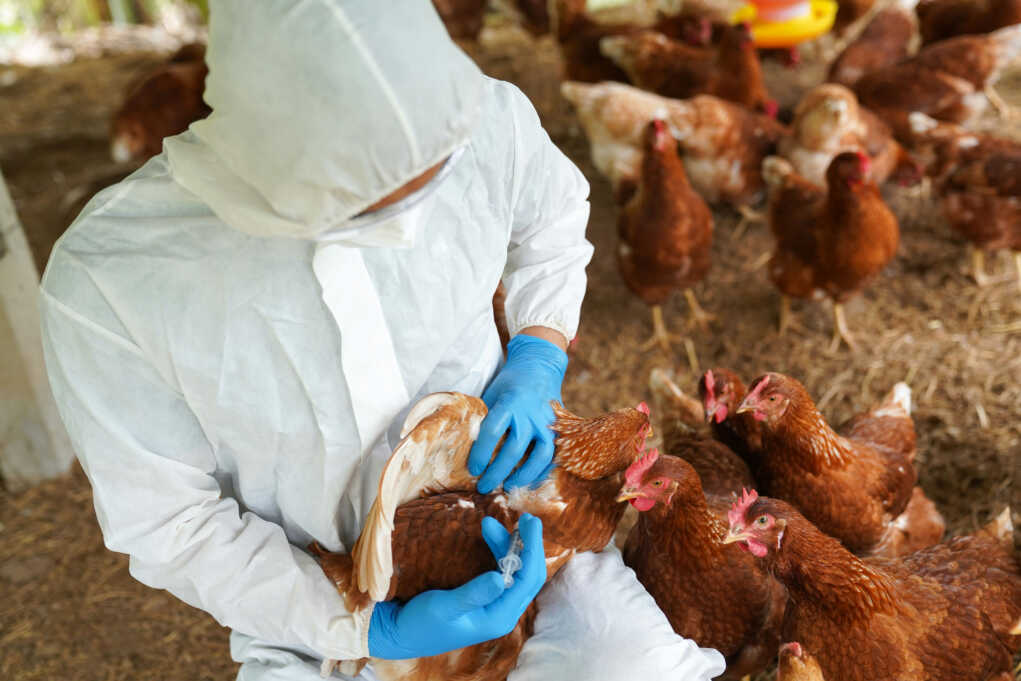
A deadly bird flu strain has finally reached Australia, raising new questions about global health, food security, and government readiness.
Story Snapshot
- H5N1 bird flu has now been confirmed on every continent after a first case in Australia.
- The virus was found in a single wild seabird, not in poultry or farm animals, so far.
- Australian officials say public risk is low, but experts warn of serious wildlife and farm impacts.
- The case is a reminder to Americans how fast global outbreaks can move and why strong borders and biosecurity matter.
Deadly H5N1 Finally Reaches Australia’s Shores
Australian authorities have confirmed their first case of the highly pathogenic H5N1 bird flu on the mainland, meaning this dangerous strain has now reached every continent on Earth.[2] The virus was detected in a single migratory seabird, a brown skua, found on a remote beach in Cape Le Grand National Park near Esperance in Western Australia.[2] Until now, Australia had been the last continent without a confirmed H5N1 detection, thanks in part to its isolation and strict border controls.[9]
The country’s Department of Agriculture, Fisheries and Forestry said the infection was found only in that one wild bird and stressed there have been no cases in poultry or farm animals.[2][8] Officials also said there was no evidence of mass bird deaths or broader spread at the time of the announcement.[2] Early testing of a second seabird from the same area, a giant petrel, returned a suspect positive result, and further laboratory work is underway to confirm if it is also infected.[3][8]
What This Strain Is, And Why Experts Take It Seriously
The confirmed virus is the H5N1 “high pathogenicity” strain, part of the clade 2.3.4.4b lineage that has devastated bird and some mammal populations across the globe since 2020.[8][9] This is the same family of virus that has killed large numbers of wild birds and infected poultry, sea mammals, goats, dairy cows, and even a small number of people in other countries.[16] Scientists say this clade can jump into poultry and cause severe disease without needing to change or mutate first, which makes early detection critical for farmers.[10]
Australia’s own health authorities still describe the risk to the general public as low, because human infections remain rare and usually involve close contact with sick birds or, in the United States, infected dairy cattle.[8] There have been no human cases in Australia from this global H5N1 clade 2.3.4.4b.[8] One Australian child was treated for a different H5N1 variant in 2024 after catching it overseas and fully recovered, with no spread to others.[1][8] That history supports the “low but not zero” risk message officials are using now.[8]
Limited Detection, Big Unknowns About Spread
So far, the facts are narrow but important: one confirmed brown skua case, one suspected giant petrel case, and no signs of infection in poultry or other animals.[2][3][8] Experts say H5N1 often arrives in new places this way, quietly riding in wild migratory birds before anyone sees problems on farms.[10][16] Australian officials admit they do not yet know if the virus has established itself in local wildlife, and they expect more information once broader testing is complete in coming days.[2]
Authorities have activated surveillance plans along sections of the Australian coastline and are urging people to report sick or dead birds to an emergency disease hotline.[2][8] At the same time, they face real blind spots. Many carcasses reported by the public are too decomposed to test properly, which limits how much scientists can see.[2] That kind of gap is common early in an outbreak and is one reason outside experts warn against assuming the virus is contained just because farm flocks look fine right now.[2][9]
Why This Matters For Food Security And U.S. Readers
Australian scientists warn that if H5N1 spreads through seabirds or shorebirds, it could cause “population-level” or even “species-level” damage to some native animals and hit poultry businesses hard through mass culls if farms are infected.[2][7] That would echo what Americans have already seen: in the United States, the same clade has moved from wild birds into poultry, goats, dairy cattle, and even one farm worker over the past few years, disrupting food production and driving up costs.[16][18] When herds or flocks get sick, farmers lose animals, and families pay more at the store.
The First Case Of H5N1 Bird Flu In Australia Has Been Confirmed. What Does This Mean? #First #Case #H5N1 #Bird #Australia #Been #Confirmed. #What #Does #This #Mean? #USA #Russia #Biden #Ukraine #War #Palestine #Gaza #Israel # https://t.co/zSBsjBK8As pic.twitter.com/LgF2hGxwmp
— MENAFN Business (@MENAFN) June 20, 2026
For conservative readers in the United States, this Australian case is another warning that global disease threats do not respect borders, trade deals, or green talking points. It highlights why strong national biosecurity, honest communication, and serious border controls matter more than feel-good globalist promises. When far-off governments or international bodies underplay risk, it is everyday people, small farmers, and working families who carry the cost through higher food prices and shaken supply chains—not the elites who fly to conferences.
How Conservative Leaders Should Read The Signal
This latest spread into Australia shows how quickly a dangerous strain can complete its march around the world once it gains real momentum.[2][5][9] It also shows the difference between calm, fact-based vigilance and panic. The key point is simple: H5N1 is now everywhere geographically, but not in every farm system, and smart policy can still protect food supplies. That means strong on-the-ground surveillance, backing farmers with clear rules, and resisting any push to use outbreaks as a pretext for heavy-handed climate or “One Health” power grabs.
For Americans under the current Trump administration, the lesson is to double down on border checks, testing at ports, and support for domestic producers rather than rely on overseas systems that may be behind the curve. Australian officials say their public health risk is low and their poultry sector is still free of H5N1, and that measured tone is right as long as it stays tied to real testing and open reporting.[2][8] The world has now seen this virus reach every continent. The next steps—by each national government—will decide whether it stays a wildlife story or becomes another blow to families’ dinner tables and wallets.
Sources:
[1] Web – H5N1 bird flu confirmed in Australia for the first time, meaning virus …
[2] Web – Australia’s first human case of H5N1 and the current H7 poultry …
[3] Web – Deadly H5 bird flu variant detected in Australia for first time in …
[5] Web – A migratory bird found on a remote beach in Western Australia has …
[7] Web – A suspected case of the highly pathogenic H5N1 bird flu in Western …
[8] Web – First detection of highly pathogenic H5N1 bird flu confirmed … – …
[9] Web – Bird flu (Avian influenza) – DAFF
[10] Web – Chickens, ducks, seals and cows: a dangerous bird flu strain is …
[16] YouTube – First case of deadly H5 bird flu variant detected in Australia
[18] Web – First sighting of human H5N1 in Australia: A detailed account … – …