
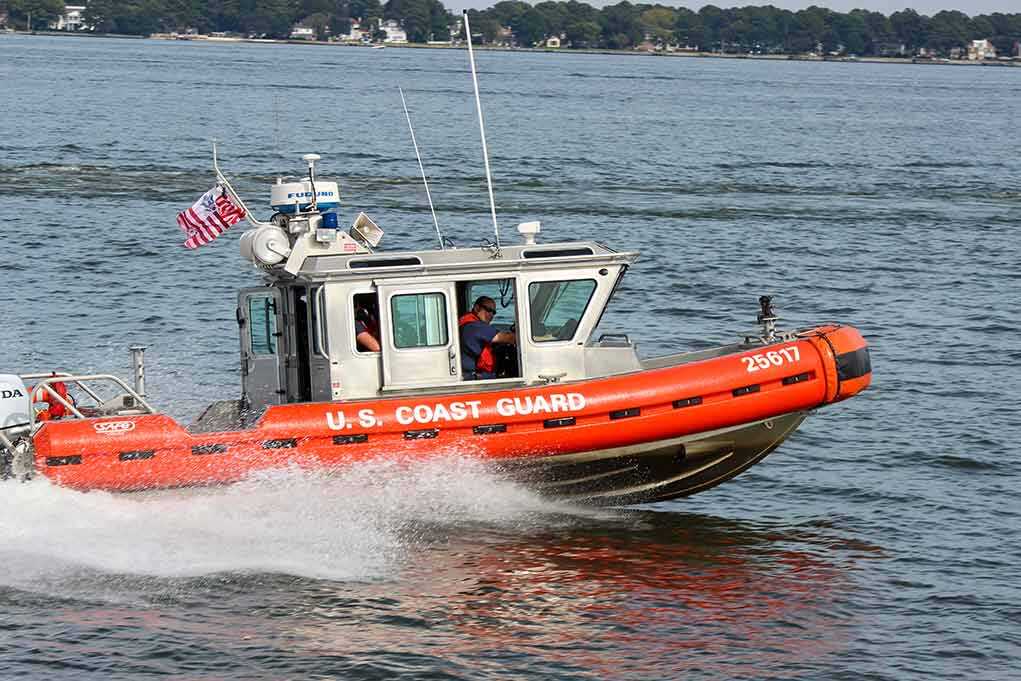
Coast Guard crews recovered the Cessna’s cabin and life-saving gear near Horn Island while the urgent search for four adults and two children continued.
Story Snapshot
- Federal authorities reported six people aboard a single-engine Cessna that went down off Mississippi.
- Search teams found the aircraft’s cabin, three life jackets, and a life raft near Horn Island.
- Officials said contact was lost around 3:45 p.m., and the plane descended rapidly.
- Investigators have not determined the cause; the search remained active at last report.
Active Coast Guard Search After Reported Mid-Afternoon Loss of Contact
United States Coast Guard units launched a search Tuesday after the Federal Aviation Administration reported losing contact with a single-engine Cessna around 3:45 p.m. near Horn Island, Mississippi. Officials said six people were believed aboard: four adults and two children. Crews focused search patterns in the Mississippi Sound after reports of debris and a rapid descent. This incident triggered a full maritime aviation response, with boats and aircraft canvassing the area through daylight and into the night hours.
Coast Guard Mobile confirmed the mission parameters to local outlets and described a multi-asset push across the likely impact zone. Authorities cited information that the Cessna began a steep drop at about 10,000 feet per minute before it was no longer tracked. That figure helped define search grids and timelines. As of the latest updates, officials had not named the occupants, and they emphasized the priority remained locating any survivors and securing the site for investigators.
Cabin, Life Jackets, and Raft Recovered Near Horn Island
Searchers located the aircraft’s cabin about two nautical miles northeast of Horn Island, a barrier island off Pascagoula. Crews also recovered three life jackets and a life raft in the vicinity. These finds confirmed the crash site and anchored the expanding search area set by currents and wind. Officials stated that no occupants had been located at the time of those recoveries. The recovered items will aid investigators and help establish an initial debris field pattern for drift analysis.
Local and national reports aligned on the core facts: an over-water crash, a defined location, and ongoing rescue efforts. Some coverage differed on the exact departure and destination descriptions, a common issue in the first hours after an aviation incident. Those early differences did not change the main picture of where crews searched or what they had found so far. Officials reiterated that determining cause will follow standard procedure led by federal investigators.
What Authorities Say About the Flight and Descent
Officials and local reporting described a flight that departed the New Orleans area before contact was lost over water east of Mississippi. Reported data indicated the aircraft was descending at a rate consistent with a severe emergency. That clue set a tight window for last known position and possible splashdown. Coast Guard units worked methodically from that point, using established search and rescue tactics for maritime aviation cases. Those tactics rely on precise drift modeling, asset coordination, and time-on-station discipline.
The Federal Aviation Administration will provide records of radar, communications, and transponder signals to investigators. The National Transportation Safety Board will examine wreckage, maintenance history, and pilot qualifications. That process typically separates operational facts from causal findings and can take weeks to months. For now, the mission remained a rescue priority, with crews scanning surface lanes and nearby shallows for any sign of the six people reported aboard.
Why This Search Approach Matters for Survivability
Time, water temperature, and currents drive survival chances in maritime crashes. Coast Guard doctrine stresses rapid launch, dense search patterns, and recovery of any floating gear. Past federal reviews show that strong coordination and early debris finds can improve results in over-water events by narrowing the target box. The discovery of the cabin, jackets, and raft gives crews fixed points to model drift and redeploy assets as daylight, tide, and wind shift across the Mississippi Sound.
"Six missing in plane crash off Mississippi coast, Coast Guard reports" – USA Today #SmartNews https://t.co/OLnFuF1xz7
— Mark (@Markf21Mark) November 25, 2026
Families and neighbors want answers fast, and they deserve a straight account. Search crews are giving it everything they have, hour by hour. As President Trump’s administration supports the Coast Guard’s mission, this is where government must work: save lives, secure the scene, and hand clean evidence to investigators. That means clear communication, tight coordination, and respect for the facts as they stand today. The work is hard, but it is the right work—and it is underway.
Sources:
nbcnews.com, localnews8.com, edition.cnn.com, wbrz.com, wzzm13.com, aircrashdb.com, ntsb.gov