

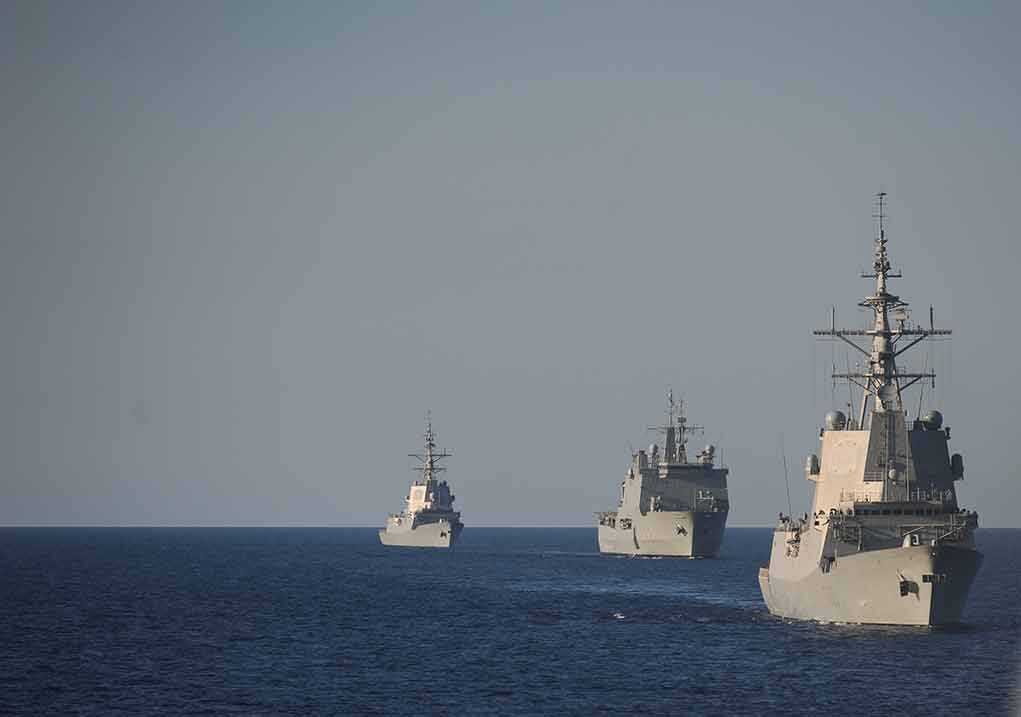
A claimed Ukrainian sea-drone strike reportedly sank a Russian warship in Libya, pushing the war far beyond Europe’s shores.
Story Snapshot
- Reports say a Russian corvette in Benghazi was hit by naval drones, with two other ships damaged.
- Ukraine’s long-range campaign also targeted Russian oil, petrochemicals, and a major flight-test base deep inside Russia.
- Fires and blasts were reported at several sites, indicating real physical effects despite Russian claims of mass shoot-downs.
- Finnish officials assessed a separate Baltic ship strike as probably Ukrainian, widening the maritime fight.
Reported Benghazi Strike Extends the War to the Mediterranean
Reports from November say Ukrainian sea drones struck a Russian naval vessel in Benghazi, Libya, with claims that a corvette sank and two other ships were damaged. Coverage described the attack as suspected or presumed Ukrainian, and attribution details remain limited in public sources. The account places the strike in a Libyan port far from the Black Sea, which suggests Ukraine’s naval-drone reach has widened. The incident drew attention because it would mark a rare hit on Russian naval assets in the Mediterranean.
Attribution in open reporting uses careful language. Sources cite local authorities and regional reporting but do not show a public, formal Ukrainian admission for the Benghazi strike. That does not negate the event; it sets a clear limit on what is confirmed in public. The same coverage ties the Benghazi strike to a larger campaign that moved beyond coastal Crimea and the Black Sea to distant waters that matter for Russian logistics and global shipping routes.
Long-Range Strikes Hit Russian Oil and Military Test Sites
Ukrainian officials reported deep strikes on Russia’s energy and defense nodes hundreds of miles from the front. Targets included the Nizhnekamskneftekhim petrochemical complex and the TAIF-NK refinery in Tatarstan, plus a Samara oil dispatch site. Ukraine also reported a strike on the 929th State Flight Test Center at Akhtubinsk, which supports aircraft and weapons testing. These sites connect to fuel supply, industry, and military readiness. Hitting them forces Russia to defend more terrain with finite air defenses.
Local and regional reports cited fires, blasts, and secondary explosions at some sites. A Samara oil facility and Tatarstan plants reportedly burned. Coverage also described detonations at a depot near Akhtubinsk tied to air-launched missile components. These effects point to real damage at least in part of the target set. Still, the available sources do not measure how long each site stayed offline or how much output was lost after repairs.
Baltic Ship Blaze and Non-Ukrainian Attribution
Reuters reported that a Russian cargo vessel in the Baltic caught fire and that the crew evacuated after a reported drone strike. Finnish authorities assessed the hit as probably carried out by Ukraine, which adds a non-Ukrainian voice to attribution. The Baltic case, paired with Libya reporting, suggests a maritime front that now spans from northern Europe to the Mediterranean, raising risks and stretching Russian defenses. The broader effect includes higher security demands on ports, ships, and coastal infrastructure.
Russian officials have tried to frame the overall drone wave as largely defeated. Moscow’s accounts said air defenses downed hundreds, even more than a thousand drones during peak attacks, and called some high-profile damage “insignificant.” Those figures stand in tension with reported fires, struck facilities, and ship incidents that reached international wires. The gap shows an information fight on top of the drone war, where each side highlights data that supports its message.
Why This Matters for U.S. Interests and Security
Ukraine’s expanded reach shows how cheap, precise systems can hit far-off fuel and military hubs. That spreads out Russian defenses and forces costly repairs. It also risks wider escalation across busy sea lanes. For Americans, this underscores why strong, smart border and port security matters and why energy policy at home should reduce reliance on unstable regions. A safer, stronger energy base at home protects families from price spikes when far-away refineries or ships are hit.
Clear facts support several points. First, reported fires and ship damage show that not all drones were stopped. Second, independent attribution in the Baltic from Finland carries weight beyond Kyiv’s statements. Third, limits remain. The public record does not yet quantify lasting damage at every site or prove who launched every maritime drone in the Mediterranean. That said, the pattern across Russia’s rear areas and distant seas points to a costly new normal for Moscow.
Sources:
twz.com, nationalsecurityjournal.org, chosun.com, reuters.com, transformukraine.org, pollar.news, irishtimes.com, ua.news, tilt.now, inews.co.uk, newsminimalist.com, ukrdronecampaign.pplx.app