A Washington press gala that was cut short by an alleged would-be assassin is back on the calendar, raising fresh questions about security, priorities, and accountability in the nation’s capital.
Story Snapshot
- The White House Correspondents’ Dinner has been rescheduled for July 24 after the April shooting that targeted President Trump.[1]
- Organizers promise “significantly enhanced safety measures” and new access rules, but provide no public technical details.[1][2]
- Critics cite prior screening failures and inconsistent accounts of checkpoints as reasons to doubt the new plan.
- President Trump has agreed to attend, signaling resolve but also putting pressure on security agencies to get it right this time.[2]
From Chaos in April to a New Date in July
The White House Correspondents’ Association (WHCA) announced that its annual dinner, abruptly ended by gunfire on April 25, will now take place on July 24.[1] The original event at the Washington Hilton was shattered when an armed suspect, identified as 31-year-old Cole Allen, allegedly tried to assassinate President Donald Trump as thousands of journalists, officials, and guests looked on.[1] Prosecutors say Allen rushed through a security checkpoint before being tackled by law enforcement officers.[1] Allen has pleaded not guilty to several serious federal charges, including attempted assassination of the President of the United States.[1]
WHCA President Weijia Jiang told members that rescheduling the dinner was “not automatic” but a choice the board made “after thoughtful consideration and input from our members.”[1][2] That language underscores how politically charged the decision has become in a climate where any threat near a sitting president is viewed as a test of institutional competence and resolve. For many Americans watching from outside the Beltway, the idea of Washington media quickly putting “nerd prom” back on the calendar may feel disconnected from everyday concerns about safety, rising crime, and respect for public institutions. Yet the association is pushing ahead, framing the dinner as part of its role in defending a free press.[1][2]
Promises of Tighter Security but Few Public Details
In her message, Jiang pledged that the rescheduled dinner will feature “significantly enhanced safety measures and new access procedures,” and she described it as a “more intimate gathering.”[2] Reports say organizers are coordinating with the United States Secret Service and other law enforcement agencies, and that additional access instructions will be provided directly to attendees.[1][2] However, no technical security plan has been released that would allow the public to judge whether known weaknesses from April have been fully addressed. There is no published threat assessment, no staffing or screening architecture, and no disclosed evacuation or emergency response blueprint tied specifically to the new date.[1][2]
News coverage has highlighted that some of the strongest criticism of the original event came from inside the ballroom, where attendees and at least one lawmaker described inconsistent or weak screening. Fox News reporting cited accounts of guests entering without photo identification checks, passing through areas with no magnetometers, or encountering different security procedures depending on which door they used. Those claims contrast with descriptions of a “security checkpoint” that the suspect allegedly breached, leaving an injured officer and chaos in the hall.[1][2] That discrepancy fuels skepticism: if the baseline security picture from April is still murky, it is hard for outside observers to accept organizer assurances that everything is now fixed.
Venue Shift, Political Optics, and Conservative Concerns
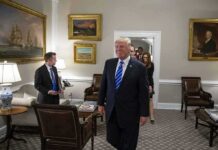
Coverage indicates that the rescheduled dinner will not simply restart at the same location under the same conditions.[2] Reports note that organizers are moving away from the Washington Hilton and planning a “more intimate gathering,” a change that likely reduces crowd size and theoretically allows tighter access control.[2] President Trump has publicly endorsed rescheduling as a sign of “strength and fortitude” and has said he plans to attend and speak at the July event.[2] That stance signals that the Trump administration is not backing away from public appearances, even after a direct threat inside a crowded ballroom, and it puts additional pressure on the Secret Service to demonstrate that lessons have been learned.
The White House Correspondents’ Dinner, cut short on April 25 after authorities say a man stormed the Washington Hilton armed with guns and knives and fired a shotgun at a Secret Service officer, has been rescheduled for Friday, July 24. https://t.co/MmLcYyVjLj
— LiveNOW from FOX (@livenowfox) June 2, 2026
For constitutional conservatives, two core tensions run through this story. On one hand, the dinner involves a president who has taken relentless fire from legacy media yet still shows up to face them head-on, which many see as a display of courage and a refusal to let political violence dictate public life. On the other hand, the same media institutions that often cheer on expansive government power now ask the country to take their security claims on trust, without releasing the kind of detailed after-action reports, venue-security plans, or threat assessments that would show concrete fixes.[1][2] Until those documents are available, the debate stays stuck where many post-incident debates end up: organizers point to “enhanced security,” critics point back to the breach, and the public is left choosing whom to believe rather than reviewing hard facts.[1][2]
Sources:
[1] Web – Second Time Lucky? DC Media’s ‘Nerd Prom’ Rescheduled After Would-Be …
[2] YouTube – White House Correspondents’ Dinner rescheduled after shooting