President Trump used Mount Rushmore to warn that American identity is under attack as the nation nears its 250th birthday.
Quick Take
- Trump spoke at Mount Rushmore on July 3, 2026, during the America 250 celebration.
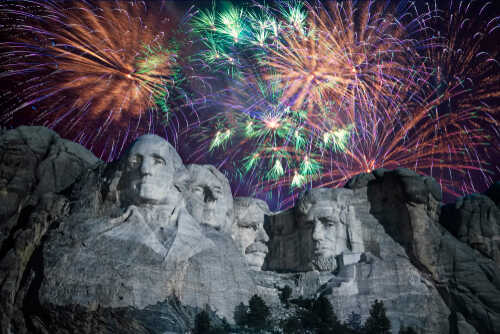
- He praised the four presidents carved into the mountain: Washington, Jefferson, Lincoln, and Roosevelt.
- He called communism the biggest threat facing the nation.
- He also claimed massive new investment and cast the speech as a defense of American culture.
Trump Ties America 250 to a Fight Over Identity
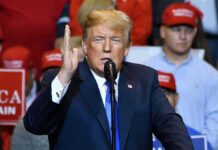
Trump’s Mount Rushmore remarks made one point clear: he sees the America 250 milestone as a battle over the nation’s soul. The White House video of the speech shows him honoring the four presidents on the mountain while arguing that the country faces renewed pressure from hostile ideas and broken values. That message fits a long pattern at Mount Rushmore, where Trump has framed heritage as something worth defending.
The setting mattered as much as the words. Mount Rushmore is meant to honor the founding, growth, preservation, and unity of the United States, and the National Park Service says the four presidents represent the first 150 years of the nation’s history. Trump leaned into that symbolism by casting the site as a place to celebrate American greatness, not apologize for it. For many conservatives, that message lands because it puts patriotism back at center stage.
Communism, Culture, and the Red Meat Message
Trump used the speech to draw a sharp line between American freedom and left-wing ideology. In televised coverage, he identified communism as a greater threat than World War II, Pearl Harbor, or September 11, 2001. He also repeated broad claims about ideological enemies and cultural decline. Those lines were not paired with detailed policy steps, which made the address more of a rallying speech than a governing blueprint.
The speech also included claims that went beyond what the public record can easily verify. Trump said $19.2 trillion had poured into the United States during his administration’s last 12 months, but the available reporting in this package does not provide a clear economic source for that number. He also made sweeping statements about communism and about who makes up its ranks, yet the reporting cited here does not supply independent proof for those claims. That leaves the speech powerful in tone, but thin on documented support.
A Familiar Mount Rushmore Pattern
Trump’s 2026 remarks follow a familiar pattern from his earlier Mount Rushmore appearances. In 2020, he used the same setting to condemn what he called a “left-wing cultural revolution” and promised to defend monuments, national memory, and the values tied to the founding. News coverage at the time described that speech as divisive and focused on the culture war. The new address echoes that same structure, even as the calendar now places it in the America 250 moment.
ICUMI
Trump at Mount Rushmore: Speech time, how to watch live #MorningJoe .@MSNow @CNN #Bloomberg @CNBC @ABCNews @CBSNews https://t.co/U2onTJ63QH via @usatoday— JoeyZee (@JoeyZNJ) July 4, 2026
Supporters will likely see the speech as a plain defense of country, faith, history, and order. Critics will keep calling it polarizing because it treats culture itself as a front line in politics. Both reactions are predictable. What is not in doubt is that Trump chose a setting loaded with national meaning and used it to tell voters that America’s identity still needs active defense, not passive celebration.
Sources:
youtube.com, trumpwhitehouse.archives.gov, nytimes.com, facebook.com, instagram.com, bunkhistory.org