

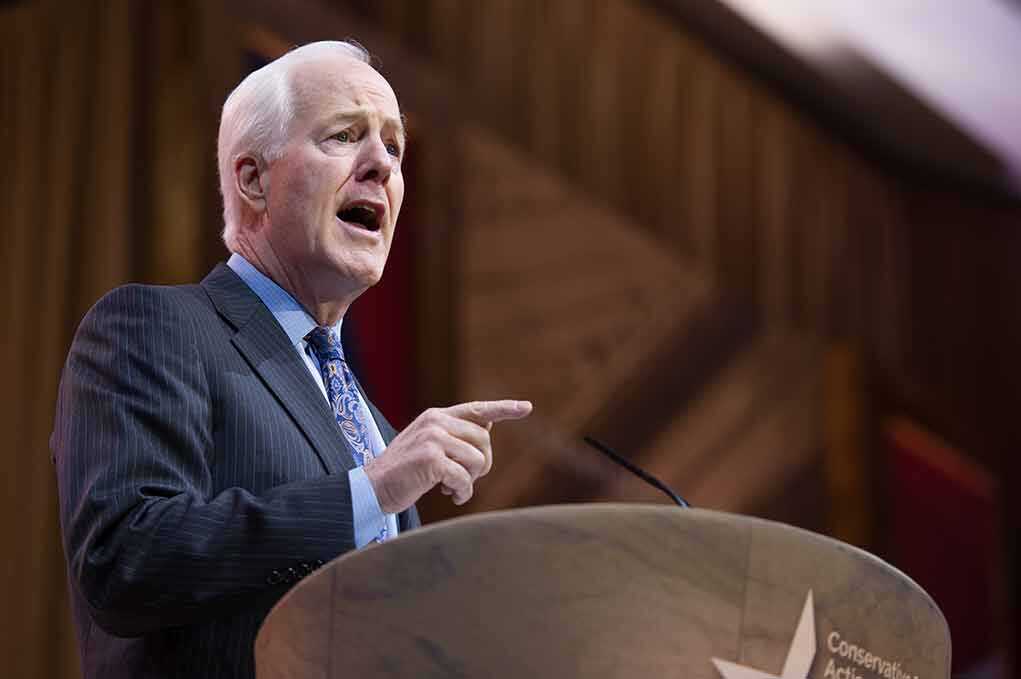
Sen. John Cornyn used the Senate’s blue-slip power to stop President Trump’s Texas judge pick days after the nomination arrived, handing Democrats leverage over a key court seat before the new year.
Story Highlights
- Cornyn refused to return the blue slip for T. Elliot Gaiser, halting the nomination’s progress.
- The official record lists Gaiser “of Ohio,” bolstering Cornyn’s residency objection.
- The nomination hit the Senate on November 16, signaling a race against a looming shift in control.
- Sen. Ted Cruz called Gaiser “exceptionally well qualified” and warned delay could forfeit the seat.
What Cornyn Did And Why It Matters
Sen. John Cornyn blocked President Trump’s nominee, T. Elliot Gaiser, for the Northern District of Texas by not returning the Senate blue slip. For district judges, a missing blue slip can stop a hearing in the Judiciary Committee and freeze the pick in place. Cornyn said Gaiser was not from Texas, had no trial experience, and had not been vetted. He also said he offered the White House an alternative candidate, signaling he wanted the vacancy filled, but not with Gaiser.
The official nomination record underlines the speed and the core dispute. The Senate received Gaiser’s nomination on November 16, 2026, during a push to confirm judges before Democrats assumed Senate control in January. The record identifies Gaiser as “of Ohio,” not Texas, matching Cornyn’s on-the-record complaint about residency. The available public sources do not disclose documents that prove or disprove Cornyn’s claims on vetting or trial experience, leaving those points asserted but not backed by released files.
The Blue Slip: Custom With Real Teeth
The blue slip is a Senate practice where home-state senators signal support or opposition to a judicial nominee. Its force has varied over time, but for district court seats it often acts as a practical veto when a chair honors the custom. Reports indicate that in this case, withholding the slip effectively blocked any committee hearing for Gaiser. That means no testimony, no public vetting record, and no up-or-down committee vote—just a dead stop driven by one senator’s refusal.
This asymmetry matters for conservatives who expect fair process. When a single senator can halt a nominee without a hearing, voters lose the chance to see qualifications tested in public. That lack of sunlight also lets rival claims fester. Here, Cornyn’s statements about vetting and trial work stand opposite the White House’s rush to fill a Texas seat, but there is no released committee file to confirm or refute the disputed details. Process should serve the people, not shield insiders.
Cruz’s Case: Fill The Seat Now Or Risk Losing It
Sen. Ted Cruz argued Gaiser was “exceptionally well qualified” and, as a senior Justice Department official, already had a completed background check, making him the only candidate who could clear the process before control changed hands. Cruz warned that delay would effectively give Democrats the seat for the long term. He said a brand-new nominee could not complete a background check fast enough to be confirmed in time, which would leave Texans without a conservative judge on that bench.
Sen. John Cornyn (R-Texas) on Wednesday blocked President Trump’s judicial nominee T. Elliot Gaiser from being confirmed for a seat on the U.S. District Court in the Northern District of Texas because the nominee is not from Texas. https://t.co/R03i4sCrw5
— Ⓜ️Ⓜ️ Lauren Ashley Davis -OG Meidas Mighty 🦅 (@Meidas_LaurenA) November 19, 2026
Conservatives see the stakes clearly. President Trump put forward a nominee to protect law-and-order values in a critical Texas court. Cornyn relied on a Senate custom to stop a hearing and pressed for a different pick. The Senate record proves the timing and the Ohio listing; reporting confirms the blue-slip block. But the public still lacks a full vetting file or a trial résumé to weigh. Texans deserve both a vote and a judge who respects the Constitution, not a procedural stalemate that hands Democrats a win by default.
What Comes Next For Texas And The Courts
Time now drives the outcome. The nomination arrived November 16, and Democrats are set to control the Senate in January. Without a quick path forward, the seat likely remains open or gets reshaped by the new majority. That would tilt the court away from Texas priorities like border security, energy freedom, and religious liberty, where federal judges often decide what policies stand. The clearest path is simple: transparent vetting, a prompt hearing, and a vote the public can see and judge for themselves.
Sources:
redstate.com, congress.gov, senate.gov, newsweek.com, usnews.com, washingtonexaminer.com