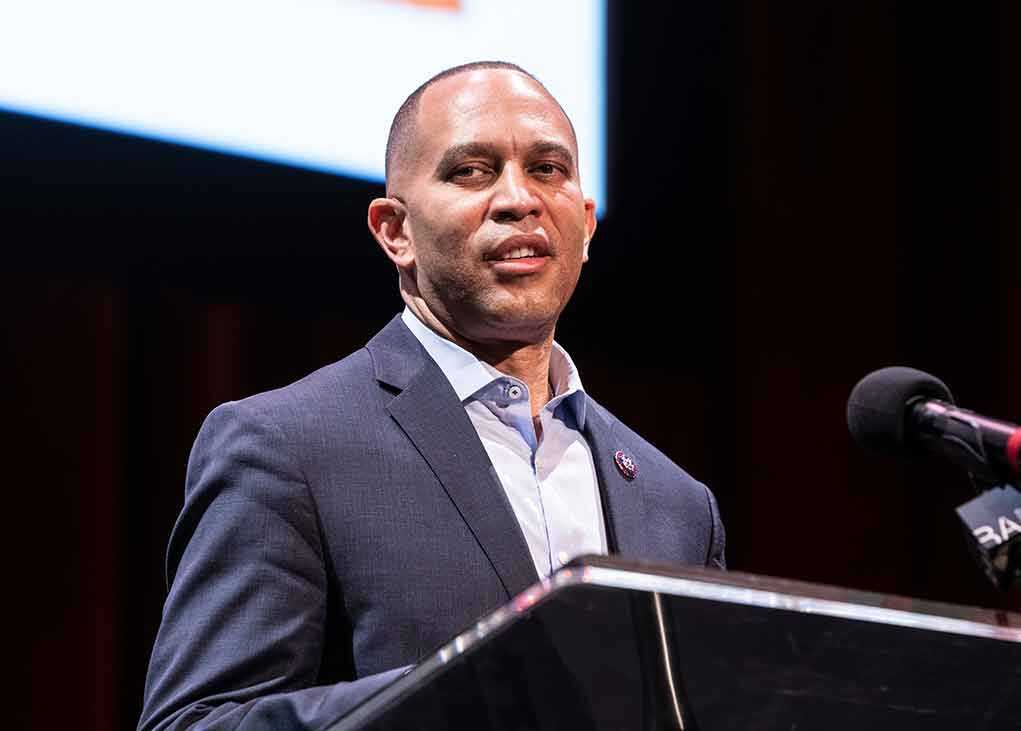
House Democratic Leader Hakeem Jeffries said he supports bringing deported DACA recipients back and giving them “remedial assistance.”
Story Highlights
- Jeffries said “certainly” when asked if deported DACA recipients should be brought back.
- He tied the plan to people he says were treated “unfairly and unjustly” and promised “remedial assistance”.
- He did not define what assistance means or how returns would happen.
- DACA is deferred action, not a legal status or shield from removal, which complicates returns.
Jeffries Endorses Return and Assistance for Some Deported DACA Recipients
On November 10, 2026, House Democratic Leader Hakeem Jeffries said he supports efforts to bring deported recipients of Deferred Action for Childhood Arrivals back to the United States. During a PBS NewsHour exchange, he answered “Certainly” when asked if he backed those efforts. He added that anyone, including DACA recipients, who were treated “unfairly and unjustly” should receive “remedial assistance” and that damage should be undone, according to his office’s published transcript and the PBS program.
Jeffries did not explain which deported recipients would qualify. He also did not identify a review standard, a number of cases, or an agency process. His remarks did not outline a legal path for readmission or say whether the route would be parole, case reopening, visas, or legislation. The scope of “remedial assistance” was also left open, with no definition of whether it means legal help, travel support, status relief, or other aid.
What “Remedial Assistance” Could Mean—and What We Do Not Know
Jeffries framed the idea around people he says were wronged, not as a blanket return for everyone removed. That qualifier leaves key questions. Who decides what counts as unfair treatment? What records will be checked? How will the government pay for it, and which office would lead it? His public statement named no dollar amount, no timeline, and no funding source. Without those details, the plan remains an intention rather than an operational policy.
Media outlets across the spectrum repeated the core quotes and drew their own angles. Some reports focused on the single word “Certainly,” along with the pledge to “undo the damage.” Others translated “remedial assistance” as payments or compensation. Those readings stretch beyond the defined facts, because Jeffries did not describe a specific remedy. The underlying quotes, however, appear consistent across the PBS broadcast and Jeffries’s official release.
Immigration Law Context: DACA’s Limits and Return Hurdles
Deferred Action for Childhood Arrivals is deferred action. It does not provide lawful permanent residence or a right to reenter after removal. United States Citizenship and Immigration Services guidance explains that people with removal orders who depart can face serious bars, and leaving without advance parole can trigger added consequences. Those rules shape what is even possible for a deported recipient seeking to return, which is why any return process would need clear legal authority and case review.
That legal backdrop is why the “how” matters. Options could include humanitarian parole, reopening removal orders, or new legislation. Each tool carries limits, paperwork, and time. Each also has budget and staffing needs. Without a defined path, promises to return people remain uncertain in practice. The difference between a general policy stance and an actual case file is wide. Jeffries’s statement set a goal but did not fill in the steps to reach it.
Fiscal and Security Stakes for Voters
Taxpayers want to know what this would cost and who is eligible. Jeffries offered no price tag, no caseload, and no agency lead. Border and security hawks will also ask how returns are vetted and whether any criminal histories or prior orders would block relief. Clear standards protect the country and also protect applicants from false hope. Until those standards and a process appear, this remains a political commitment without an implementation plan.
🚨 JEFFRIES BACKS FUNDING RETURN OF DEPORTED DACA RECIPIENTS WITH TAXPAYER COMPENSATION
House Democratic Leader Hakeem Jeffries says he supports bringing previously deported DACA recipients back to the U.S. and providing them taxpayer compensation.
The proposal raises…
— Mossadil Commentary (@MOSSADil) November 11, 2026
President Trump’s administration continues to enforce existing immigration laws while Congress debates changes. If House Democrats pursue Jeffries’s goal, they will need to specify the legal basis, costs, and timelines. Voters deserve straight answers: who comes back, why they qualify, who pays, and how it improves fairness without weakening the rule of law. The facts today establish the pledge; the next step is whether Democrats put forward a clear, lawful, and funded plan.
Sources:
yournews.com, fedfront.com, breitbart.com, mediabias.news, meridian.news