
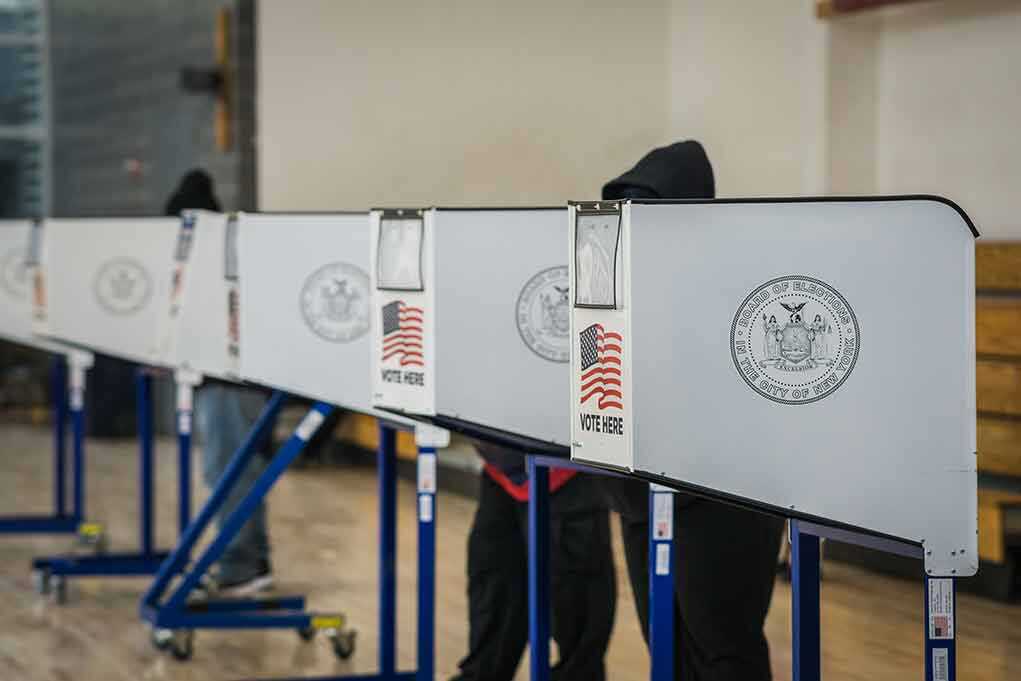
New York Democrats rewrote the state’s election calendar, moved local races onto even years, and now the party’s own chairman says that change helped fuel a sweep of town and county seats across the state.
Story Snapshot
- New York’s Democrat-controlled Legislature moved most local elections outside New York City to even-numbered years starting in 2025.
- State Democratic Party Chairman Jay Jacobs said the first even-year local elections “may have boosted turnout” for his party.
- Democrats flipped local seats in Newburgh, Dutchess, Ulster, Putnam and Erie counties.
- New York Democrats also gained a state Senate supermajority and picked up a U.S. House seat statewide.
- Outside research shows on-cycle elections raise turnout but normally do not tilt results toward one party, raising real questions about New York’s outcome.
Democrats Changed The Calendar Before They Changed The Results
New York’s Legislature set this up years ago. Governor Kathy Hochul signed Chapter 741 in December 2023, moving elections for many town and county offices outside New York City from odd years to even years, with the change taking effect January 1, 2025. Follow-up legislation, including Senate Bill S5711C, locked in the switch, requiring many city and county officers outside New York City to run in November of even-numbered years instead of odd ones.
Lawmakers said the goal was simple: boost turnout. An Assembly memo on the related bill A10466 argued that odd-year local elections cause “voter confusion” and “voter exhaustion,” while turnout runs highest when state and federal races share the same ballot. That argument is backed by outside research. The Massachusetts Institute of Technology’s Election Lab has found that off-cycle elections consistently draw fewer voters and a different kind of voter than elections held alongside bigger statewide or national races.
But here is the catch conservatives should notice. The same Legislature that drew the new map of when local elections happen is the party that just won big under that new map. Democrats control the Assembly, the state Senate and the governor’s mansion. They wrote the rules, then collected the results in the very first election cycle those rules applied.
Party Chairman Credits The Rule Change For His Own Party’s Wins
New York Democratic Party Chairman Jay Jacobs did not dance around it. He told New York State of Politics on November 11 that the Democratic vote was up statewide, and that holding the first even-year elections for town and county races “may have boosted turnout” in ways that helped his party.
Jacobs pointed to specific flips. Democrats took the supervisor’s seat in the Town of Newburgh, added three Democratic seats to the Dutchess County Legislature, flipped a Republican-held Ulster County legislative seat, won a coroner’s race in Putnam County, and captured the Erie County clerk’s office. Those are real, named victories in areas that used to elect local leaders in quiet, low-turnout odd-year elections.
A Statewide Blue Wave Makes It Hard To Separate Cause From Coincidence
These local flips did not happen in a vacuum. The New York Times reported Democrats picked up a U.S. House seat statewide in 2026, and the Times Union reported Democrats also locked down a state Senate supermajority. Local government races got swept up in a broader progressive and Democratic wave that stretched from the governor’s race all the way down to county clerk.
That timing matters for anyone trying to figure out what actually drove the local results. Academic research on election scheduling, including work out of Harvard, has found that moving local elections onto the same calendar as big statewide races reliably increases turnout but “has negligible effects on the partisan composition of the electorate” in most places studied. New York’s experience looks very different, with Democratic gains piling up across nearly every level of government in the very same cycle the new calendar took hold.
Conservatives have a straightforward reason to pay attention here. A one-party Legislature redrew the local-election calendar, its own party chairman is now crediting that redraw for local wins, and the broader academic record says timing changes like this usually do not swing results this way. Voters outside New York should watch closely, because a blueprint that merges local government races into a bigger partisan wave is not something that stays confined to one state’s county clerk races.
Sources:
nysenate.gov, bhfs.com, citylandnyc.org, jdbk.scholars.harvard.edu