
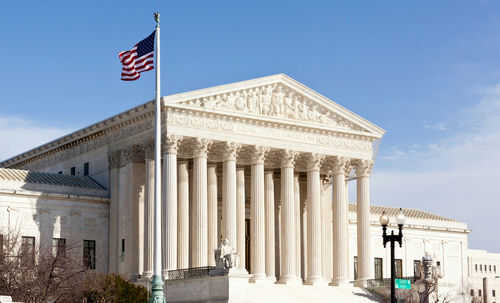
The Supreme Court has kept birthright citizenship in place, and that blocks President Trump’s Executive Order 14160 from taking effect.
Quick Take
- The Supreme Court ruled that Executive Order 14160 cannot override the Fourteenth Amendment’s Citizenship Clause.
- The majority said children born in the United States to parents who are unlawfully or temporarily present are still citizens at birth.
- The Court leaned on the long-standing rule from United States v. Wong Kim Ark, not a new theory.
- Supporters of the order say the fight is not over, since some justices signaled Congress could still act.
Supreme Court Draws a Hard Line on Citizenship
The Supreme Court’s decision delivered a major setback to Trump’s effort to narrow birthright citizenship. The Court held that Executive Order 14160 is unconstitutional under the Fourteenth Amendment’s Citizenship Clause. That means children born on U.S. soil remain citizens at birth in the vast majority of cases, including children whose parents are unlawfully present or here only for a limited time.
The ruling also reaffirmed a core principle many Americans thought was settled long ago. The Court relied on the 1898 precedent in United States v. Wong Kim Ark, which treated birth on U.S. soil as the key test for citizenship, with only narrow exceptions for foreign diplomats, foreign sovereigns, enemy occupation, and similar rare cases. For conservatives who want clear constitutional limits, the decision showed the Court was not willing to let an executive order rewrite the amendment.
What the Majority Said About ‘Jurisdiction’
Chief Justice John Roberts wrote for the majority that children born to parents unlawfully or temporarily present are still “subject to the jurisdiction” of the United States and therefore citizens at birth. The opinion also rejected the government’s claim that birthright citizenship depends on some extra test of “primary allegiance” tied to where the parents live. That matters because it closes off the idea that the White House can create a new citizenship rule by executive fiat.
The decision matters beyond this one case because it follows the same constitutional path that has controlled birthright fights for generations. The Congressional Research Service said the challenge rested on the claim that the plain text of the Fourteenth Amendment, as read through Wong Kim Ark, covers nearly all children born in the United States. The Court’s ruling fit that reading and kept the older constitutional rule in place rather than letting politics set the standard.
Why the Dispute Still Matters Politically
Even with the Court’s ruling, the political battle is not finished. One justice’s separate view suggested Congress might be able to change the law by statute, and some lawmakers are already talking about a constitutional amendment. That keeps the issue alive, even though the legal path is steep. The research package also notes that ending birthright citizenship through a new amendment would require enormous political support and would be far harder than passing an executive order.
🔴 GOP files bills to restrict birthright citizenship after Supreme Court ruling
Republican lawmakers are drafting legislation to challenge the Supreme Court's decision upholding birthright citizenship as a constitutional right. Proposals include targeting 'birth tourism,'… pic.twitter.com/xriDWHbyzz
— NewsTongue (@NewsTongueX) July 3, 2026
Trump publicly called the ruling “too bad for our country” and urged Congress to step in, which shows the White House sees this as a real policy defeat. Legal and media coverage also framed the decision as a major loss for the administration, while civil rights groups praised it as a victory for the existing citizenship rule. For readers who value constitutional restraint, the bigger point is simple: the Court said the president cannot override the Fourteenth Amendment with pen and paper.
Sources:
theamericanconservative.com, constitutioncenter.org, scotusblog.com, latino.ucla.edu, forumtogether.org