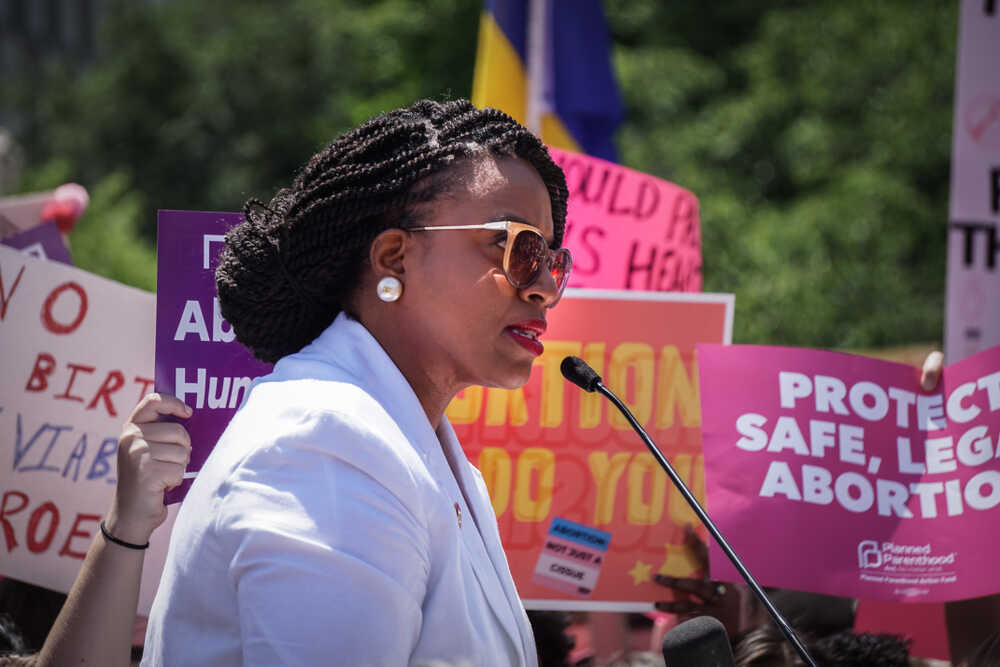
A sitting Democrat claimed Trump officials would prefer Black Americans “pick cotton” instead of picking their leaders—an incendiary charge delivered without documentary proof.
Story Snapshot
- Rep. Ayanna Pressley made a sweeping accusation about Trump-era racial hostility, citing voting-rights disputes. [1]
- Her quote relies on rhetoric; no internal records or court findings in the provided material prove such intent. [1]
- Pressley has repeated similar characterizations of Trump and his policies across official platforms. [3][6]
- The clash highlights a broader fight over evidence versus hyperbole in debates on race and representation. [1][3]
Pressley’s Charged Remark And The Context She Cited
Mediaite reported that Rep. Ayanna Pressley said, “There are people in this hostile anti-Black administration that would rather Black Americans pick cotton than pick the president,” tying the remark to what she called racial gerrymandering and a “great injustice” tied to Black political power. She framed the dispute as a defense of democracy and Black voters’ participation in elections. The report connects her claim to a court decision and partisan reactions surrounding representation and voting in the South. [1]
Pressley positioned her comments as part of a larger voting-rights struggle, arguing that racially discriminatory power structures threaten representation. She emphasized that the fight extends beyond Black Americans to the broader integrity of elections. The article attributes to her the argument that the stakes involve congressional and senatorial elections alongside the presidency. While the rhetoric is vivid, the provided materials tie the statement to public debate and media framing rather than to newly produced evidence. [1]
Evidence Gap: Rhetoric Versus Documentary Proof
The supplied record shows no internal administration memo, directive, sworn testimony, or judicial finding establishing an anti-Black intent matching Pressley’s wording. The available claims rest on her statements and secondary reporting, not on primary-source documentation proving discriminatory purpose. That absence makes her “pick cotton” line vulnerable to the charge of being hyperbole rather than substantiated fact, especially where courts typically distinguish intent from effect in voting-rights disputes. [1]
Counter-arguments from Trump-aligned voices in the record emphasize policy rationales in related debates, framing contested actions as law enforcement or election integrity rather than racial exclusion. However, the research set does not supply a definitive exonerating document, either. The result is an evidence standoff: a provocative allegation without primary-source corroboration, and a defense posture that stresses legality but does not directly address the specific intent Pressley alleged for the cited dispute. [1]
Pressley’s Ongoing Narrative About Trump And Race
Pressley’s official communications and campaign materials reflect a pattern of charging Trump with racism and authoritarian impulses. Her public pages and appearances feature language describing a hostile government, racial injustice, and threats to democracy. That consistency shows a sustained message strategy, but repetition does not itself establish the specific intent she alleged in the “pick cotton” quote. The documentation here records her stance; it does not provide new proof of the motive she ascribes. [3][6]
Pressley’s rhetoric sits within a broader, recurring conflict: whether stark racial language clarifies systemic harm or overreaches available evidence. In hard-fought disputes over voting and representation, the legal standard usually demands proof of discriminatory purpose, not only disparate effects. When the record contains assertions but no contemporaneous documentation, audiences sort claims through partisan trust rather than verifiable facts—a dynamic that heightens division and weakens confidence in institutions. [1][3]
Why Conservatives Should Care About The Standard Of Proof
Conservatives watching this debate should insist on evidence-based claims before accepting accusations that impugn constitutional governance. Strong language that casts entire administrations as racially hostile risks chilling debate, inflaming tensions, and distracting from verifiable policy outcomes such as border enforcement, energy affordability, and fiscal restraint. Demanding primary-source proof protects due process, guards against defamatory narratives, and keeps focus on measurable results rather than polarizing soundbites that degrade civic discourse. [1]
What To Watch Next: Records, Rulings, And Measurable Impacts
Voters should watch for primary records: court opinions addressing discriminatory purpose, internal communications demonstrating motive, and quantified analyses of electoral impact. If future filings or investigations produce direct evidence, the conversation will change. If not, sweeping charges should be weighed against their proof. Meanwhile, the Trump administration will be judged by concrete actions on the economy, border security, and public safety—areas where results, not rhetoric, most clearly answer critics and serve the national interest. [1][3]
Sources:
[1] Web – Ayanna Pressley: Trump Prefers Black Voters ‘Pick Cotton’ – Mediaite
[3] Web – Media – Ayanna Pressley
[6] Web – Ayanna Pressley for Congress – Official Campaign Website of …