
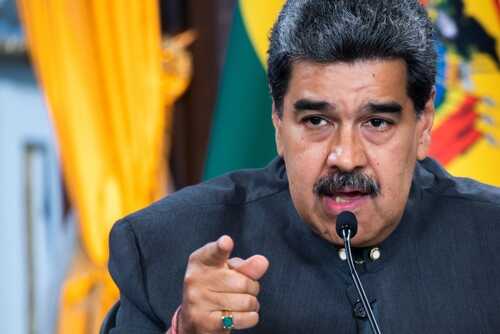
Venezuela’s abrupt suspension of energy agreements with Trinidad and Tobago exposes the dangerous consequences of unchecked globalist alliances.
Story Highlights
- Venezuela cancels joint gas projects with Trinidad and Tobago after the island nation hosts U.S. warship for military exercises.
- Trinidad’s new government, more closely aligned with Washington, prompted Venezuela’s perception of increased hostility in the region.
- U.S. sanctions and political maneuvering threaten energy security and economic stability for both Caribbean nations.
- Regional tensions highlight the ongoing risks of foreign entanglements and the erosion of national sovereignty.
Venezuela Halts Energy Cooperation Over U.S. Military Presence
In October 2025, Venezuela formally announced the suspension of all energy cooperation agreements with Trinidad and Tobago, triggering uncertainty across the Caribbean’s energy sector. The move followed Trinidad’s decision to host a U.S. warship for joint military exercises, a gesture Venezuela denounced as hostile and a threat to its sovereignty. These agreements, in place since 2015, underpinned critical joint natural gas projects—including the Dragon field—now suddenly jeopardized by escalating diplomatic friction and mounting U.S. pressure.
Watch: Maduro Suspends All Oil and Energy Agreements with Trinidad After US Warship Docks at Trinidad
Venezuela’s leadership, led by President Nicolas Maduro and Vice President Delcy Rodríguez, views Trinidad’s alignment with U.S. interests as a direct affront to its autonomy. Maduro’s government cited not only the warship’s arrival but also a broader pattern of U.S. interference in the region. The new government in Trinidad and Tobago, installed in April 2025 under Prime Minister Kamla Persad-Bissessar, has sought closer ties with Washington, further straining relations with Caracas.
Venezuela moves to cancel energy agreements with Trinidad after US warship arrives at island nation | National News | https://t.co/uOfwpqu5sx https://t.co/qohkixzlEV
— vanessa (@linusblue) October 28, 2025
Energy Security and Economic Fallout for the Caribbean
The immediate effect of Venezuela’s suspension is the stalling of joint energy ventures, especially the Dragon gas field, which had already faced delays due to rigorous U.S. sanctions on Venezuela. Both nations rely heavily on these projects for economic growth and energy security, and the loss of cooperation threatens to disrupt gas supplies and undermine regional stability. Major energy companies like Shell and the National Gas Company of Trinidad and Tobago (NGC) now face operational uncertainty, with billions in potential revenue and thousands of jobs at risk.
Regional Tensions and the Broader Geopolitical Picture
The breakdown in Venezuelan-Trinidadian relations signals a troubling pattern of growing U.S. influence and military presence in the Caribbean. Venezuela’s government argues that Trinidad’s actions are part of a larger U.S. strategy to destabilize regional partnerships and assert dominance over critical resources. The current suspension of agreements marks a turning point, with diplomatic ties now deeply strained and energy cooperation in limbo. The broader Caribbean community faces heightened uncertainty as potential shifts in alliances and economic partnerships loom on the horizon.
Sources:
Venezuela Suspends Energy Agreements with Trinidad and Tobago
Venezuela Cancels Energy Ties With Trinidad and Tobago After US Warship Visit