
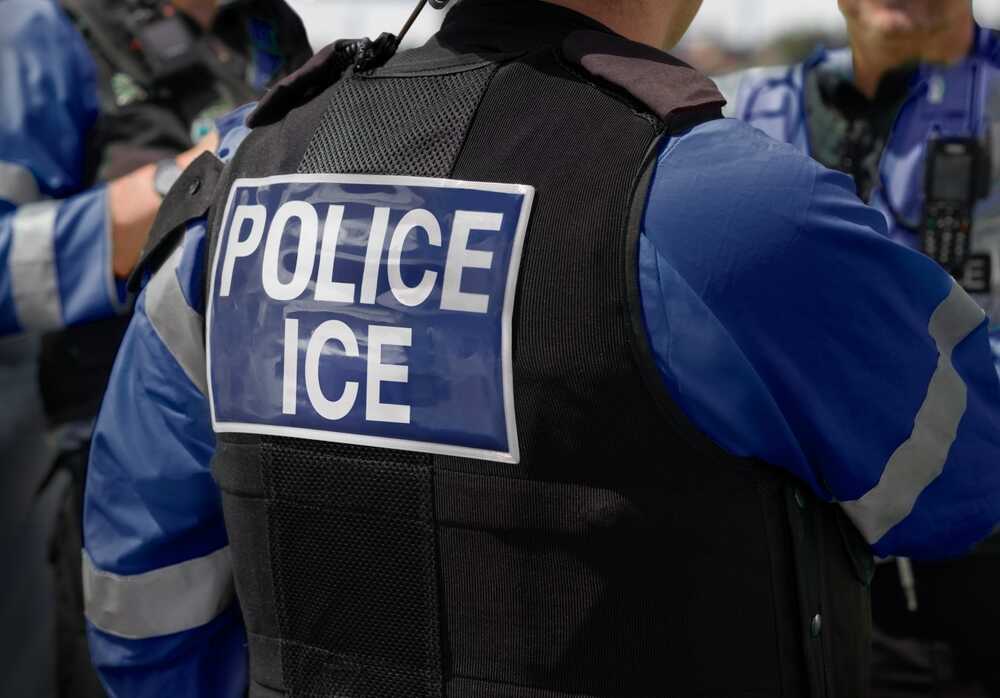
Anti-ICE agitators blocked vehicles and clashed with officers outside Newark’s Delaney Hall, prompting arrests and renewed calls for firm enforcement of the law.
Story Snapshot
- Protesters tied their actions to alleged “inhumane” conditions and a claimed hunger strike, but evidence remains largely advocacy assertions [1].
- Officials reported road blockages, violent clashes, and assaults on officers, including a biting incident that led to federal charges [1][6].
- New Jersey authorities imposed protest zones and checkpoints to keep access routes open and restore order.
- Most demonstrators were reportedly peaceful, yet a disruptive subset escalated to unlawful interference [2].
Clashes Outside Delaney Hall Disrupt Operations And Lead To Arrests
Local and national outlets reported that protesters outside Delaney Hall in Newark blocked vehicles and confronted law enforcement, resulting in arrests and disruption around the federal immigration facility [1]. New Jersey’s attorney general stated that most demonstrators were peaceful, but a subset crossed into criminal conduct, prompting police action [2]. Reporting described road blockages and physical confrontations that interfered with access and public safety, shifting the event from expressive activity into enforcement territory [1][2].
Sources highlighted serious allegations of officer assaults during the unrest. A Department of Justice-cited account, reported by Fox News, said a New Jersey man faced charges after allegedly kicking officers and biting two federal agents amid the clashes [6]. Such conduct, if proven, transforms the narrative from protest to criminal battery. These incidents reinforce the public-order rationale for intervention when demonstrations impede government operations or endanger personnel charged with enforcing immigration law [6].
Advocates Cite Conditions And A Hunger Strike; Verification Remains Thin
Advocates and families asserted that detainees suffered pepper spray, physical force, and poor access to food and health care inside Delaney Hall; they also linked the protests to an alleged hunger strike [1]. While those claims merit scrutiny, the available coverage relies chiefly on advocacy statements rather than documented inspection findings or medical records, leaving the factual basis incomplete [1]. Without facility reports or sworn testimony, the claims remain allegations rather than substantiated conditions evidence that would justify unlawful street obstruction [1].
Media coverage confirms the demonstrations spanned days and involved organized immigrant-rights supporters pressing a list of demands, underscoring a coordinated campaign rather than a spontaneous gathering [1]. That organization can clarify messaging, but it also raises accountability for tactics that blocked roadways and escalated into confrontations. Conservative readers understand that free speech is protected, yet coordinated plans to obstruct vehicles and disrupt operations cross legal lines that police are obligated to address, regardless of the protest’s stated cause [1].
State Response Seeks Order: Protest Zones, Checkpoints, And Enforcement
New Jersey’s governor directed state police involvement, created a designated protest area, and established vehicle checkpoints to restore traffic flow near the detention center, an approach reported as balancing expression with safety and access. Officials emphasized that operational continuity at a federal facility cannot be negotiated on a public street. When orders and curfews are set, later roadway blockages predictably trigger arrests, which should not be confused with silencing speech but rather with enforcing time, place, and manner rules.
An anti-ICE protester is facing federal charges after allegedly attacking officers during clashes outside Newark’s Delaney Hall. According to the Department of Justice, 26-year-old Brendan John Geier kicked one federal officer and bit two others after being ordered to clear the… pic.twitter.com/UghpZ7BJxj
— Breaking911 (@Breaking911) May 31, 2026
Some reporting stressed that many protesters remained peaceful, though persistent images of shields, barricades, and clashes now dominate public memory of the episode [2]. That visual narrative undermines claims of purely rights-based civil disobedience and makes it harder for the public to separate lawful protest from unlawful interference. For citizens who value the rule of law, these events reinforce a basic point: advocacy does not excuse assault, and grievances—real or alleged—must be pursued through legal channels without blocking roads or attacking officers [2].
Sources:
[1] Web – Watch: Anti-ICE Crew Finds Out It’s a Bad Move to Block Vehicles at …
[2] Web – 6 protesters arrested after clash with ICE officers outside NJ … – …
[6] Web – Charges filed after New Jersey ICE facility protest turns violent